Textiles are expanding and are no longer limited to curtains, upholstery, and soft items. As we already analysed in this report on architecture and textile interior design, textile-inspired fabrics and surfaces are moving towards walls, headboards, wardrobes and integrated furniture. Their lightness, tactility and ability to build atmospheres have made them an increasingly present language in the design of spaces.
But this shift from fashion to architecture also invites us to ask a more urgent question: what happens to fibres when they can no longer be turned back into garments?
Textile recycling: still insufficient
Europe generates around 15.2 million tons of textile waste per year, of which 13.3 million tons are post-consumer waste. Less than 1% is currently converted back into textile fibre. According to a report by ReHubs and Boston Consulting Group, achieving a viable industrial scale would require recycling 2.7 million tons annually by 2035 and investing between 8 and 11 billion euros.
In Spain, during 2024, only 118,951 tons were collected selectively, equivalent to 2.45 kilos per inhabitant. Each person, however, generates about 19 kilos of textile waste per year and 87% of used clothing continues to end up in landfills, according to data from this study. The collection is growing, but it is lagging behind a consumption model in which second-hand goods still coexist with fast fashion.
From textile culture to surfaces
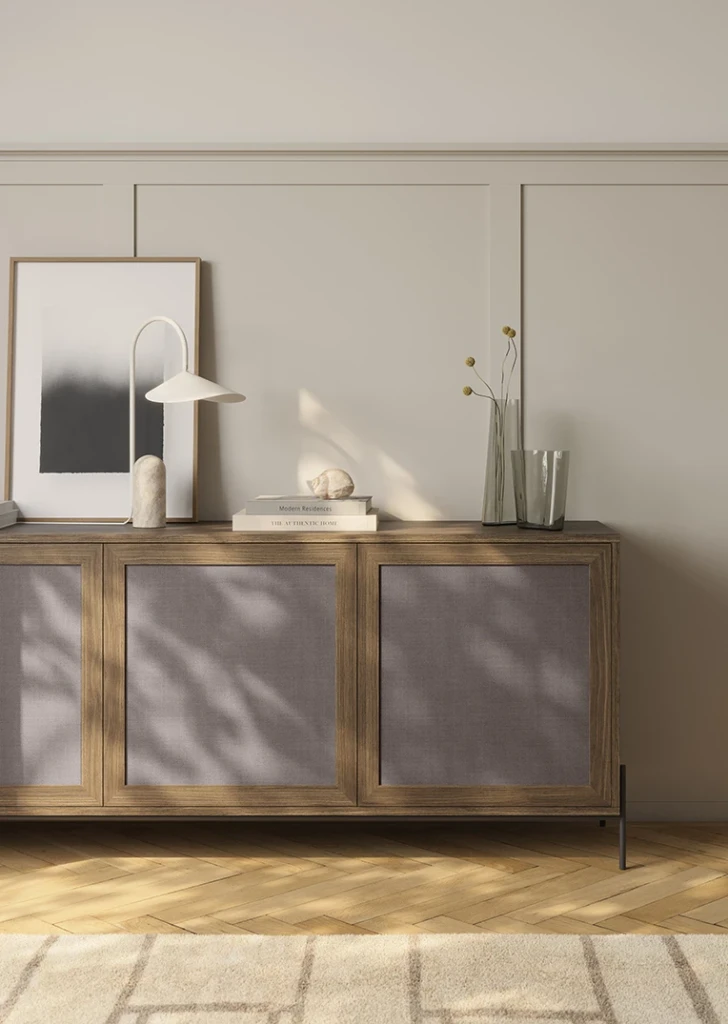
Finsa’s Fabric range shows how the sensory codes associated with fashion can be transferred to interior design. Pelle, Linum and Suede reinterpret leather, linen and suede through surfaces designed for furniture, panelling and vertical applications. Linum incorporates real textile fibres, while Pelle introduces reconstituted leathers in a solution applied to a board.
With eight Pelle references, five Linum and five Suede, the collection builds a palette in which texture, resistance and material perception work together. It does not in itself constitute a response to the global surplus of clothing, but it does demonstrate a relevant change, namely that textiles can be a material capable of being integrated into construction systems and interiors.
Taking advantage of the residue that cannot be returned to the thread
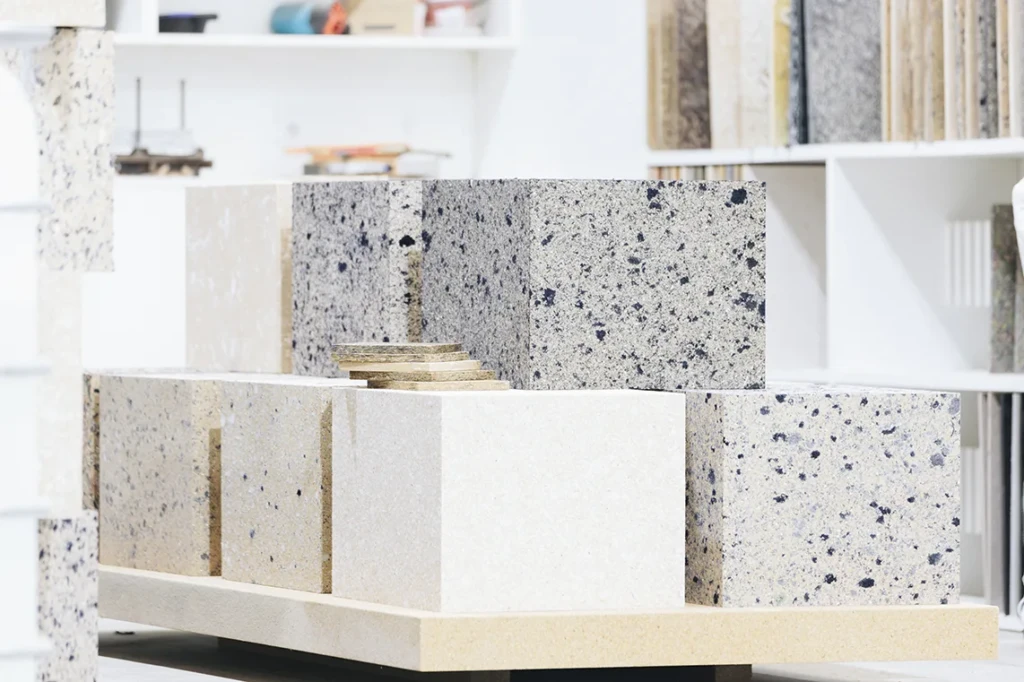
Birdmind is working at that intersection, currently in the prototype phase and looking for partners to scale its proposal. The company incorporates fibres that, due to their mixtures or treatments, cannot be recycled by spinning into boards intended for furniture, coverings and retail and contract spaces. Each board can hold up to 30 kilos of waste, more than 250 t-shirts.
According to data provided by Birdmind, their process allows the use of around 70% of the fibres rejected by recycling for spinning. The company also states that it can integrate a particularly high volume of fibre per square meter and that it has a high potential production capacity in Europe.
 Interior design can become another solution to the problem of fashion waste. Thus, when a fibre can no longer become a garment, perhaps it can still become a space.