Sometimes the future hides in dusty books. In 1926, Charles H. Mason – a disciple of Edison – patented steam explosion, a method that shredded wood chips with a blast of superheated steam. Almost a century later, projects like Finvalia, focused on improving processes in the production chain of wood solutions through AI and digitalisation, resurrected that discovery to transform post-consumer MDF into high-value raw material.
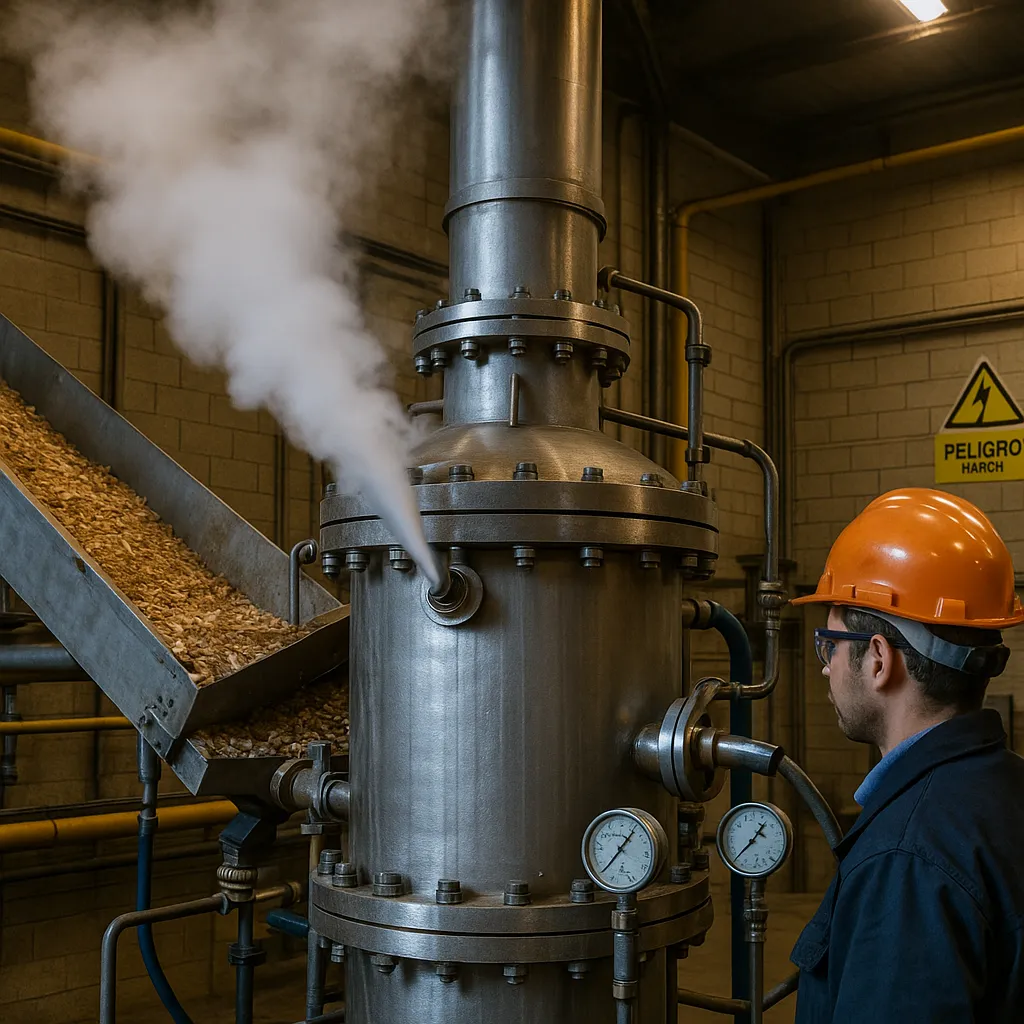
The operation is both brutal and delicate: the crushed panel is introduced into a reactor, saturated steam is injected until it penetrates the heart of each fibre, and suddenly, the gate opens. The instantaneous pressure drop expands the steam and bursts the glue bonds, releasing cellulose, hemicellulose and lignin without a single chemical reagent. The resulting fibres, still warm, retain the tactile warmth of wood but behave like a new material, ready to return to the industrial cycle.
At Fibranor pilot plant, an entity participating in the Finvalia project, the team is already scaling the process from 150 kg/h in the laboratory to two tons per hour. There, waste is not “recycled”; a resource capable of fuelling biorefineries, producing low-emission bioadhesives, or generating reconstituted panels with a minimal carbon footprint is refined. The circular impulse is evident: each old board becomes raw material that saves logging, energy, and miles of logistics.
How a hundred-year-old technology reshapes the habitat
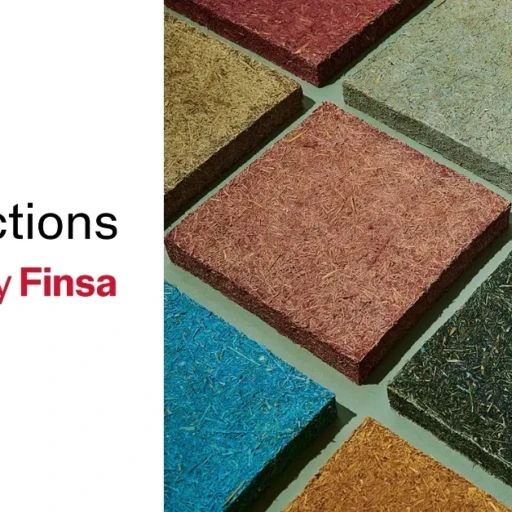
What does this mean for architecture and interior design? First, formal versatility. By not carrying the internal stresses of virgin MDF, post-explosion fibres allow for thinner, more stable pressings, suitable for curved skins, acoustic slats, or fluid mouldings. Second, an expanded aesthetic palette. The panels accept mineral pigments, water-based varnishes, or natural textures that play with light reflection, key in office and hospitality spaces. Third, narrative. Each sheet comes with a digital passport certifying its waste origin and CO₂ savings, a feature that customers are already requesting in sustainable fit-out competitions.
The old patent also rewrites the current construction detail. Finvalia develops bioadhesives lignins derived from the same process – without isocyanates – which open the door to completely bio-based sandwich solutions, compatible with LEED or WELL certifications. For modular architecture, this means lightweight structural panels; for interior design, lightweight hollow doors and “infinite-cycle” furniture that can be disassembled and returned to the reactor when the lease closes.
 In a sector obsessed with innovation, Finvalia proves that sometimes all it takes is a breath of fresh air. Steam technology Explosion returns as a tale of industrial alchemy: transforming waste into material beauty, memory into future.