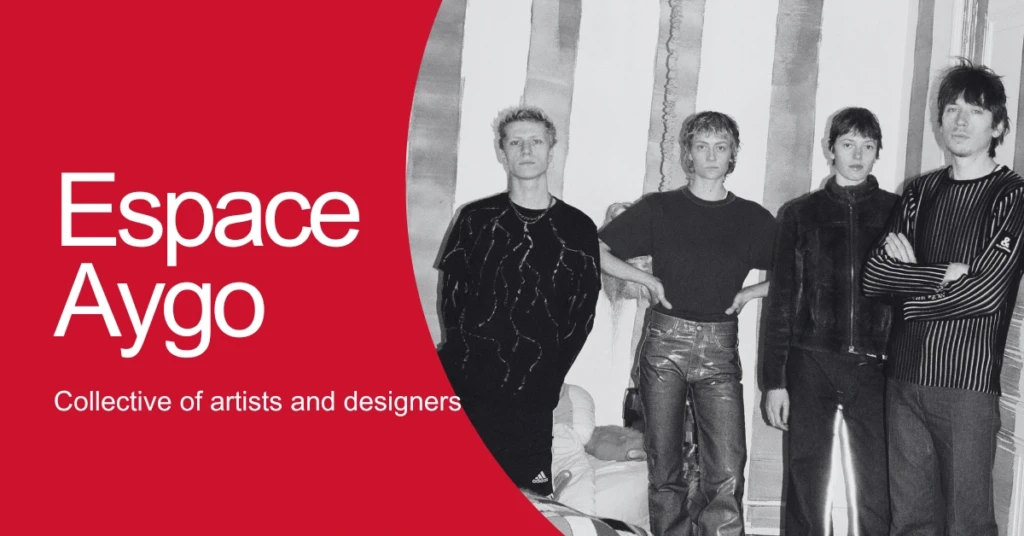
If there’s one good thing about these times of transience and globalisation, it’s that an experiment in a house can end up being a global event in a matter of months. That was what Espace Aygo, an artistic and design collective made up of Salomé Sperling, Line Murken, Jaime Le Bleu and Sijmen Vellekoop, experienced firsthand.
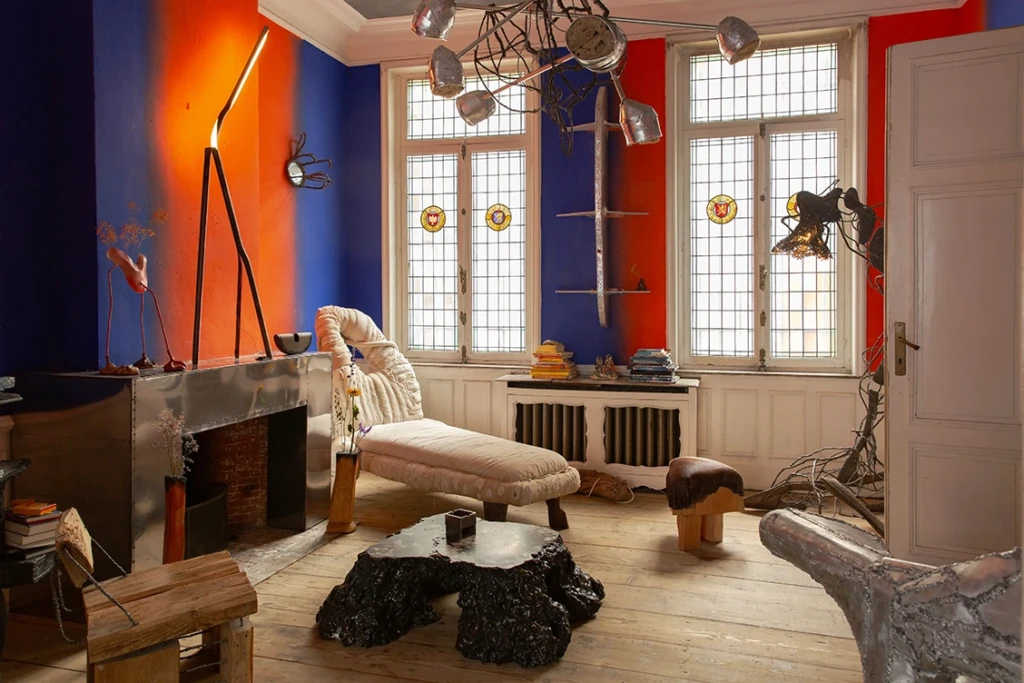
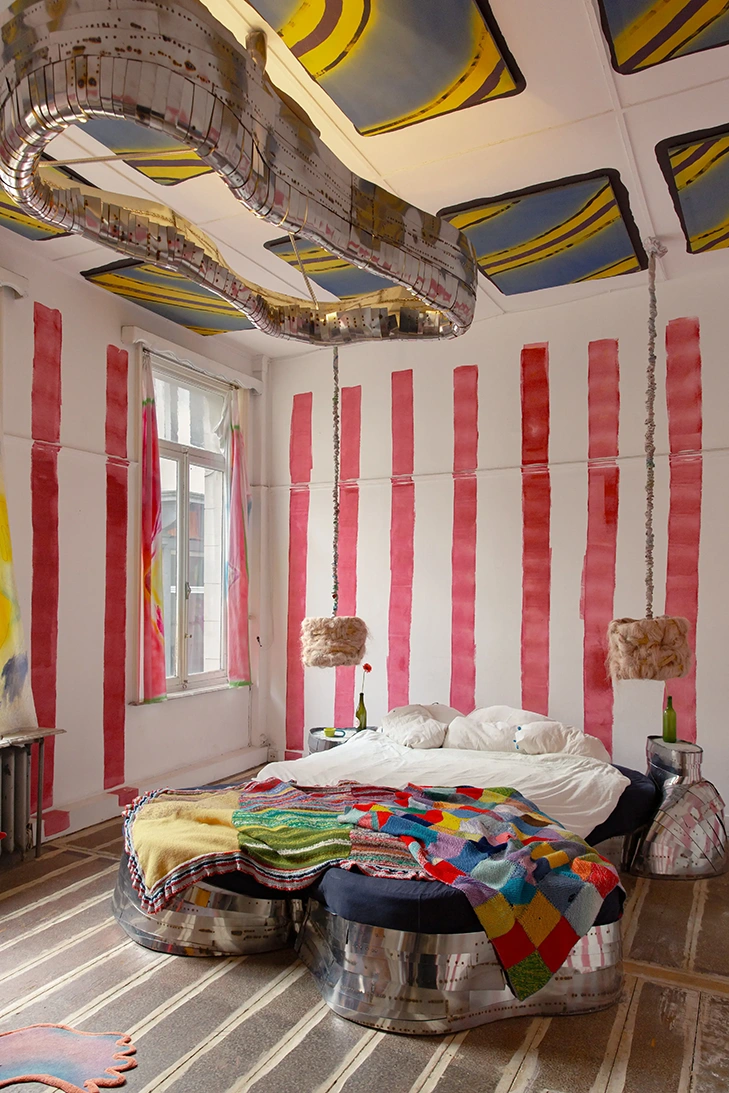
The group rose to international fame thanks to this article in The New York Times after transforming a large single-family home in Brussels into a “total work of art” (Gesamtkunstwerk), where each room functioned as a manifesto of their shared approach to architecture and collective life.
Of Swedish, Dutch and French origins, its members met while studying design in Eindhoven before settling in Brussels. His practice is defined by a very organic and spontaneous vision of the intersection between dwelling and building, understanding design as the material that shapes living conditions and community relationships.
 As part of the Mayrit biennial, the collective will present the installation Unboxing at the Central del Diseño (Matadero Madrid) on May 20th. The work proposes a physical narrative about the life cycle of industrial materials, specifically the wooden board. Through sculptural entities that emerge from boxes, the piece explores concepts of entropy and control, suggesting that matter possesses a latent agency that resists industrial and technological models.
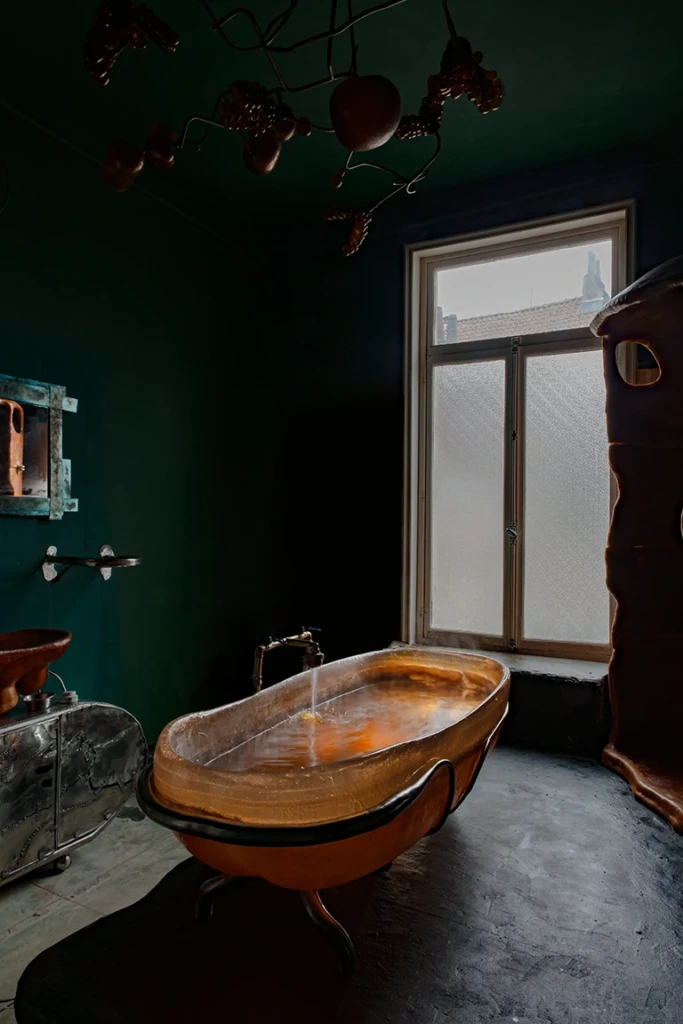
You became known internationally in 2024 for the intervention in that house in Brussels. How did you experience that moment?
It was a transition from one end of the spectrum to the other. We started the project when we were still in school and worked at home nonstop for two years, living practically like hermits. We didn’t think about how the outside world would perceive us; we created for ourselves and our close community. Suddenly, the article came out in The New York Times and we went from that seclusion to being super public, with people ringing the doorbell and receiving emails from people who wanted to see the house. It was fun to receive that feedback, although sometimes it was strange to have people from the United States giving their opinions on our work after only our friends and family had seen it.
A few months ago, we decided to kill the house by painting it completely black, like a fade to black in a movie, to stop that public cycle and give ourselves space to start a kind of second creative album, to use a musical analogy.
What do you consider to make something a good design?
It’s a very broad and subjective question, but we believe that good design is that which is created close to people, following the body, movement and well-being. In the academic context, you are often told which architects or designers you should like, but it is important to find what truly moves you. Furthermore, we would get into ethical dilemmas about what is good or bad, and we would never finish the interview (laughs).
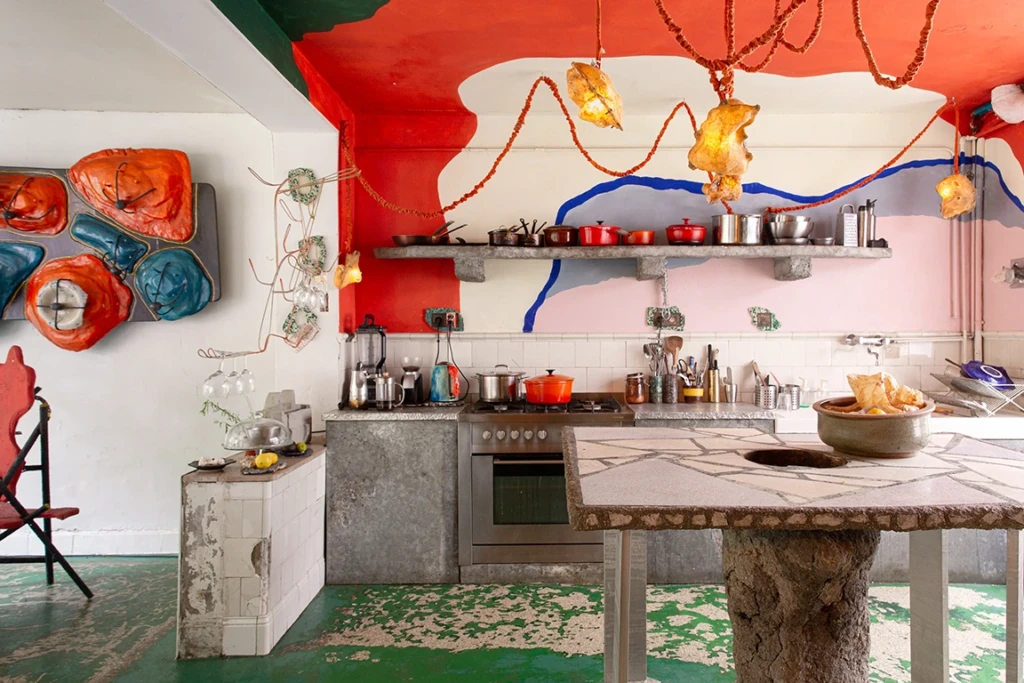
You worked with the concept of exquisite corpse. How important is the surrealist movement to you?
We are not experts in the surrealist movement, although we recognise the similarities. Surrealism sought to understand that dreams are part of reality, and that is definitely something we do. We play with objects that are recognisable but inhabit a dreamlike state, creating an ambiguity where the user recognises something but at the same time doesn’t. We admire artists like Kurt Schwitters and his Merzbau for this idea of constructing personal and physical worlds that you can enter. Many people who came to the house unconsciously mentioned surrealism, so in a way, we are channeling it.
You will soon be at Domaine de Boisbuchet to conduct a workshop based on this concept of exquisite corpse, which moves from the individual to the collective. Do you think this is the way to create, in community, away from individualism?
We use the exquisite corpse concept because it’s a fascinating way to collaborate: four people do something together, seeing only a small part of each other’s output. It’s a perfect exercise for eliminating ego, although we realised that ego is also important for generating discussions and seeing different potentials.
Our practice goes beyond objects; we seek something holistic, like the life that happens inside the house. Furthermore, there is a practical reason: many hands can lift mountains. When people saw us trying to build a house with no budget, they came together to help, and that created very strong community bonds.
Ver esta publicación en Instagram
What can we learn from the architecture and interior design of artist-run spaces?
The key is the balance between structure and the lack thereof. Sometimes, the most beautiful things emerge when there is no rigid structure from the beginning, allowing everyone to be free to discover themselves and try things without fear of the consequences. However, if there is no structure, everything becomes too unstable and nobody knows what to do; someone builds a bridge while the other plans a tunnel. What’s interesting about our structure is that the things we do are born from close interactions with artists, musicians, and people from different disciplines with whom we live.
Where would you like the group to evolve in?
We don’t know exactly where we’re going, but what’s certain is that we’ll stay together. We are four people -plus our extended family- and we want to continue doing crazy and fun projects. A long-term dream would be to own our own land to create our own world and space there. We need to remain fluid and flexible to adapt to whatever comes.
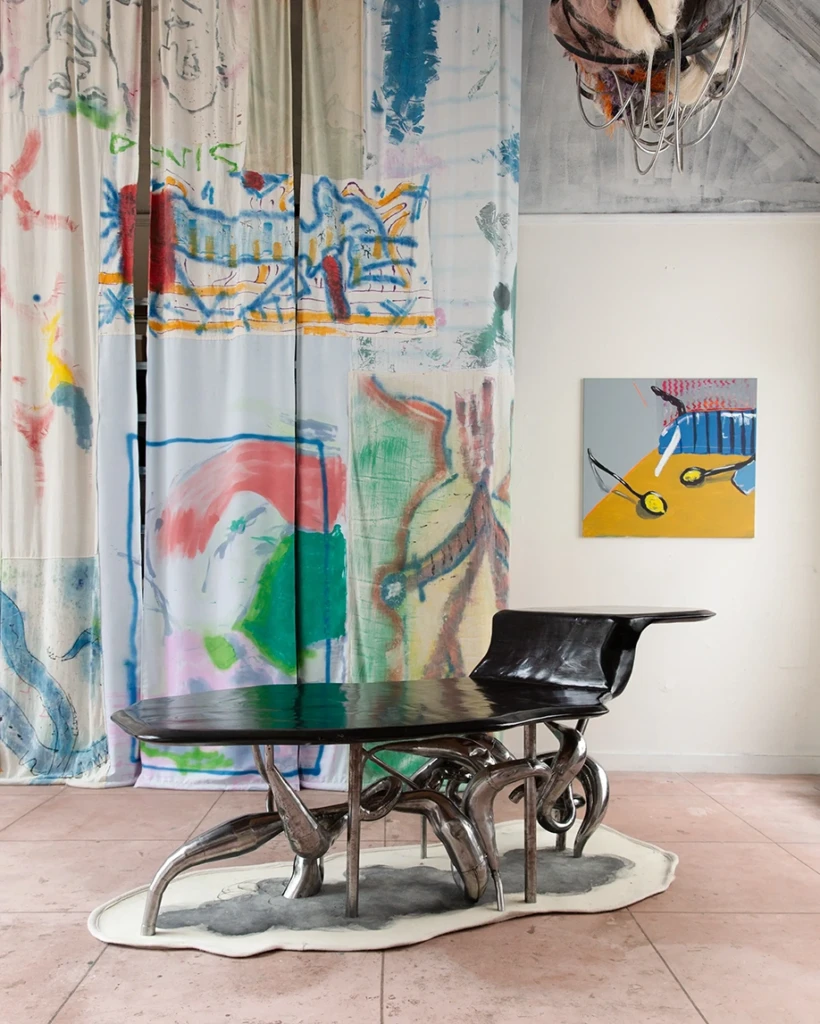
How do you conceive the collaboration with Finsa in Mayrit through Unboxing?
We are very excited because we would never have chosen to work with these types of industrial materials on our own. We are fascinated by Finsa’s lamination process; it creates a strange material reality where only the surface (those 4 mm of veneer) is “real”. It’s like a kind of science fiction where you only need the last layer to create a world. Furthermore, working with such a large industrial company and with such a conceptual theme in Mayrit takes us out of our comfort zone.
What is your opinion of trade fairs like Mayrit or Salone del Mobile?
We don’t usually participate in art fairs or are represented by galleries; it’s a system that doesn’t usually work for our way of working. However, Mayrit feels different, more like a conceptual biennial where we can spend time thinking about a theme instead of just making another chair. For us, the Salone del Mobile is the “Week of Friendships”, a time to meet. At Mayrit, we are not going to present objects, but to create an installation or an atmosphere.
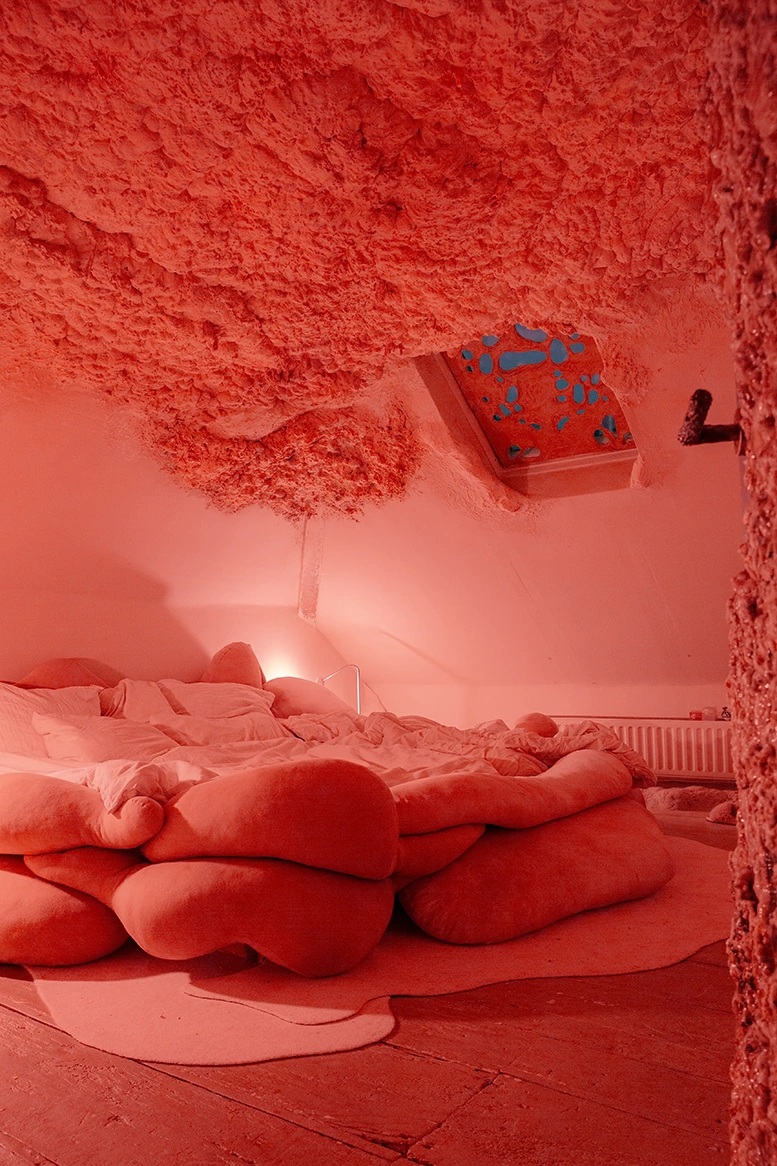
From the physical to the digital, what is your opinion on the use of AI in design?
We use it practically to speed up processes, such as consulting varnishing methods, but we believe that artistic instinct and human intention remain fundamental, since AI alone does not have a clear reason why it creates things.
What inspires you in your daily life?
Everything and nothing at the same time! From movies to coffee or the way Sijmen sings in the mornings. I am inspired by observing how people behave in space and questioning “assumed truths”, such as the fact that in the Netherlands we all live in identical houses connected to each other. We are also inspired by the process of creating a problem and solving it. That fragile moment when a work isn’t right and you have to make a drastic decision or try a new technique to fix it is very stimulating.