
Some materials evoke an immediate emotional response. They don’t need to be explained, and a gesture, a texture, or a scent is enough to activate sensory memory. Leather, linen, and suede belong to that category of raw materials that we have learned to associate with comfort, warmth, and natural elegance. For decades, they have inhabited our bodies and our homes through fashion, upholstery, and accessories, but today they find new forms of expression in interior design.
In the age of tactile, its return could not be limited to the purely decorative. Today’s material culture —one that seeks the emotional without sacrificing functionality— has fostered a generation of surfaces that evoke these fabrics in a contemporary way. They are materials that are not only seen but also touched with the gaze. They promise an experience, even if they are applied to a wall, a headboard, or a wardrobe. And that makes touch a new language of living.
Decorative leather surfaces
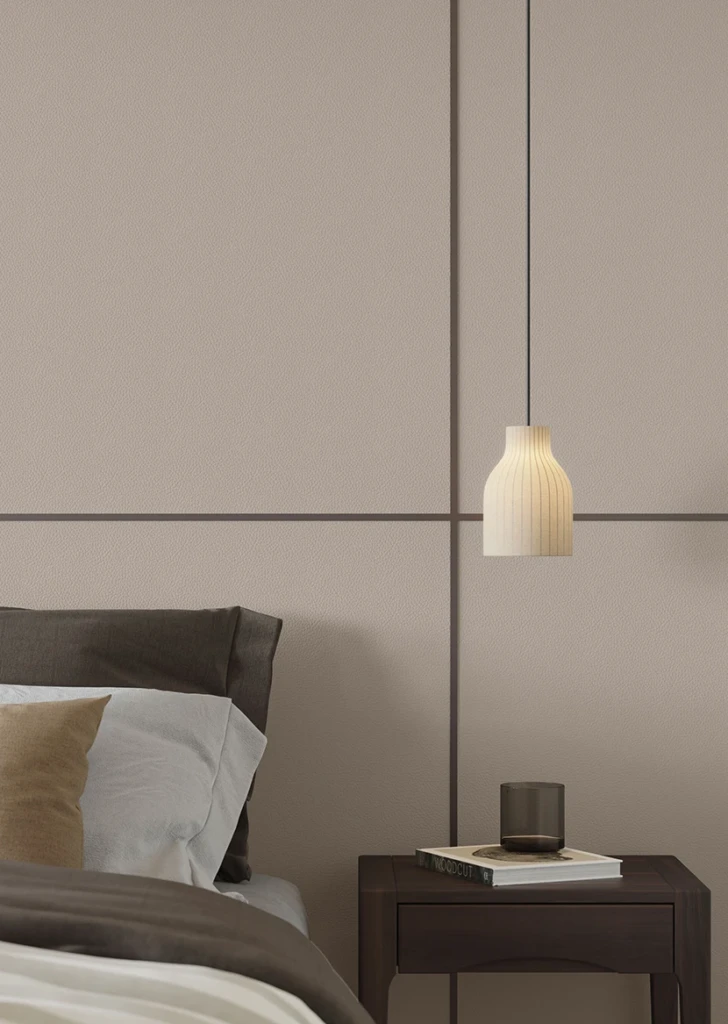
Leather, with its authenticity and nobility, is now reinterpreted in solutions such as Pelle, a technical surface that recovers its visual and sensorial character without the limitations of the original material. The result is a warm, suggestive and very versatile proposal, available in shades such as Pelle Arena, Pelle Utopía or Pelle Merino.
In all of them, the balance between the emotional and the functional is maintained: durable, lightweight surfaces that work equally well in a domestic space as in a commercial setting.
Decorative textile surfaces
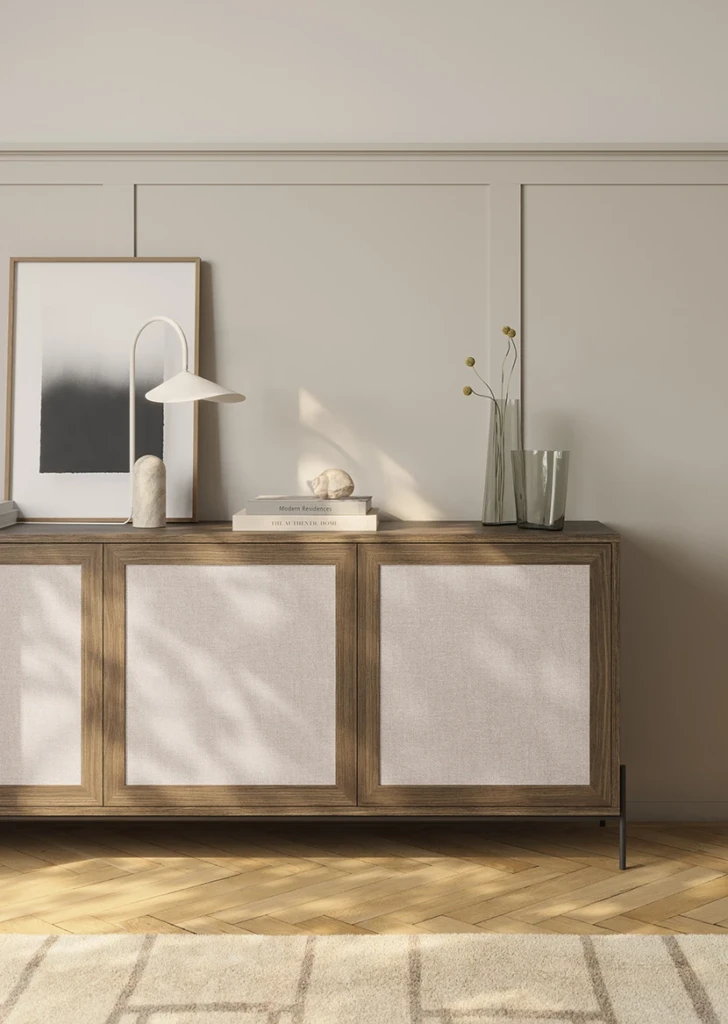
Linen has always been synonymous with material honesty. Light yet durable, with a dry texture and slightly irregular appearance, it has accompanied generations as an everyday fabric, laden with cultural references ranging from the Mediterranean to the Nordic world. Its raw tactility and unadorned naturalness now inspire Linum, a surface that brings these qualities to the world of interior design.
Surfaces like Linum Tierra, Gris or Marengo, this proposal finds its place in projects that seek warmth and sobriety, where the material is not the protagonist due to excess, but rather due to coherence. Its visible texture and ability to create soft atmospheres make it an ideal choice for spaces where comfort is built from the sensorial.
Decorative surfaces in suede
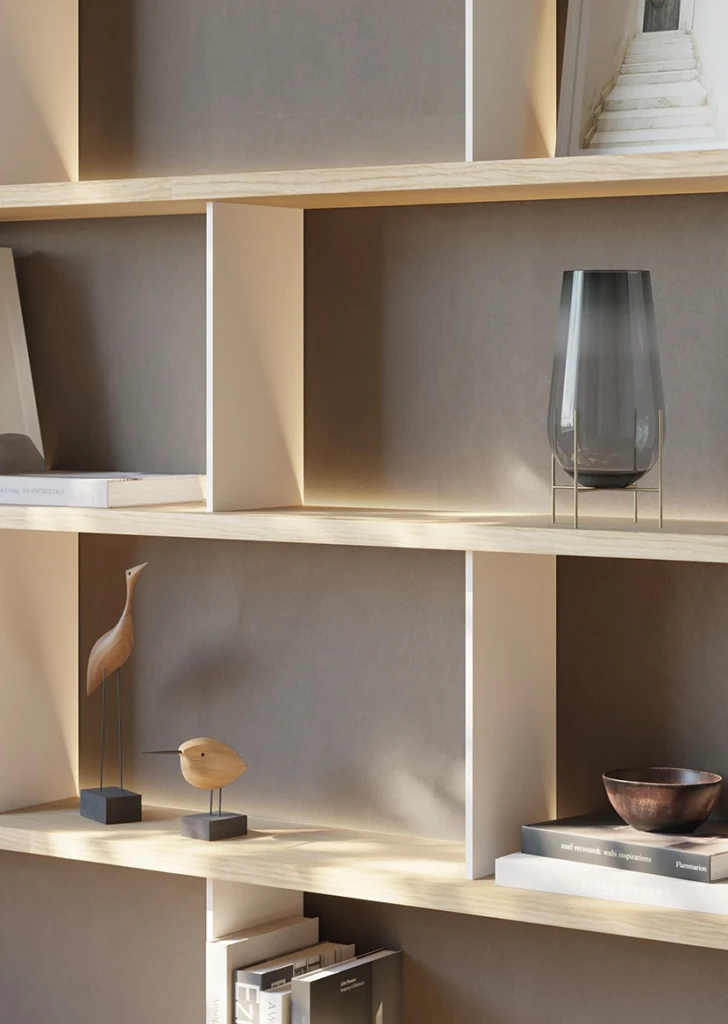
Suede has been associated with sophistication without artifice. Present in clothing, footwear, and furniture details, its velvety texture and enveloping feel have given it an aura of quiet elegance. Suede, the contemporary interpretation of this material, recovers that tactile quality in an architectural surface that conveys serenity, softness and depth.
References such as Suede Piedra, Crudo or Tierra are committed to a delicate aesthetic, perfect for creating timeless and sensorial interiors, where materiality speaks softly but leaves its mark.
This new generation of materials demonstrates that it is possible to extend their emotional charge to technical surfaces without sacrificing comfort or durability. And that materiality—when chosen intentionally—can transform not only spaces, but also the way we inhabit them.
Fabric range is, in this sense, a synthesis of that evolution: a meeting point between textile tradition and surface technology. It’s not about reproducing nature exactly but rather capturing its essence. Because in the end, what we remember is not just how a material looks, but how it made us feel. And new interiors, more than ever, start there.