
“Except for the pyramids of Egypt and the Parthenon, all architecture is ephemeral”. This is the emphatic statement made by architect Nuria Prieto, director and coordinator of the Atmósferas festival, which explores the essence of ephemeral architecture.
This discipline consists of constructions conceived and designed to last only a limited time: pavilions, installations, pop-ups, or public interventions made for a specific event, exhibition, or context, which are then dismantled, reused, or disappear. Its value lies partly in its immediacy and its experimental capacity.
Their interest is not in permanence, but in the specific response —a scenography, an experiment, an urgency— and usually involves criteria of lightness, quick assembly and disassembly, economy of resources and, sometimes, material or social experimentation. Architect Ángel Rocamora focuses precisely on this issue, believing that ephemeral architecture is linked “to the celebration of the social”. It appears in things that are more exciting, events that happen for the encounter”.
Ver esta publicación en Instagram
Contemporary perspectives on ephemeral architecture
The Atmósferas festival, the first contemporary ephemeral architecture festival held in Galicia, has revitalised the perception of architecture as a tool for urban reflection.
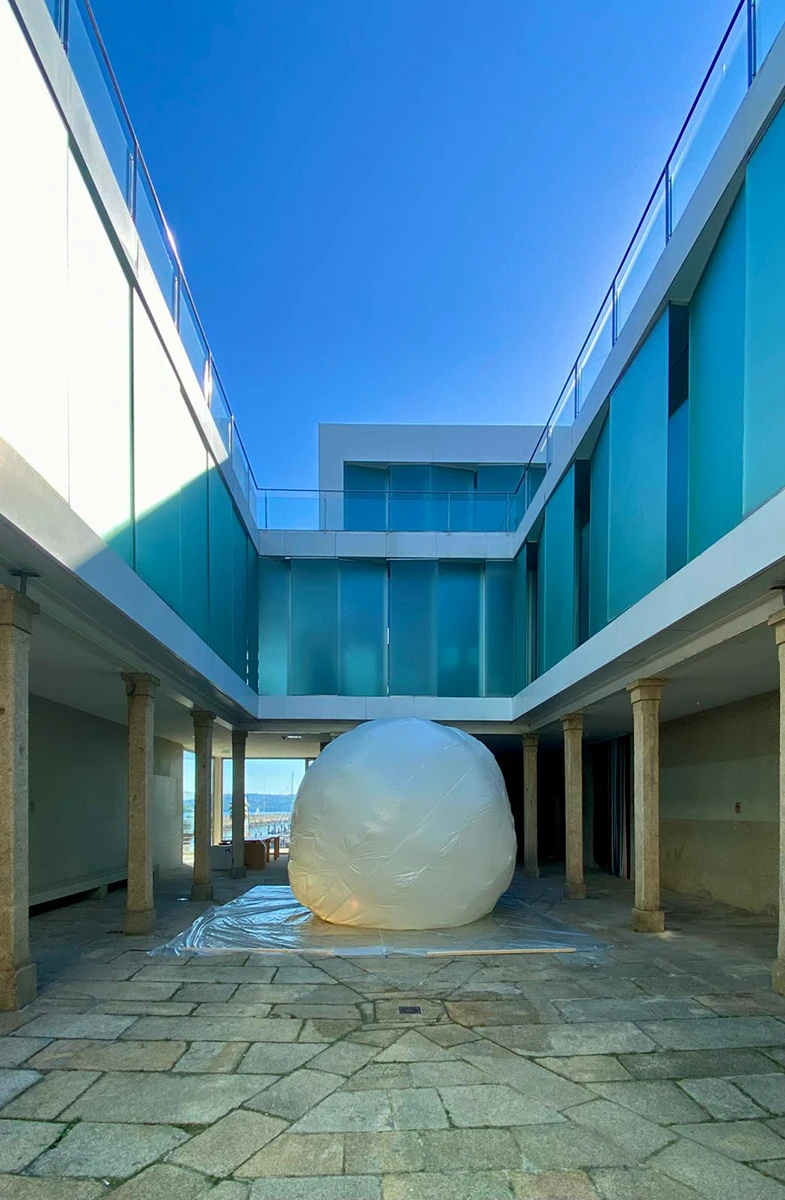
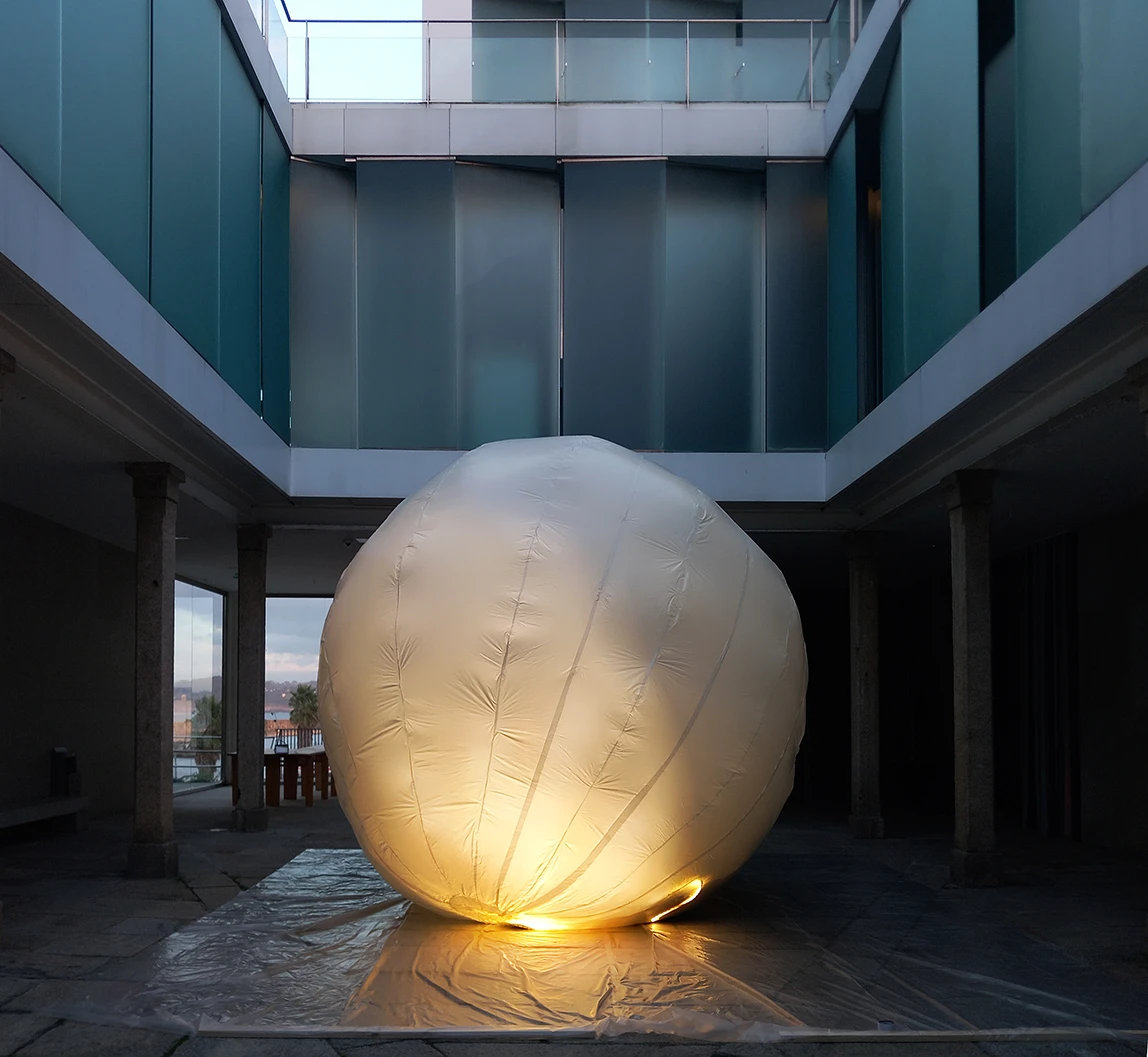
The event brought together five works of ephemeral architecture that engaged in dialogue with the city of A Coruña. Lonestar, for example, was an inflatable piece, in which Prieto participated, composed of two inflatable spheres (four and two meters), made with reusable plastics:
an outer layer of 200 gauge and an inner layer of 100 gauge. Prieto recalls that inflatable structures have a military origin, but that the counterculture of the 60s and 70s redefined them as playful and democratic objects: “they became something at the service of everyone, self-built”.
For his part, Ángel Rocamora is working on a temporary exhibition of archaeology and ethnography at the Archaeological Museum of Alicante (MARQ). From November 2025, 618 pieces of Denia’s archaeological heritage will be exhibited, spanning from prehistory to the 20th century. The exhibition emphasises the duality of sea and land in the city. The architect explains that for this exhibition, they have worked with materials such as aluminium, printed textiles, wood and recycled plastics. For him, lighting represents “50% of the project”.Contemporary temporary architecture includes proposals such as the Serpentine temporary pavilion, located in Kensington Gardens, London, designed by Bangladeshi architect Marina Tabassum. It is a capsule-shaped structure with mobile modules designed for public gatherings. It is a clear example of architecture curated for a specific period and designed as a demountable public space.
Another example is the 11th edition of the Concentric Festival in June of this year, with multiple ephemeral installations in public space. Bayona Studio reused 111 lamppost heads to illuminate the Town Hall square, while Leopold Banchini Architects placed a sauna mounted on a fountain and MVRD V made a veil with 48,000 recycled corks. All of these share one trait: direct dialogue with the urban environment and attention to recycled materials.
Ver esta publicación en Instagram
Self-construction, emergency and atmospheres
One of the virtues of these pieces is their ability to self-build: they allow groups and individuals to participate in the assembly, recovering the root of the human refuge. Prieto emphasises their usefulness in emergencies: “In case of conflict or loss of housing, they are built instantly and provide shelter for people.” “They are architectures without rules, abstract, […] they are completely free”, Prieto adds. “They can occupy any place and solve humanitarian problems”, he emphasises.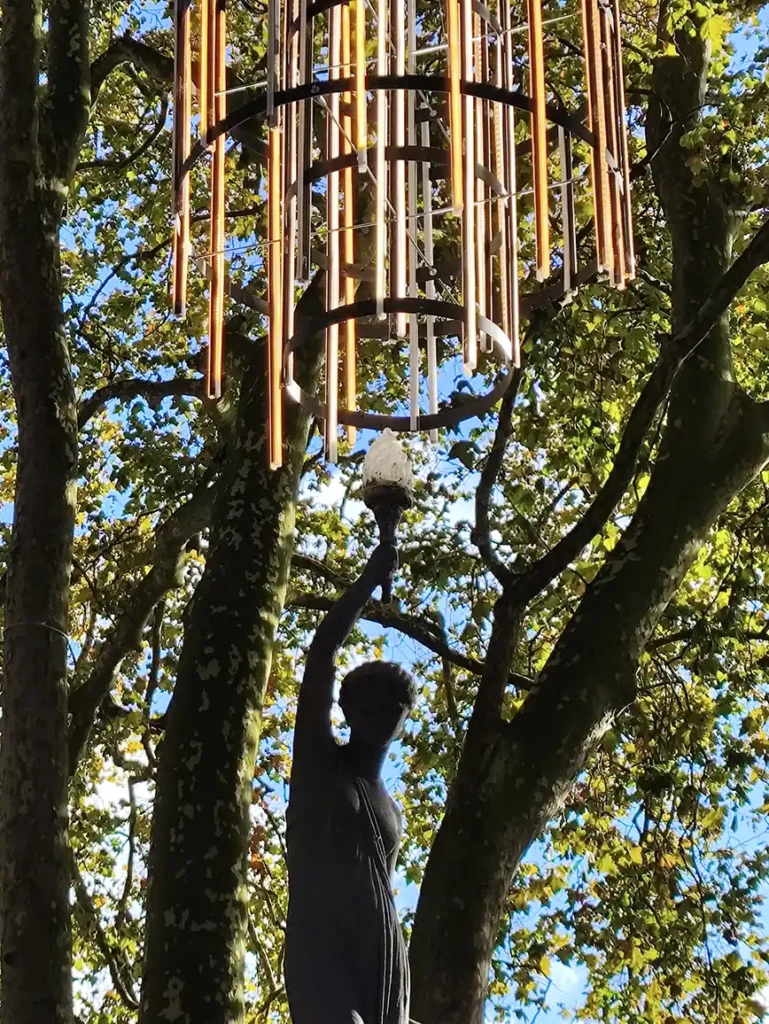
This type of architecture also has a dreamlike dimension: “Placing a sphere in a place is strange, but at the same time it always seems to fit, because it is a pure volume, a geometry perfectly acceptable to the eye, and completely understandable […]. It is like entering a dream”.
Rocamora emphasises precision and control in these projects. “They allow for great ease of use, precision, and just the right amount of durability. Timeless architecture allows you to search, experiment, and work with love. The life we live is associated with sounds and smells, and this is what we try to bring because they build an atmosphere”, he explains.
Ephemeral architecture, permanent sustainability
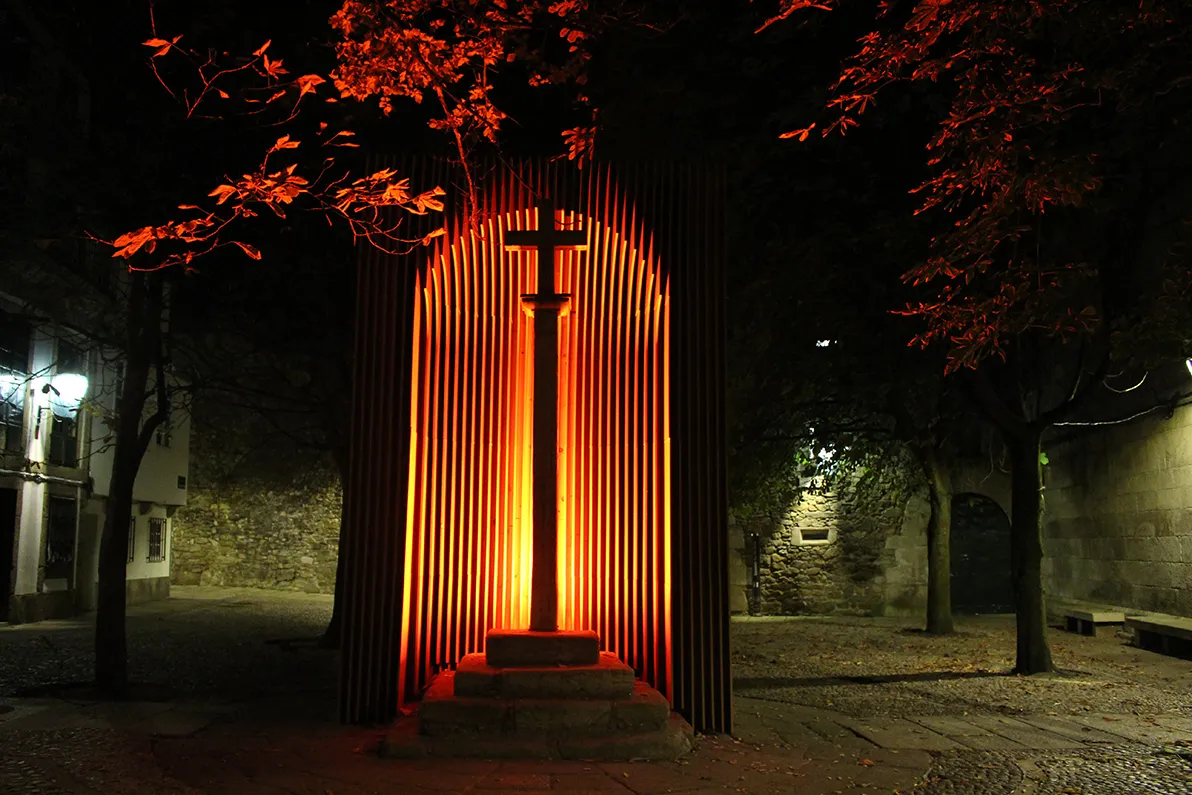
Sustainability and the second life of the material are common pillars in ephemeral architecture. In the Plaza de Santa Bárbara, in Galicia, Hornacina, by Estudio Bayona, a tectonic prism that reconfigured the cross of the square was installed. Finsa contributed more than 200 Fibrapan TEX Flute boards (not compliant for sale) and pine slats from its factory, demonstrating how industrial surpluses can be turned into pieces with public meaning. “I know Finsa very well and I know that it circulates the entire material. The board gives us a lot of peace of mind. They innovate seriously”, Rocamora says.
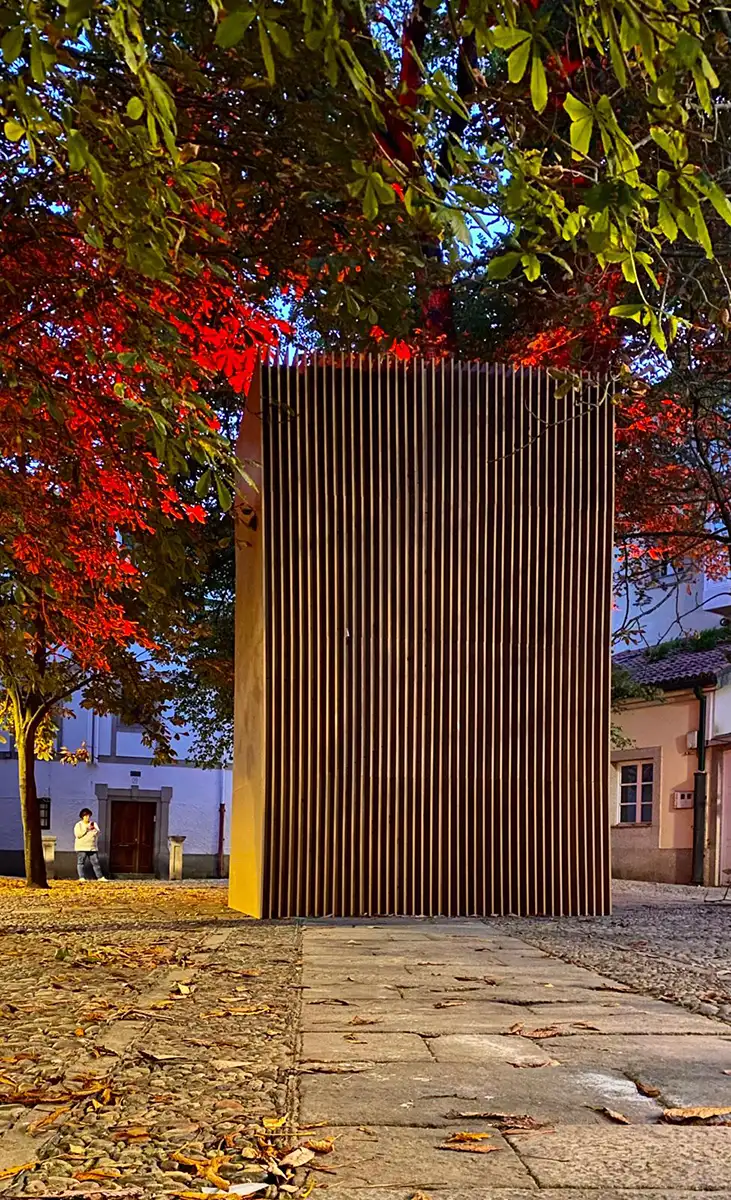
Ephemeral architecture allows us to rethink the city through experimentation and participation. Detachable, lightweight and often recycled pieces open windows to test ideas, reclaim spaces and generate encounters. Its strength lies in that intermediate space between the built and the transient: the ability to transform perceptions and activate urban life without demanding permanence.