Since the first Passivhaus was built in Germany in 1991, a milestone in energy efficiency without traditional air conditioning, concepts that integrate it have emerged, such as self-sufficient houses. This housing model conquers all types of climates thanks to intelligent automation and sustainable materials such as wood, essential to guarantee environmental and residential health.
What is it like to live in a self-sufficient house?
“As a friend says, we have gone from a culture of taking care of the house to one in which the house takes care of you”, explains Sara Velázquez Arizmendi, partner at the Varquitectos studio and specialist in this Passivhaus certification.
Living in a self-sufficient house makes us feel a clean and fresh atmosphere. We forget about the external temperature fluctuations and enjoy a constant temperature all year round. Living in a home built to the Passivhaus standard is experiencing a new dimension of residential well-being, where energy expenditure is minimal and quality of life is at its maximum.
“They become climate refuges”, the expert explains. “Whether it’s because the house is in free operation and cross ventilation is activated, which is a must for us, or when the heat recovery unit is working, which renews the air by filtering it”.
This is where key elements of bioconstruction come into play, such as airtightness and the mechanical ventilation system, in addition to excellent basic thermal insulation, says Ander Echevarria, technical and commercial director of Biopasiva Construcción Sostenible. In recent decades, for this professional, the greatest advance has been comfort. “People are seeing that it is possible to truly enjoy their home, to be comfortable and at ease”, he says.
However, the real evolutionary leap comes with intelligent automation. Using a weather station on the roof, for example, the house detects the weather in real time, whether it is rain, sun or cold, and acts autonomously to multiply energy savings.
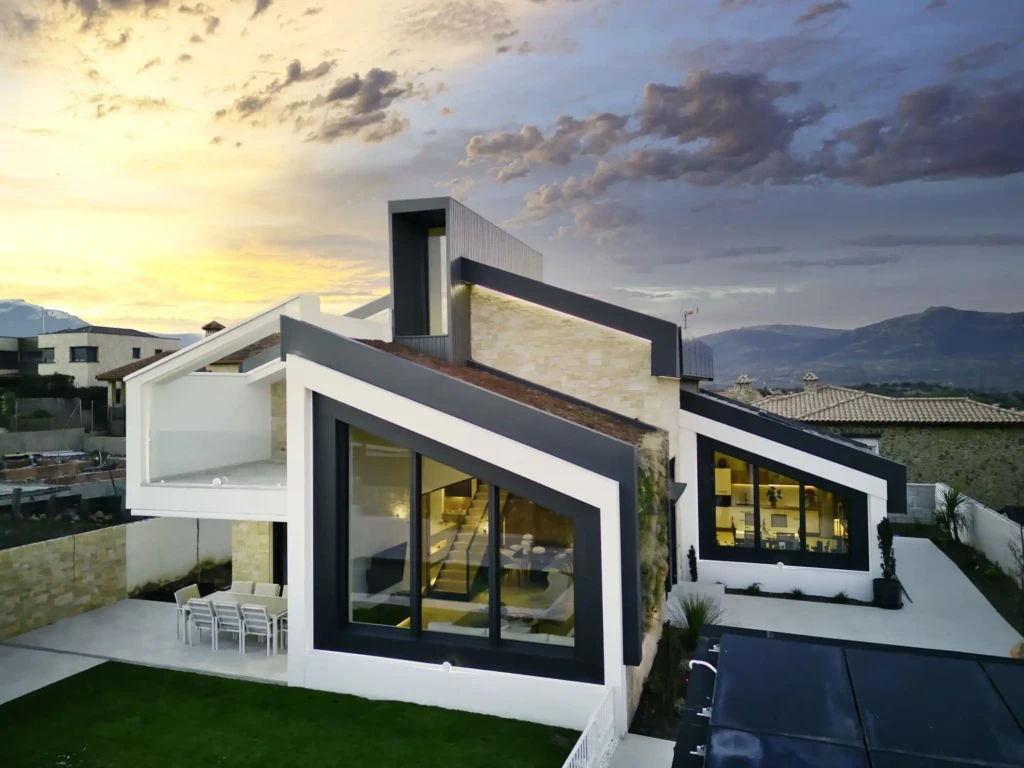
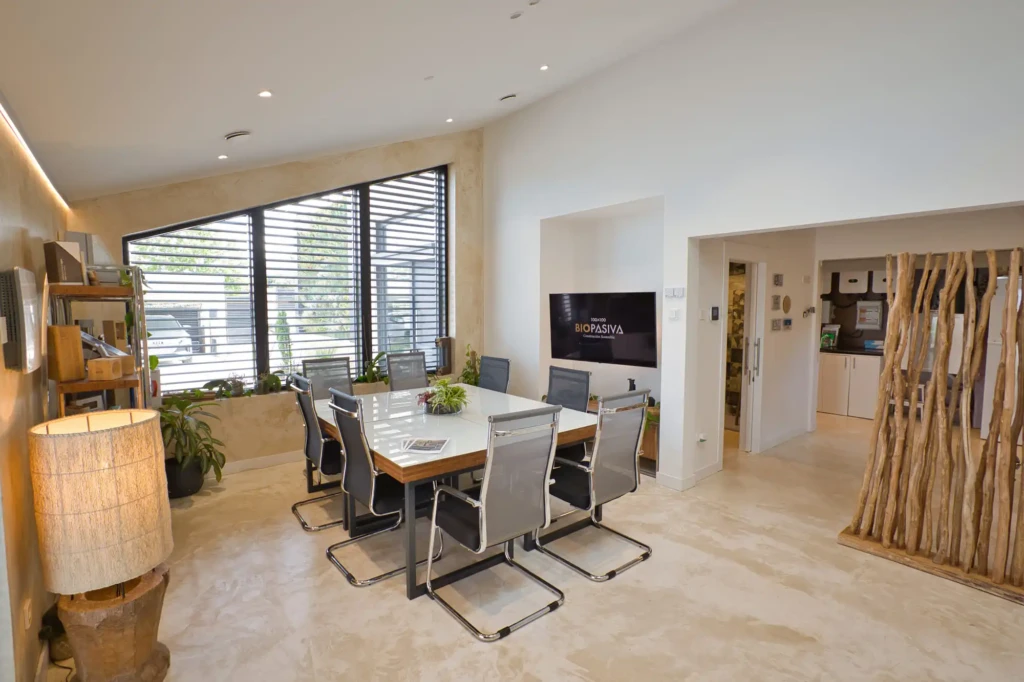
Is it possible to see this innovation in action? The answer is Casa Sophia. Located in Guadalix de la Sierra (Madrid), this Biopasiva project functions as a living showroom of the building of the future. It boasts the highest ecological distinction, the Passivhaus Premium certification, and its lightweight timber frame structure incorporates advanced materials from Finsa.
The impact of this design is measurable and marks a milestone: it has achieved 92% in the VERDE environmental certification (5 leaves) of the Green Building Council Spain (GBCe). Self-sufficiency is already a geometric and habitable reality.
Passivhaus: from inspiration to norm
The Passivhaus standard was created by physicists to save energy. “It was seen that it worked and it spread,” Velázquez explains. In 1991, Dr. Wolfgang Feist built the first passive house in Darmstadt, Germany. “It seemed very experimental, but it aimed to anticipate what all of society now demands: energy efficiency,” Echevarria points out.
That project established five basic principles :
- Adequate thermal insulation
- Elimination of thermal bridges.
- Airtightness.
- High-performance windows.
- Mechanical ventilation with heat recovery.
“It was a house built with enormous common sense. “It had large south-facing windows, with sunshades and a lot of traditional bioclimatic logic,” notes the Navarrese architect. “That thought, and the fact that those savings are seriously quantified, was very inspiring.”
Today, passive building encompasses everything from offices and kindergartens to hospitals and hotels across Europe. In Spain, since 2020, regulations have required nearly zero-energy buildings, free from “energy debt”. Although Passivhaus is more demanding, “the great news is that all new construction or major renovations must meet energy-saving parameters“, the professional celebrates.
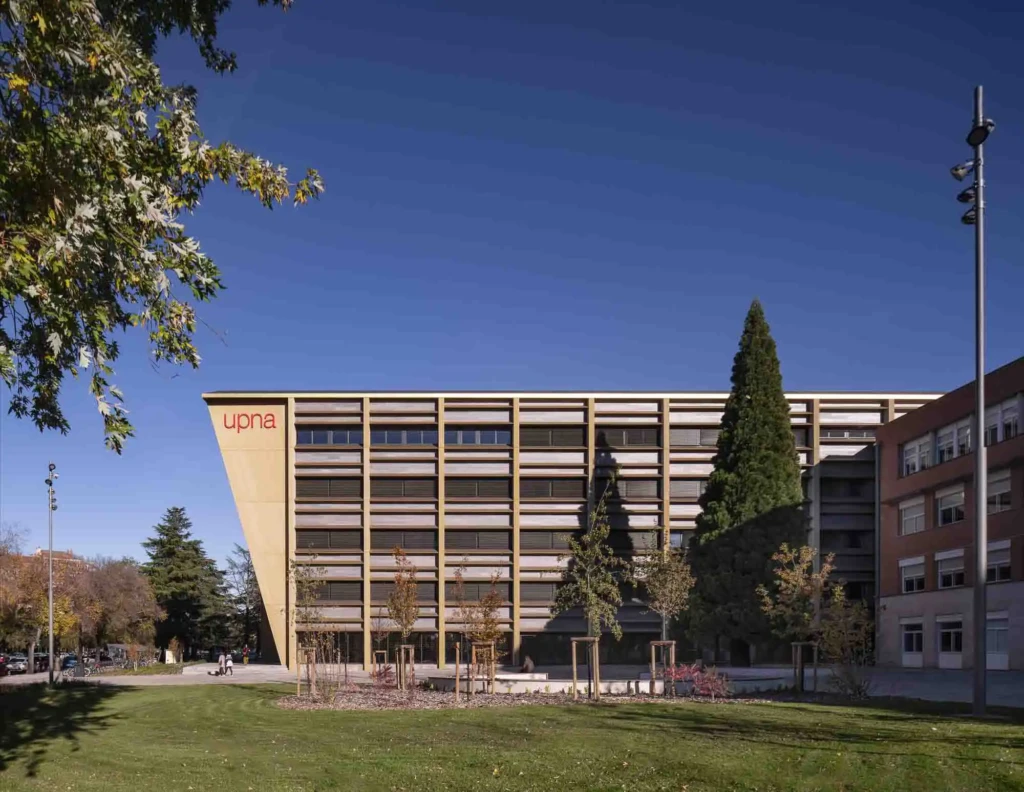
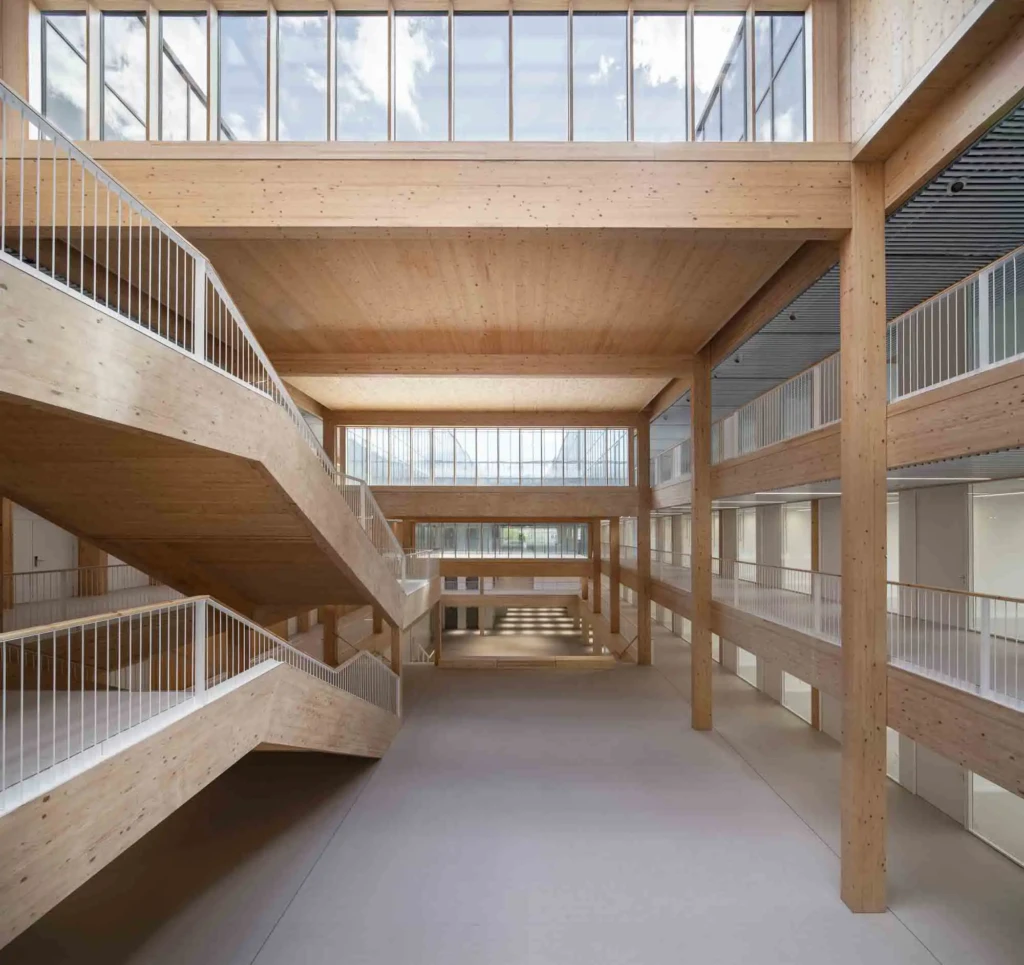
An iconic example is the new Faculty of Health Sciences of the UPNA (Pamplona), designed by Varquitectos and Bryaxis Arquitectos, the largest wooden structure in Navarre. It is a positive energy and 100% electric building. “It has a large atrium that serves as a meeting place for students and an outdoor garden as a climate refuge, integrating environmental and social values,” Velázquez concludes.
Bioclimatic architecture as a basis
“The biggest advance has been the versatility to adapt to one climate or another ; it makes no difference whether you build a house in the Arctic Circle or in the Sáhara Desert, going to extremes,” explains Ander Echevarria. The key to this universal functioning lies in bioclimatic architecture.
In Spain, one of the biggest challenges is extreme temperatures. When Casa Sophia was being designed in Guadalix de la Sierra (Madrid), the team faced a harsh continental climate, with temperatures ranging from -15 °C to 43 °C. How does a passive house adapt to this environment? There was also another objective: “to demonstrate that the materials used in construction have a real impact on our health and on the health of the planet.”
With this goal in mind, natural components, free of formaldehyde or volatile organic compounds (VOCs), such as Finsa boards, were used while measuring air quality and emissions inside. Designed in 2016, recognised by the European Horizon 2020 program and built in 2021 in less than seven months, the house is a success story that demonstrates the potential of solar control and well-being with bioclimatic architecture.
Wood is a great ally in this paradigm shift. Beyond the environmental benefits, Sara Velázquez highlights its unique ability to create a sense of well-being: “With its scent, its warm feel, and its grain, spaces with wood acquire a special warmth.” For the architect, in the pursuit of healthy interiors, “products of natural origin have a lot to offer”.
The challenge of self-sufficient homes
The sector’s biggest challenge is economic, and it consists of designing to excellent standards at affordable prices. Faced with rising material costs and a shortage of labour, fitting projects into today’s high regulatory demands is the major challenge facing architecture professionals.
Where are we headed? Echevarría has dedicated more than two decades to the design of self-sufficient houses and sees a future that can be drawn in two directions :
- Industrialised structures: a commitment to modular systems of wood or steel instead of traditional brick to optimise deadlines and help curb energy poverty.
- Smart and healthy homes: the focus is on integrating advanced home automation to manage comfort autonomously, along with the use of natural materials such as wood to reduce the carbon footprint.
The change is already underway through projects based on four essential pillars: health, sustainability, energy efficiency and technology. This is the formula that articulates Casa Aura and Casa Zoe, the upcoming showrooms of Biopasiva Sustainable Construction. These new proposals demonstrate that living under self-sufficiency criteria allows homes to become true allies of our well-being.