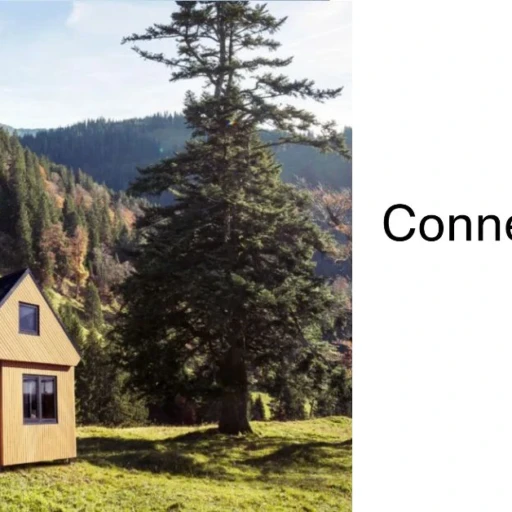
The current housing crisis is rethinking the very foundations of the spaces we inhabit. It not only affects prices or the availability of housing, but also the way we relate to the people around us and to natural resources. In this scenario, ecological cohousing has become prominent, a residential model that places collective life at the centre and proposes homes with a minimised environmental impact.
A model of Denmark in the sixties
Cohousing combines private spaces with shared areas and active community management. This is an architectural and social proposal that aims to redefine the way we live, from the organisation of the place to energy systems and the relationship between neighbours.
Cohousing is not a recent phenomenon or a passing trend. The first experiences emerged in Denmark in the 1960s as a response to individualistic residential models. According to researcher Patricia Millán Ortega, from the University of the Basque Country, this system proposes an alternative based on community life, cooperation and mutual care.
It’s not just about having common areas or reducing economic expenses. Cohousing involves consciously building community, which requires active involvement from those who reside in these projects. “It is important that the management of resources and space is done within the community: the people are the ones who manage it”, she emphasises. “The cohousing projects that I direct in my studio to are for people who want to challenge the current model of expensive housing”, she adds.
Millán’s research focuses on experiences developed in the Basque Country, including the Errenteria Community Housing for Young People (GEK), promoted by the City Council, and another case promoted by a residents’ cooperative. In both models, assemblies constitute the core of community life and allow decisions to be made about maintenance, the use of spaces, and collective activities.
To properly speak of cohousing, there must be a balanced combination of private and shared spaces. Neither an overcrowded dwelling nor a building with high-cost common services can be considered cohousing on its own. “There has to be a private housing section and a section for common areas”, the researcher explains. “The idea stems from doing a joint project”, she emphasises.
An architecture that enables community life
Cohousing is finding particularly favourable ground among older people, who often own a home that they can sell or use as a financial contribution to the cooperative. For young people or people without savings, however, this model remains difficult to access, even though in the long term it may be more affordable than traditional market options.
In Spain, co-housing is growing, especially in urban areas such as Madrid and Catalonia. Examples such as the Comunidad del Sol, in El Escorial; La Constel.lació, in Badalona; or EntrePatios, in Madrid, show how this model is beginning to consolidate. These latter ones function as a cooperative with the right of use, an intermediate formula between ownership and rental.
In Madrid, the Tomás Bretón building stands out, conceived as a residential project where the community is the backbone. “In cohousing projects like this, there is usually a greater involvement of the residents in the life of the building, from mere daily use, to the organisation of activities or the management of some shared services. The building acts as a catalyst for the common good”, explains Carlos Fernández-Marcote of the sAtt Arquitectura studio.
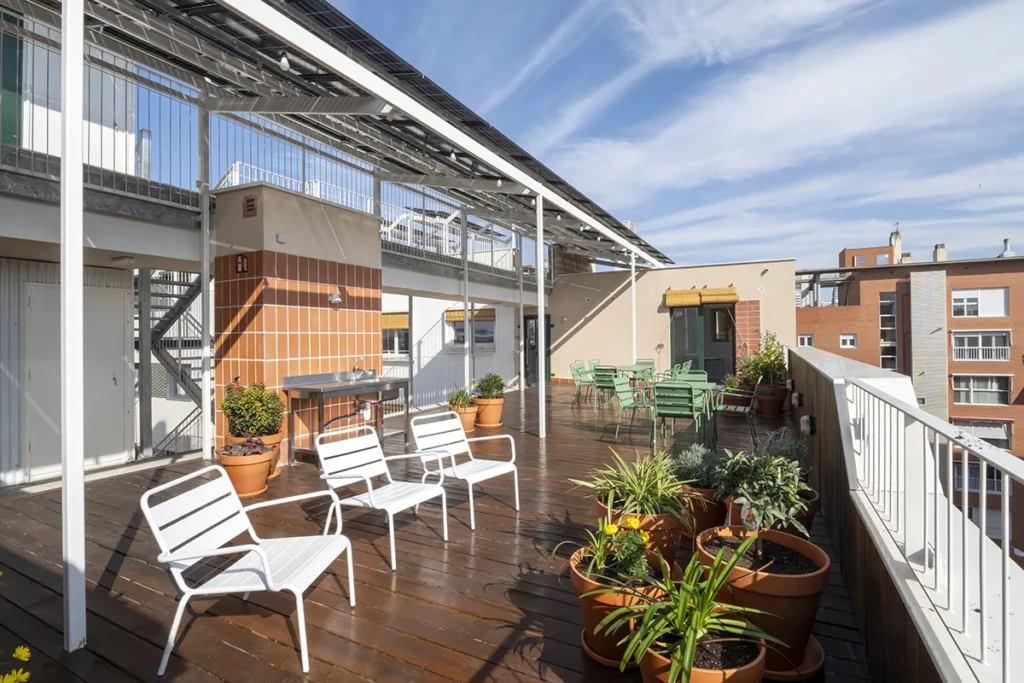
Shared areas function as an extension of the home. “It’s not just about adding common spaces, but about how they connect with each other and with the homes. The goal is for architecture to make community life possible, but for each community to decide to what extent it wants to activate it”, he explains. The building has a 105 m² shared terrace, multipurpose rooms, a patio, a garden, and a bicycle workshop. These elements not only promote coexistence but also allow for the sharing of equipment and the optimisation of resource use.
“In Tomás Bretón, architecture is designed to facilitate encounters without invading privacy. It is about reconciling and, at the same time, differentiating between the common and the private. Each home maintains its autonomy, but the building incorporates a series of common spaces that expand the possibilities of use”, adds Fernández-Marcote. This model also makes it possible to strengthen neighbourhood networks in dense urban environments, where community life has tended to weaken in recent decades.
Sustainability in ecological cohousing
The ecological component is another of the fundamental pillars of contemporary cohousing. Most of these projects focus on nearly zero-energy buildings and solutions close to the Passivhaus standard, a construction model that minimises heat loss and reduces energy demand.
In the case of EntrePatios, the building reuses greywater and uses energy from renewable sources. The Tomás Bretón building, for its part, combines several strategies: passive house design, high-performance thermal envelope, and efficient air conditioning systems. The main objective is to reduce energy demand before optimising active systems.
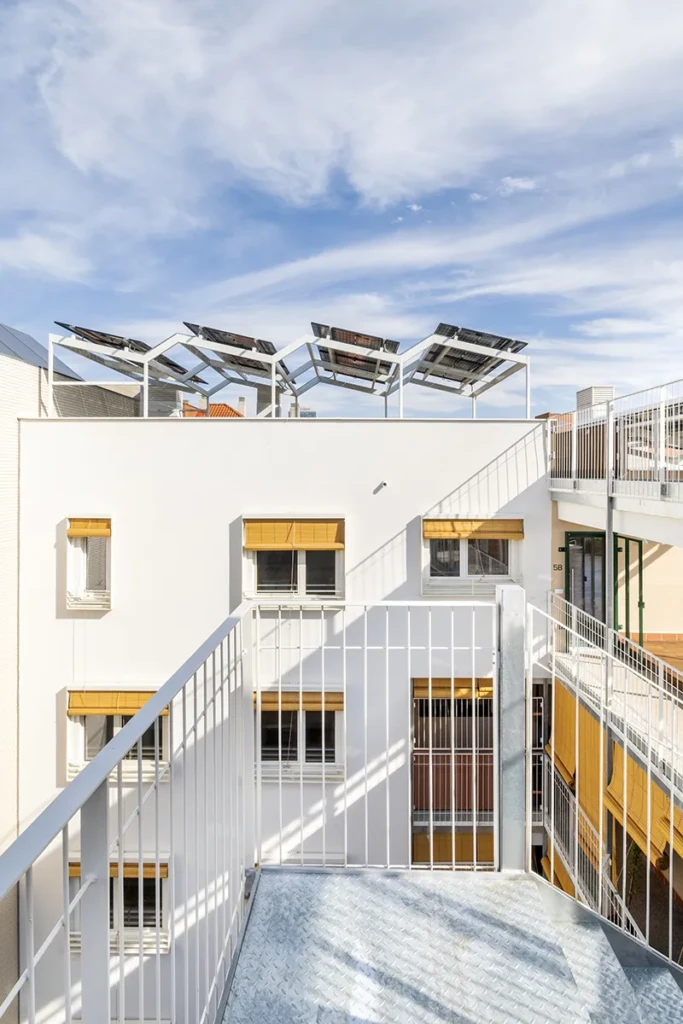 Another important aspect is the use of materials with low environmental impact, those that generate fewer emissions during their manufacture and that can be reused or integrated into circular economy processes. One example is FSC-certified wood, which guarantees responsible forest management.
In the Tomás Bretón building, the structure was built using CLT wood, a solution that significantly reduces the carbon footprint compared to conventional construction solutions.“Thanks to the wooden structure, 902 tons of carbon emissions have been avoided”, explains Fernández-Marcote. This is complemented by on-site photovoltaic energy generation, controlled mechanical ventilation systems, and a design that prioritises thermal comfort with reduced energy consumption.
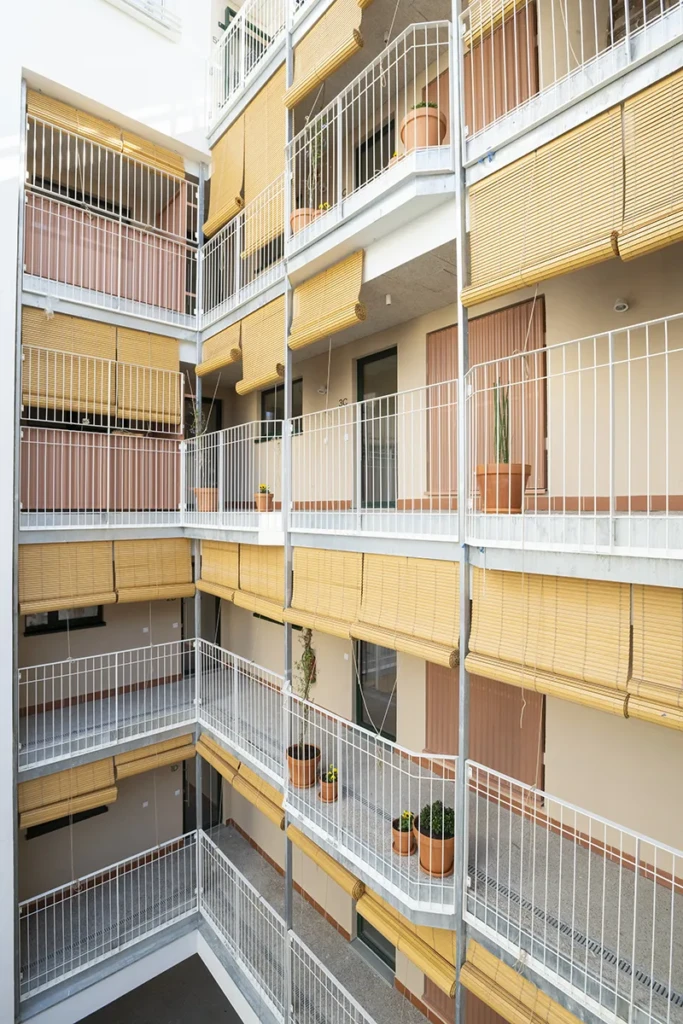
Although cohousing remains an emerging model in Spain, its growth potential is significant. “The key lies in combining architectural innovation with promotion and management models that allow for reduced costs and improved access”, says Fernández-Marcote. However, its expansion depends largely on institutional support and public policies that facilitate access to land and financing. “Climate pressure, the cost of housing and the need for more resilient urban models point in that direction. “What we see as innovation today will probably end up becoming part of the norm in urban housing“, he concludes.