Until 2025, the centre of Madrid did not have a collective residential building that combined a wooden structure and was certified as CO₂ Casi Nulo. The Tomás Bretón building was a landmark, featuring five floors with twenty apartments (one to three bedrooms), open communal and private spaces. It is a design by the studio sAtt Arquitectura, the first Spanish B Corp company in the architecture sector, the developer Distrito Natural , the construction company Woodea and the industrial partner for the timber structures, Madergia.
The trend towards decarbonised housing is growing, “but it is still in its infancy”, according to sAtt Arquitectura. “Unlike workplace or hospitality, the market continues to prioritise initial cost over lifecycle cost. Even so, regulatory pressure, European taxonomy and growing consumer awareness are accelerating the movement, so we believe that ecological criteria will cease to be a differentiator and become a standard”.
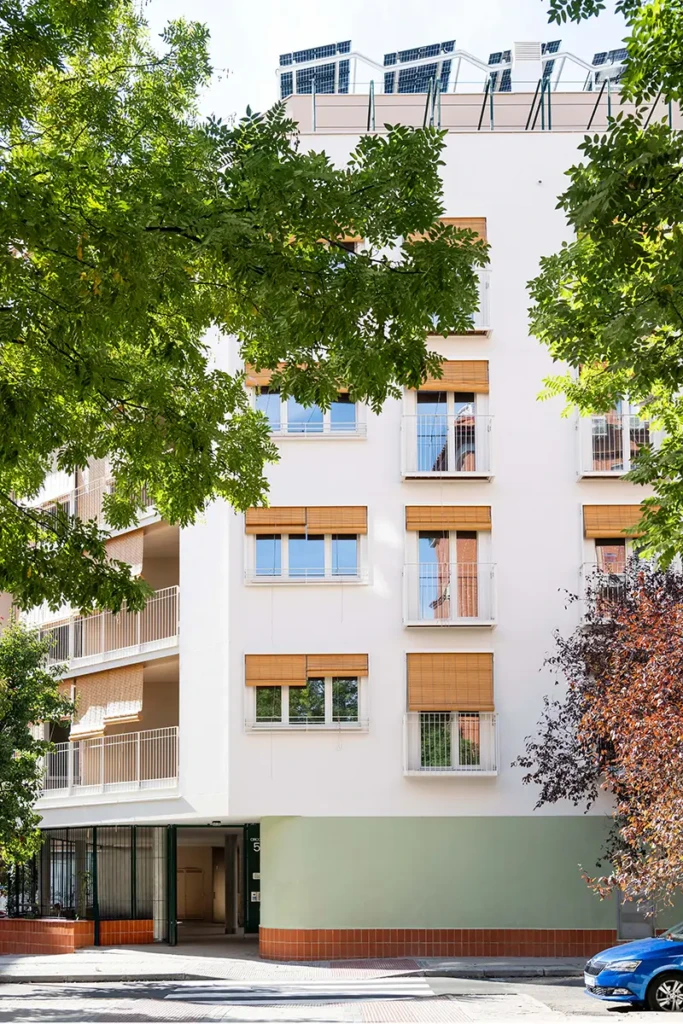
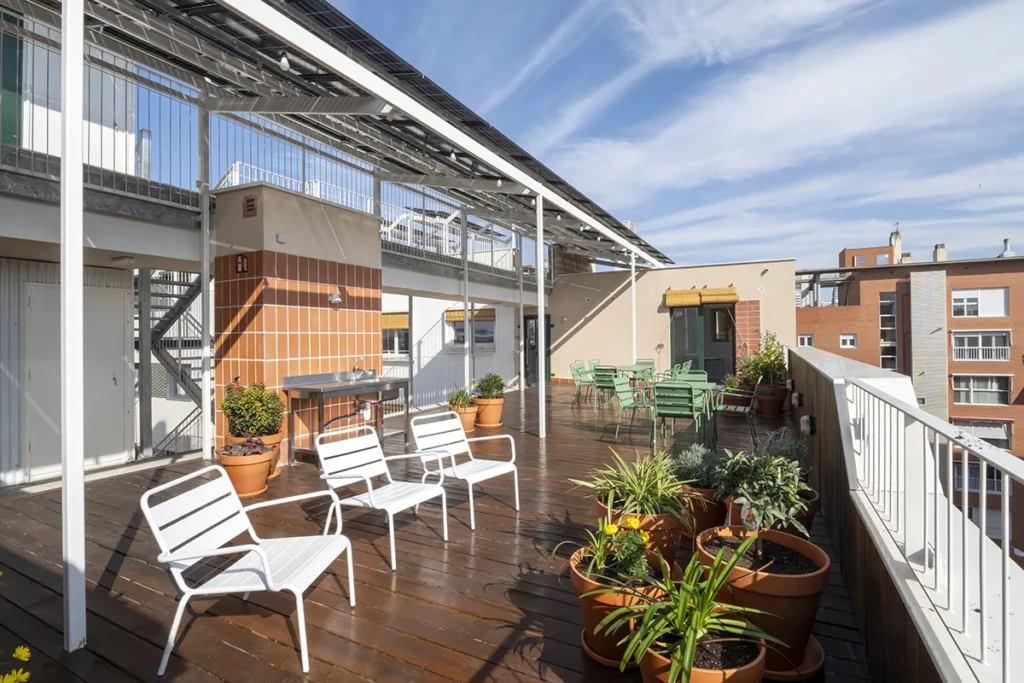
The Tomás Bretón building combines social, environmental and economic balance. In social terms, it is based on a model where the community is the backbone. “Participatory design has been used from the early stages: personalisation of homes, definition of common areas, governance and conflict resolution”, the architecture studio explains. The building features a 105 m² shared terrace, multipurpose rooms, a patio, a garden, a bicycle workshop and a common portico.
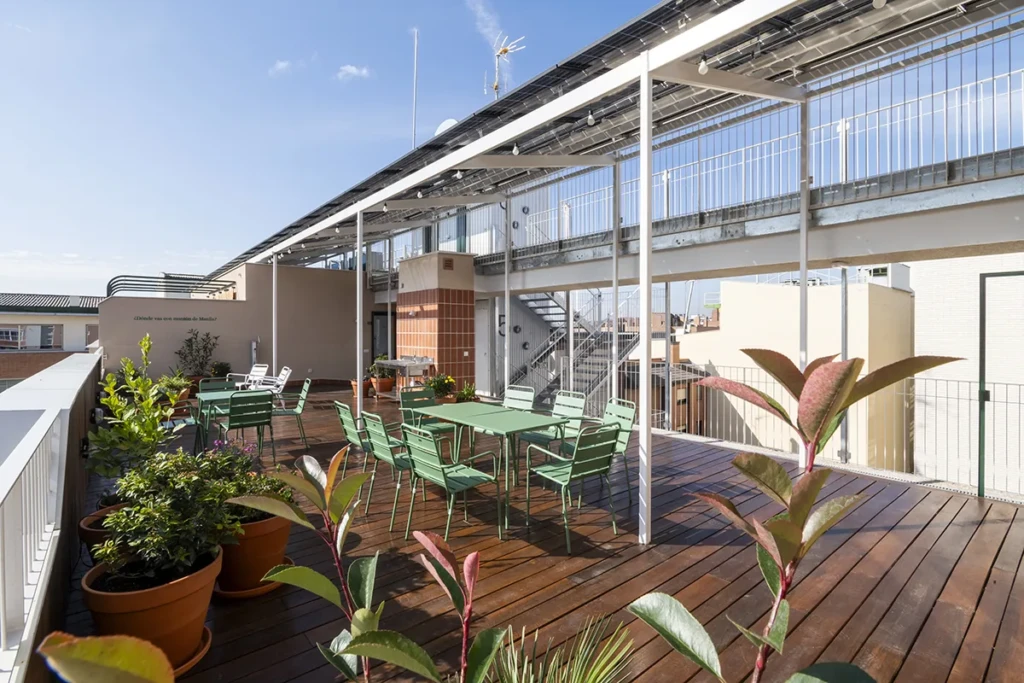
“In a context of unwanted loneliness, architecture can create places for meeting and care. It does not impose relationships, but it facilitates them, something that seems as important to us as the energy performance of the building”, they point out from sAtt Arquitectura.
Furthermore, homes allow for flexible configurations to adapt to needs over time: families, couples, professionals who work remotely, or intergenerational models. “This is because we believe that housing can no longer be designed as a closed product; it must be an adaptable system, prepared to evolve as those who inhabit the spaces do”, they conclude.
In environmental terms, the reduction of embedded carbon that CLT allows directly impacts the results of the Life Cycle Analysis and the overall emissions balance. Thanks to this structural strategy, the building has been able to achieve zero operational emissions and obtain the Nearly Zero CO₂ certificate from Ecómetro Association. Furthermore, the consistency between structural material, energy efficiency and full electrification reinforces compliance with the Passivhaus standard. “Without the structural timber, the final balance would not be the same”, they explain.
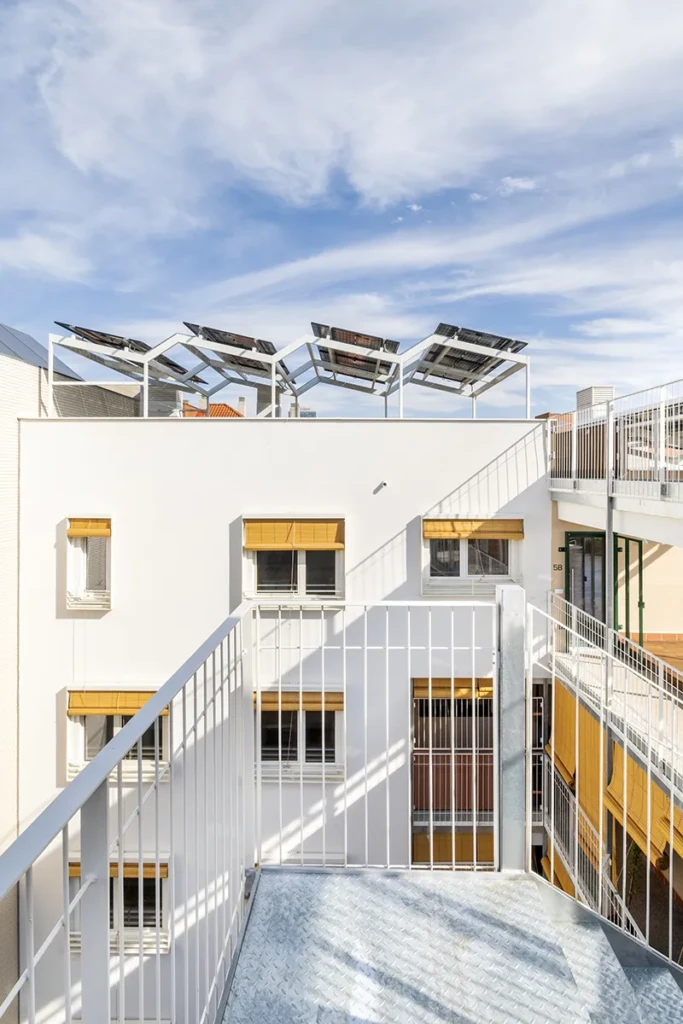
Xilonor‘s CLT has been decisive for three reasons: carbon, precision and technical consistency. The wooden structure has allowed the storage of 902 tons of CO₂, turning the building itself into a carbon sink. Compared to conventional concrete or steel solutions, the reduction of embedded emissions is in the building’s structure itself.
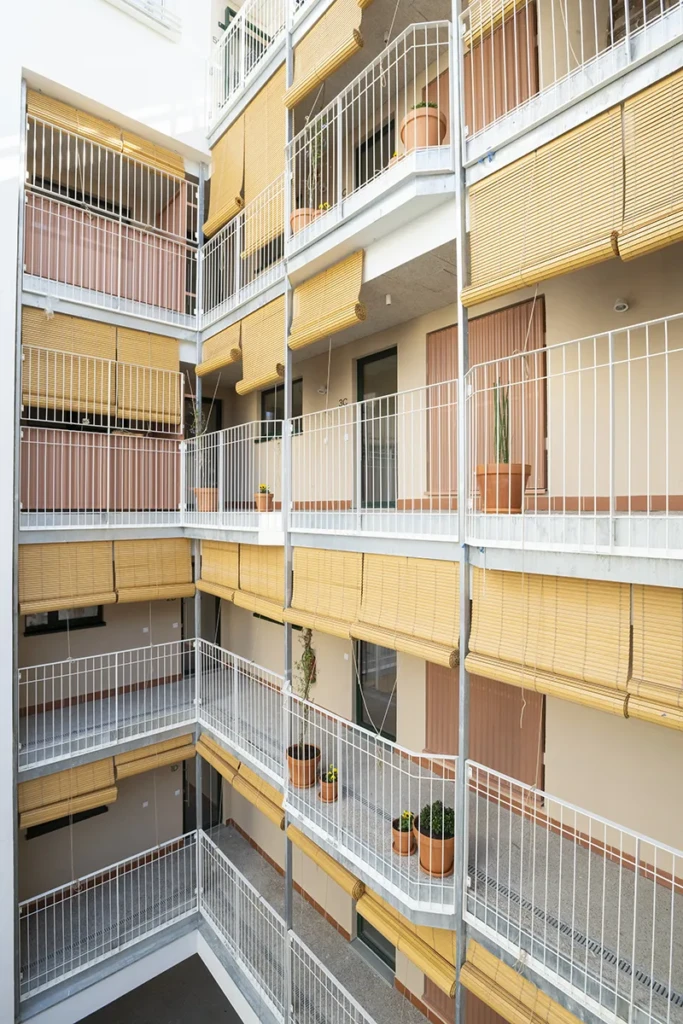
In terms of construction, cross-laminated timber provides lightness, less impact on foundations and a high degree of industrialisation, which improves time, reduces waste and increases the quality of execution. In fact, assembling the structure took just eight weeks.. Furthermore, CLT facilitates the elimination of thermal bridges and fits naturally with a Passivhaus standard. “In our case, the use of wood is a strategic decision aligned with our goal of decarbonising projects”, they argue.