Each year, the Swiss publisher World-Architects joins forces with the ARCHITECT@WORK organisation, and together they collaborate to organise an exhibition that revolves around a specific theme. In the sixth edition of this Project Wall, as they call it, the theme was the transformation. “The 44 selected global projects showcase the diverse ways in which existing buildings and landscapes can be transformed to give them new uses and adapt them to changing circumstances”, they explain on the website. This transformation, which translates into the rehabilitation of existing buildings and spaces, reflects current social changes and challenges, such as the environmental one, while also showing the flexibility of the built environment, which is not rigid but dynamic.
Through four of the selected projects, we explore four key ideas that are present in the transformation of spaces.
Do not erase history
Faced with an old building, there are two options: tear it down to build something new in its place or rehabilitate it, that is, study what is there, what can be used and what cannot, and imagine a new life from that starting point. In this part, it is important not to erase history. Often it is the local authorities themselves who prevent this erasure, forcing them to work with elements that, at first glance, may seem strange.
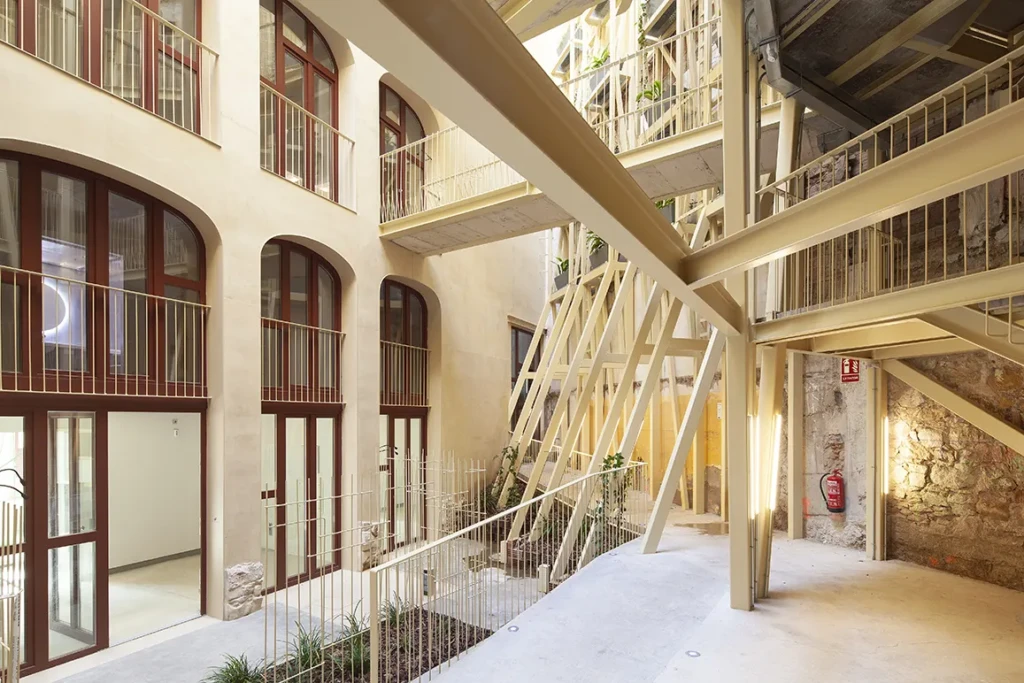
This is what Ángel Borrego, an architect at Office for Strategic Spaces, found when he started working on the La Carbonería building (Barcelona), one of the projects selected by World Architects. “The largest windows in the building, which we were forced to recover, overlooked a very narrow and small inner courtyard. I was just looking at two dividing walls that crossed a few meters away, it was something very ugly”, he recalls.
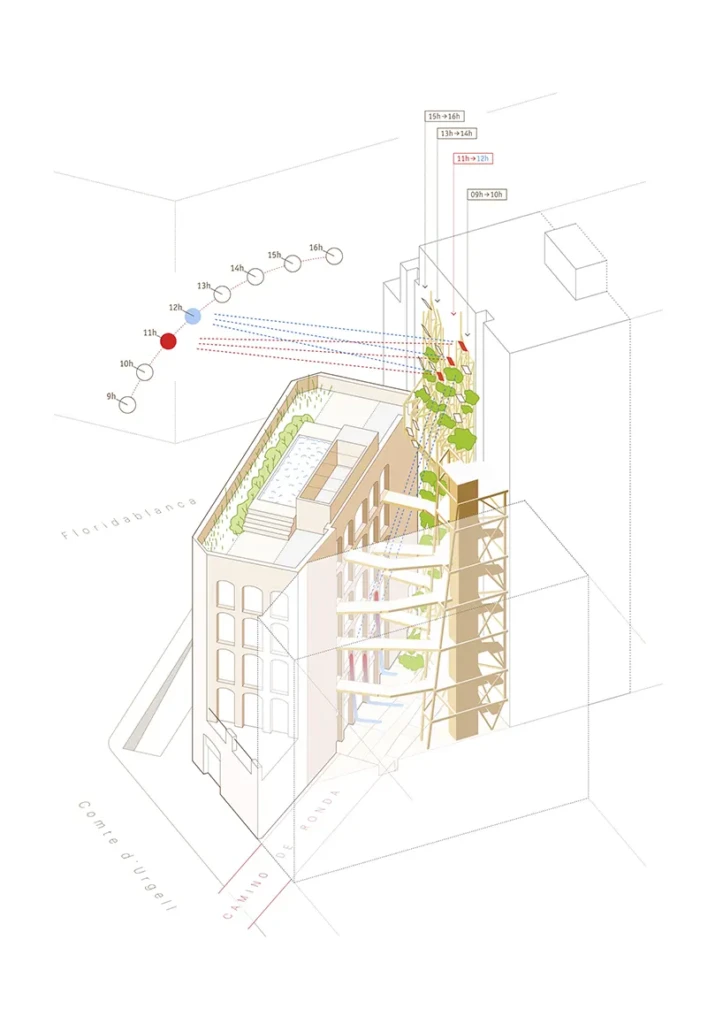
Why was a building constructed with such large windows that offered no view? It wasn’t due to a constructive extravagance. As Borrego explains, the answer lies with the developer who bought the original plot in the 19th century and found himself in the middle of an urban planning dispute between the Barcelona City Council and the Ministry of Public Works over how the city should expand. The City Council proposed a large boulevard that would pass in front of the La Carbonería building and give it privileged views. “Those large windows made sense when the developer believed they could overlook a boulevard. Since he didn’t know what they were going to do, he decided to put large windows on all the facades, just in case”, the architect recounts. But the Ministry’s option, the Cerdà plan, won, and there was no boulevard.
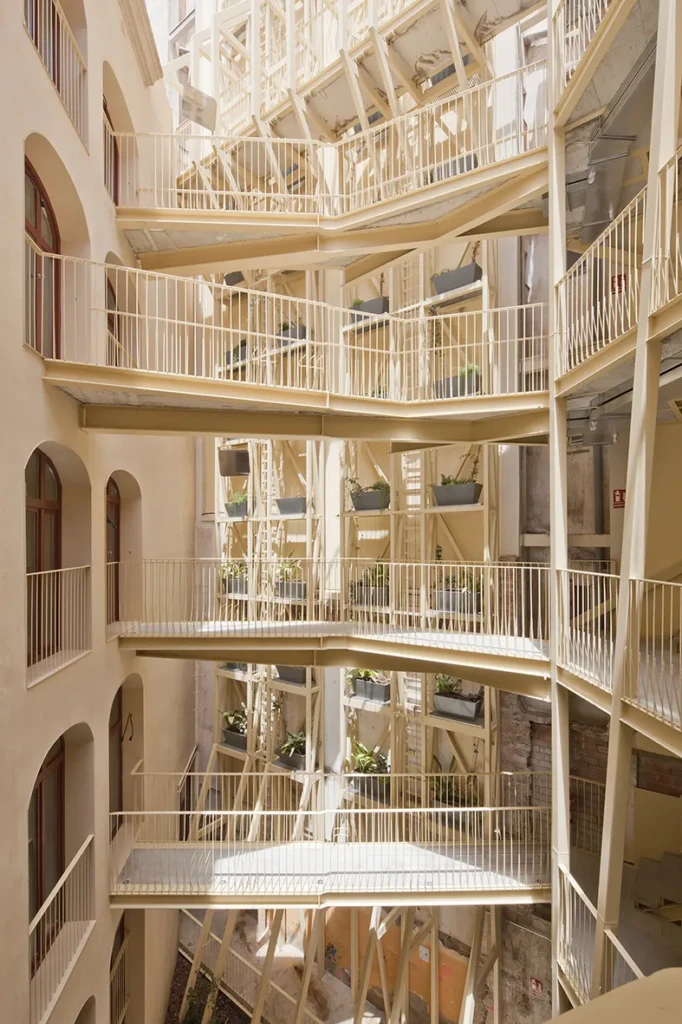
To respect that history and give new meaning to those windows that had to be recovered, to the courtyard and the medians, the rehabilitation project moved the communications core that had disappeared when the staircase was demolished in 2014 outside the building: now walkways emerge from those windows that make that interior facade visible and integrate it into the daily life of the building.
Thinking about who (and how) will move through the space
For Path Yard: Zhiruan Digital Art Gallery, located in the Tianqiao historical and cultural district in Beijing, the architecture studio CU Office encountered two very distinct spaces on the same plot: one was a square building made of brick, cement and a flat roof; the other, a small courtyard. The rehabilitation project respected this -as it was a protected area, the rehabilitated building could not be larger than the original and the oldest parts had to continue using traditional construction techniques- and continued with those two distinct spaces, but connected them to function as a whole (before they each had their own entrance).
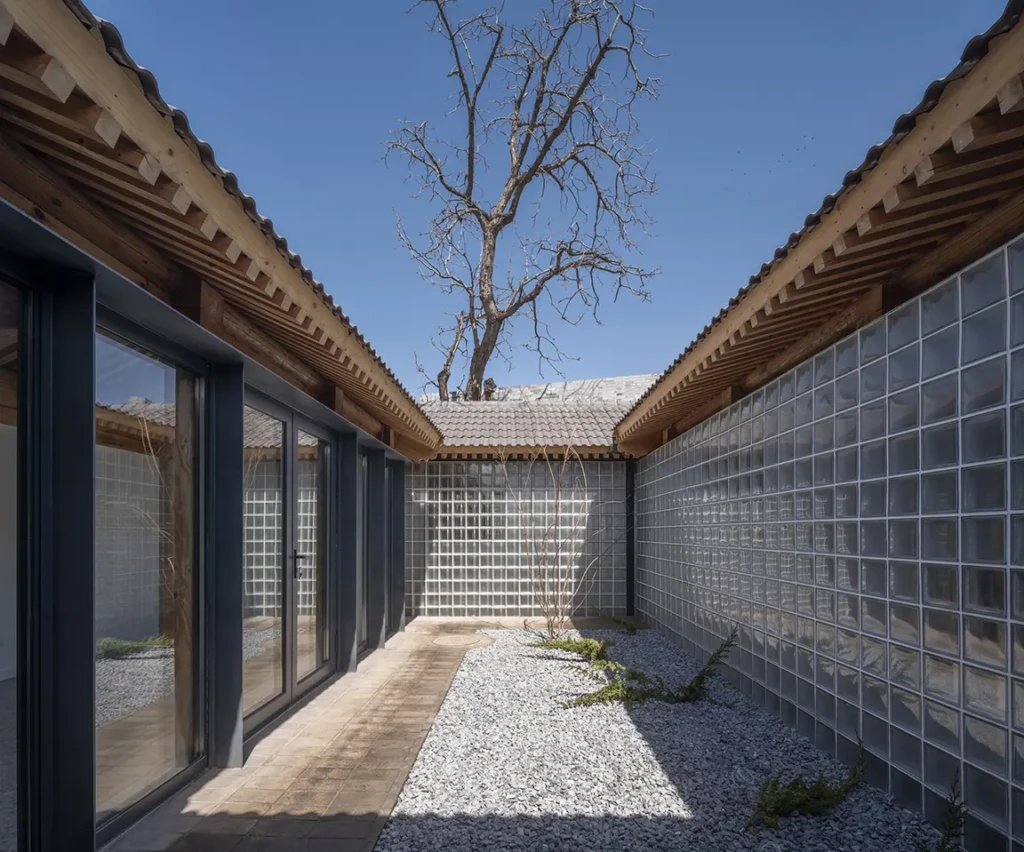
For that connection, thought was given to the people who would visit the gallery, and what the route they would take would be like. The result is a design that guides visitors clockwise, from an entrance on the facade of the square building, through which you reach the exhibition spaces of the covered courtyard, which at the end have an exit to the same street through which you entered. A glass brick wall visually connects the two spaces and changes the orientation of the courtyard.
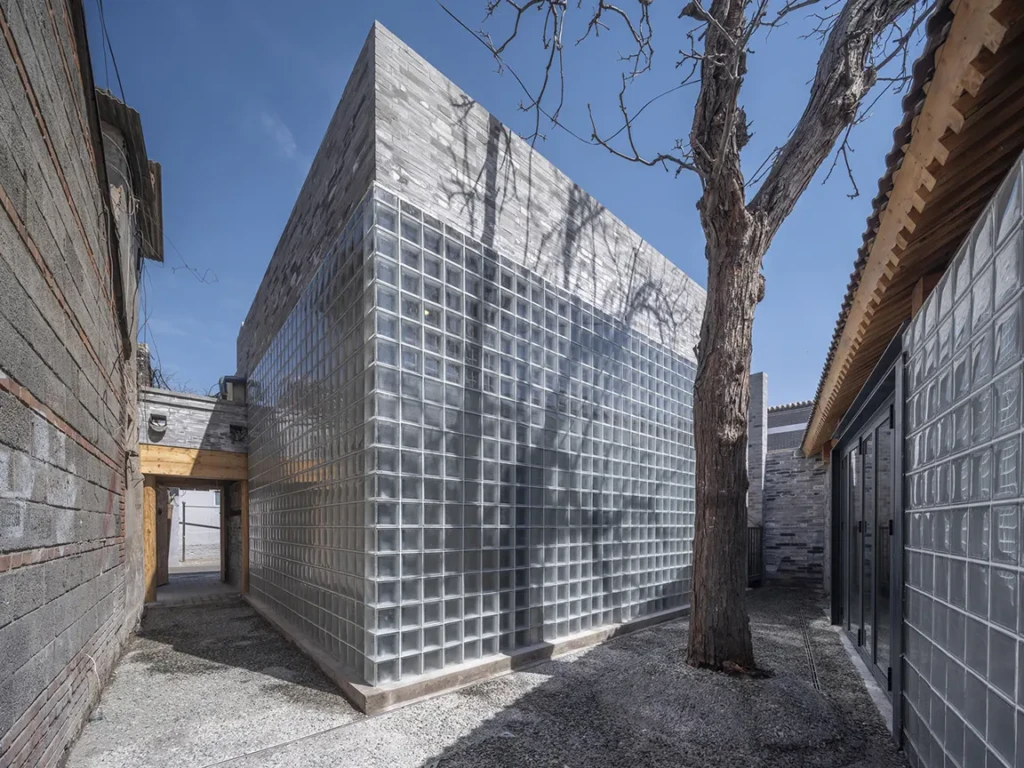
Other people who were taken into account in this project were those who live in the neighbouring buildings: almost all the exterior walls are shared, as well as part of the courtyard roof. Throughout the design and rehabilitation process, this shared space was respected, seeking a common improvement.
Revitalise the area and foster community
How to approach the rehabilitation of a large complex? That was the challenge for the German studio Kinzo when they set out to design a new life for the old Sony Center, located in the iconic Potsdamer Platz in Berlin. The goal was to revitalise the area and create a user-centred development, for which they carried out mobility studies in various parts of the large complex.
Ver esta publicación en Instagram
Based on the results, they decided to exploit the potential of semi-public spaces and activate communal areas. The goal began to emerge on the horizon: to turn the place into a meeting point, as well as an attractive location for businesses, shops and restaurants.
With all this, they manage to reintroduce an underutilised area into the context of the city from an atmospheric, economic and infrastructure point of view, taking advantage of available resources and promoting the sustainability of the project.
Respect for the environment
Another point shared by all the rehabilitation projects selected by World-Architects is to integrate naturally into the environment: it should be noticeable that it is a rehabilitation, yes, but it should not clash with the surrounding buildings and spaces. A clear example of this is the Wohnen im Quartier Säge project (“living in the Säge neighbourhood”), winner of the 2025 Baukulturpreis, a prestigious award in the German sphere within the construction sector.
Ver esta publicación en Instagram
Säge district, in the historic centre of the German city of Hohenems, still maintains its traditional character, with remains of old craft workshops, surrounded by two streams and with the town’s castle watching from a hill. For the residential building constructed on the site of a former wagon manufacturing workshop, Ludescher + Lutz Architekten always had in mind the goal of finding that balance between the avant-garde of something new and not clashing with a neighbourhood where history is palpable at every turn. The building’s facade features a wooden lattice that gives it a sculptural character and protects residents from being seen from the street.
What has been awarded for this project (and the reason why it was selected for Project Wall) is not only the design and construction itself, but also its integration into the urban fabric: it contributes to the identity of the neighbourhood and is a demonstration of a sustainable building culture typical of the area. “The cultural environment is our greatest common heritage in the Alpine region. In harmony with their surroundings, good buildings enhance the value of a place. We’re doing our bit”, the architects say on their website.
Ver esta publicación en Instagram
These four key elements, shared by all four projects, are joined by another cross-cutting element that is always present: sustainability. Not surprisingly, the overall theme of the event in which this exhibition on transformation was framed was decarbonization. Strategies such as the use of materials like wood or the use of what already exists (in La Carbonería, for example, after an energy study, they discovered that they only had to replace the roof) connect with a historical past and, at the same time, allow us to imagine a future in which these buildings continue to contribute to the urban landscape and social fabric.