
Amsterdam aims to halve its use of new raw materials by 2030 -compared to 2016- and become a fully circular city by 2050. To reach that goal, we need to focus on how much material a building consumes, how long it can be used, and what happens to its components when needs change. The municipal strategy proposes using natural materials, incorporating reuse into projects, and applying circular design criteria in new developments.
In that context, Amsterdam is switching to wood, at least in a strategic part of its public facilities. The Innovation Partnership School Buildings program plans to build between nine and thirty high-quality, flexible, and sustainable schools over the next ten years. To this end, CircleWood -an alliance of design, construction and engineering companies- has developed together with Studio A Kwadraat and OMA a modular wood system that allows the production of different buildings based on a common construction logic.
From prototype to city
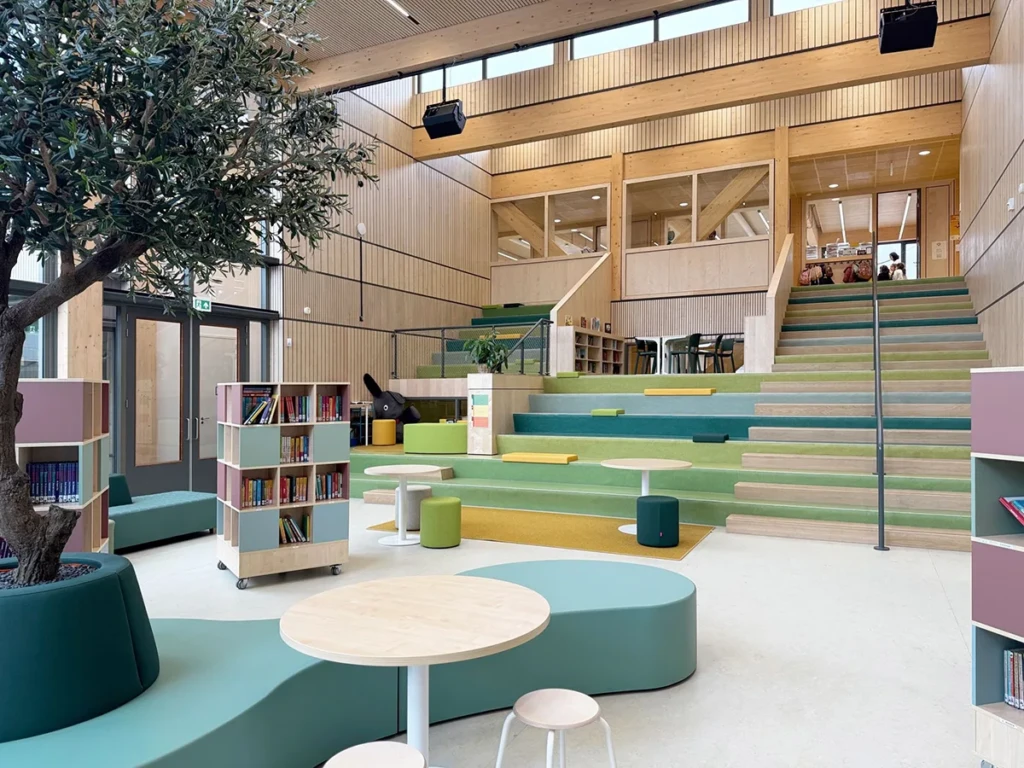
The project is no longer in a merely experimental phase. Basisschool Wisperweide, in Weesp, is the first school completed with the CircleWood system. The building was delivered in November 2025 after ten months of construction. The overall program remains open, but its first application is already finished and in use. The challenge now shifts from demonstrating that the model works to perfecting it and replicating it in the following schools.
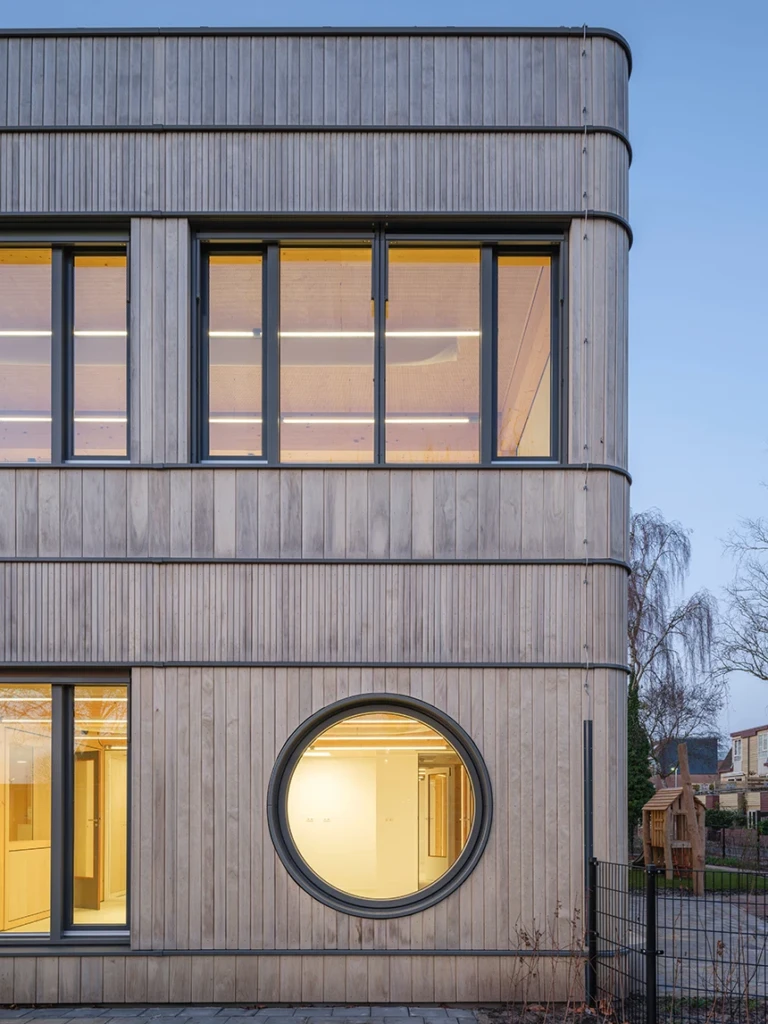
Wood is key because it allows circularity to be addressed as a system, combining standardised columns, cross-laminated timber floors, recycled steel joints and flexible wooden partitions. Prefabrication facilitates assembly, while the independence between structure and interior divisions allows for modification of classrooms, corridors and common areas without destructively intervening in the building.
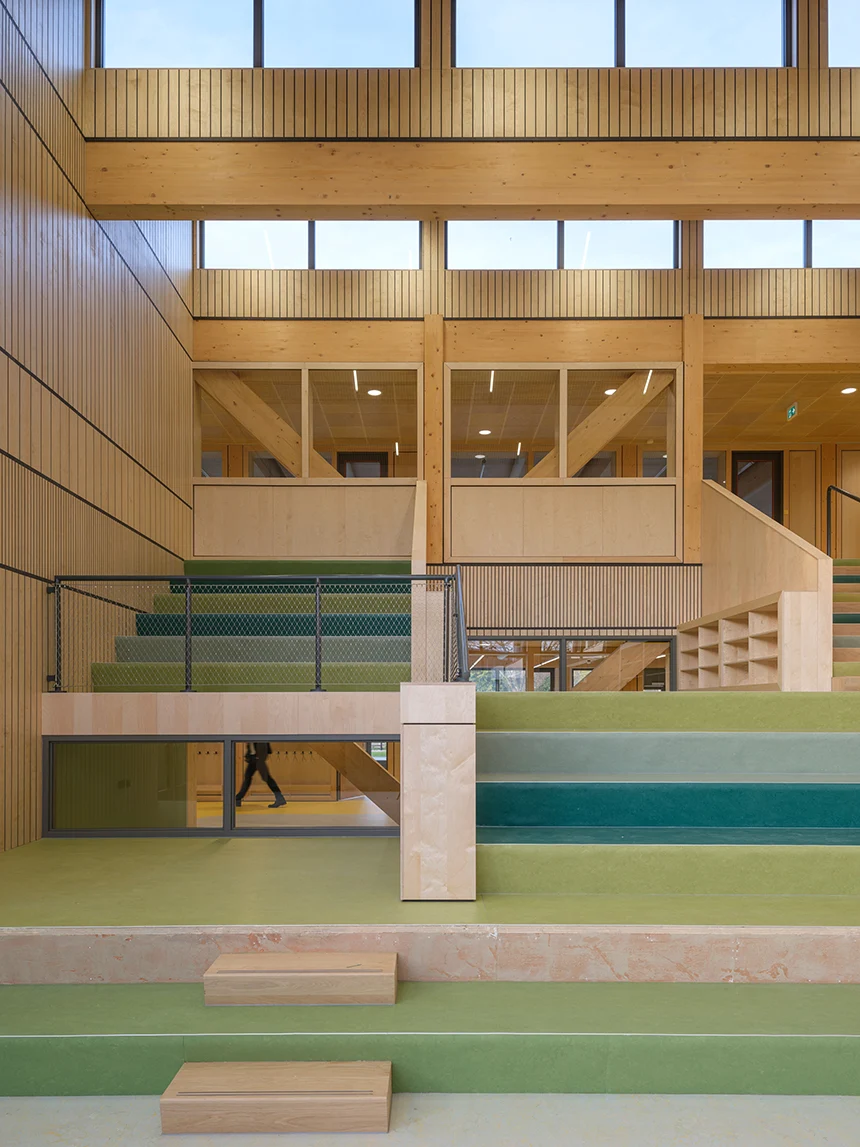
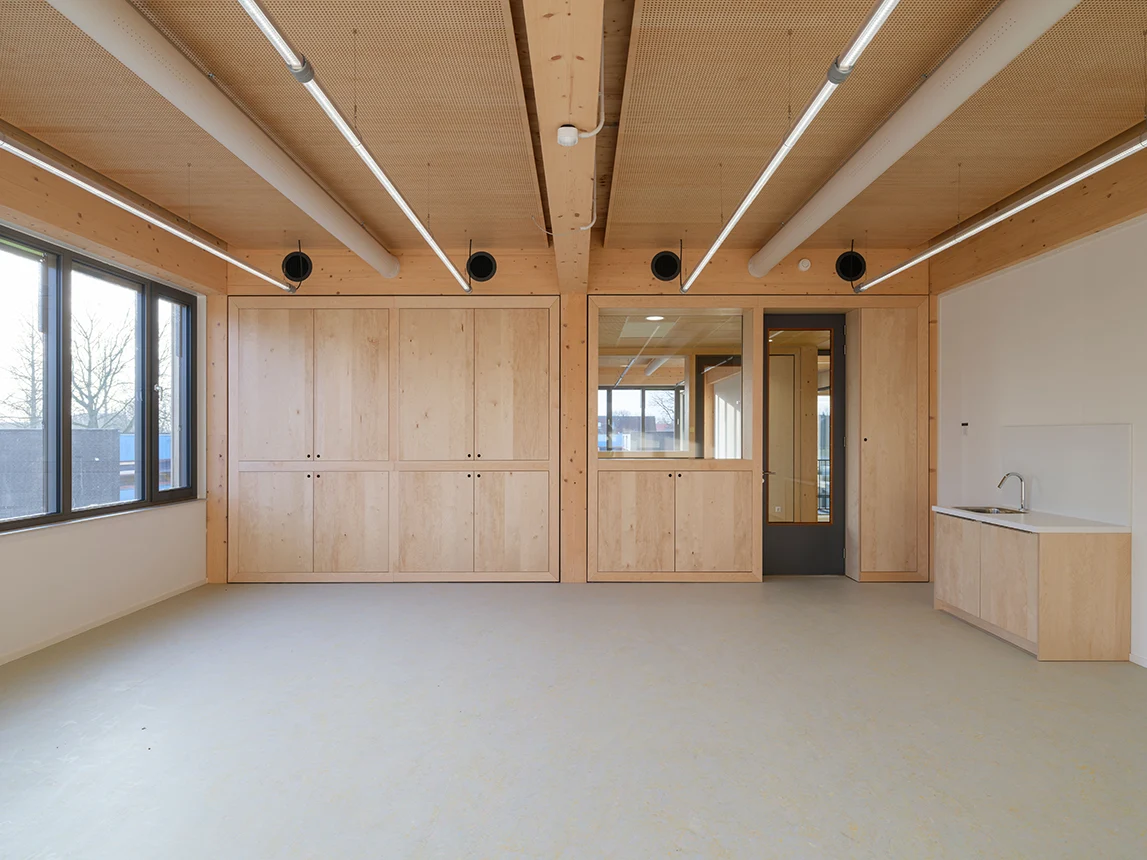
Wisperweide can even be expanded, as the north facade is designed to be removed and the structure extended with new modules. Their bio-based partitions can also change function and become cabinets, display surfaces, or quiet zones. Sustainability, therefore, lies in building with a renewable resource, but also in avoiding future demolitions.
Engineered wood can be key to the ecological transition, provided it comes from responsible forest management and is incorporated into systems designed to last, be disassembled and reused. The reduction in global warming potential of solid wood buildings compared to conventional systems ranges from 19% to 41% in the phases between extraction and factory exit, and from 34% to 51% when considering the complete life cycle, according to a review published in 2026. The figures vary depending on the origin of the wood, the transport, the calculation methodology and the final destination of the components, but they reinforce one conclusion: sustainable urban planning will depend on building with renewable resources and keeping materials in circulation for longer.