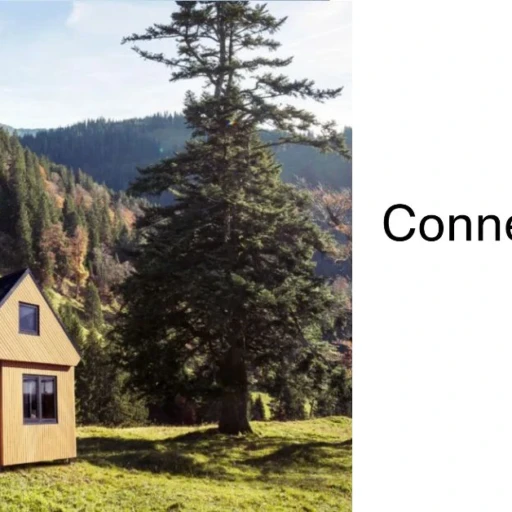
In the parameters of contemporary architecture, comfort is no longer perceived solely through the visual. Acoustics, the way in which a space absorbs, modulates, and manages noise, has become a key factor in the design of healthier, more efficient, and more livable environments.
Acoustic solutions are evolving towards more sophisticated proposals, and innovation in sound materials is consolidating itself as a key element for building more balanced, efficient and sustainable spaces in the long term.
Therefore, we spoke with Sandra Höll, sound expert at Selador, an emerging brand within the established industrial group Vöhringer, which is redefining the role of acoustic materials through customisation, production efficiency and a technical approach to sustainability.
Selador’s solutions comply with multiple technical and environmental certifications. What role do they play in their international positioning?
Certifications are fundamental because they function as a common language in the global market. Our products meet demanding standards in sound absorption, fire safety and durability, guaranteeing not only their performance, but also their reliability in different regulatory contexts.
Furthermore, we use materials such as 100% recyclable PET and certified fabrics, which reinforces our commitment to sustainability. This set of certifications allows us to participate in international projects where transparency, traceability and regulatory compliance are key factors in decision-making.
How do you ensure continuous compliance in a constantly evolving regulatory environment?
For Selador, quality is a constantly evolving process. We have an in-house laboratory and an integrated system that combines quality control, regulatory monitoring, and technological adaptation.
A specialised team continuously monitors European and international regulations, allowing us to anticipate new requirements. In addition, we carry out periodic calibrations, validate testing methods before implementing new standards, and are committed to the continuous training of our team.
This approach allows us not only to comply with current regulations but also to proactively prepare for the future.
Sustainability is one of the main pillars of the sector. How does this translate into your materials?
It is reflected from the beginning in the selection of materials. We are committed to solutions based on recyclable PET and fabrics with recognised certifications, which guarantee both their performance and a lower environmental impact.
In addition, we have Environmental Product Declarations (EPDs), which provide transparency about the life cycle of our materials. For architects and designers, this information is increasingly relevant, as it facilitates more informed decision-making in project development.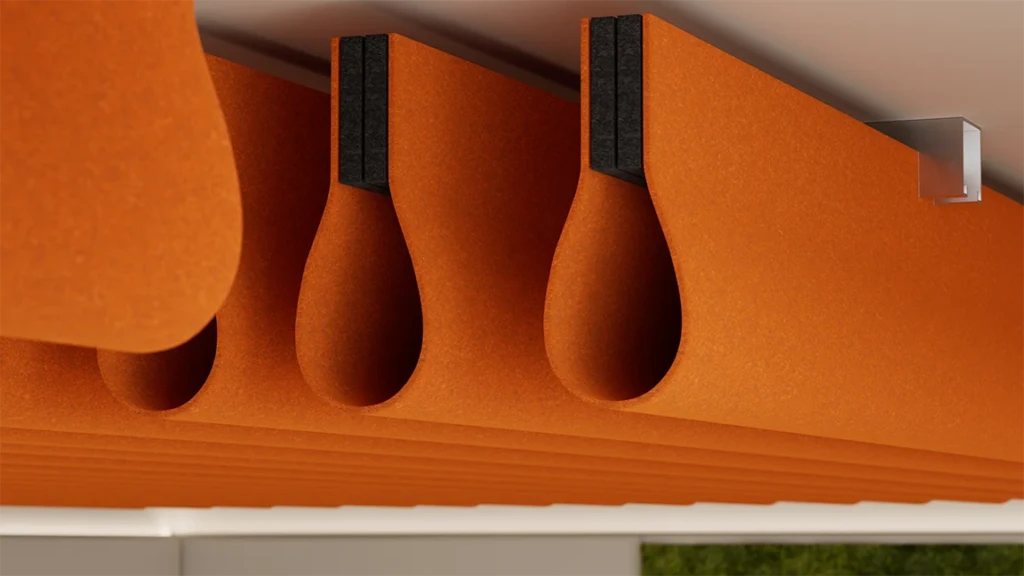
As a new brand within an established group, how have you validated your business model?
We have adopted an agile approach, inspired by methodologies such as lean startup, which allows us to validate our solutions in early stages through continuous learning cycles.
We work directly with potential clients through interviews, pilot projects, and initial agreements that have allowed us to confirm the real demand. At the same time, we analyse the market and define our pricing strategy based on perceived value. In terms of profitability, we leverage the group’s synergies, continuously optimise our processes, and monitor key indicators that ensure sustainable growth.
How can the Made in Germany standard be maintained in a context of growth?
It is one of our pillars. Maintaining this standard involves combining industrial tradition with technological innovation. We are committed to digitisation and process automation, which allows us to reduce errors and guarantee consistent quality. We operate in accordance with recognised industry standards and continue to invest in training to ensure the evolution of technical knowledge. Production in Germany remains central, both as a guarantee of quality and as a hub of innovation.
Your supply chain is based on European suppliers. What advantages does this model offer?
The proximity provides a great advantage in terms of resilience. We have a diversified network of European suppliers, which reduces risks and allows us to respond quickly to changes in demand.
Furthermore, we maintain strategic relationships that facilitate the scalability of production. The use of digital tools provides us with real-time visibility, allowing us to anticipate potential bottlenecks and optimise the supply chain. This model combines stability, flexibility, and compliance with environmental and social standards.
How can a design solution be scaled without compromising sustainability or acoustic performance?
The key is to approach sustainability as an engineering challenge. It’s not just about selecting suitable materials, but about designing processes that allow for efficient large-scale production. We work with recyclable materials and automated processes that guarantee both aesthetic quality and acoustic performance. In this way, we are able to transfer high-value solutions to an industrial context without compromising their coherence.
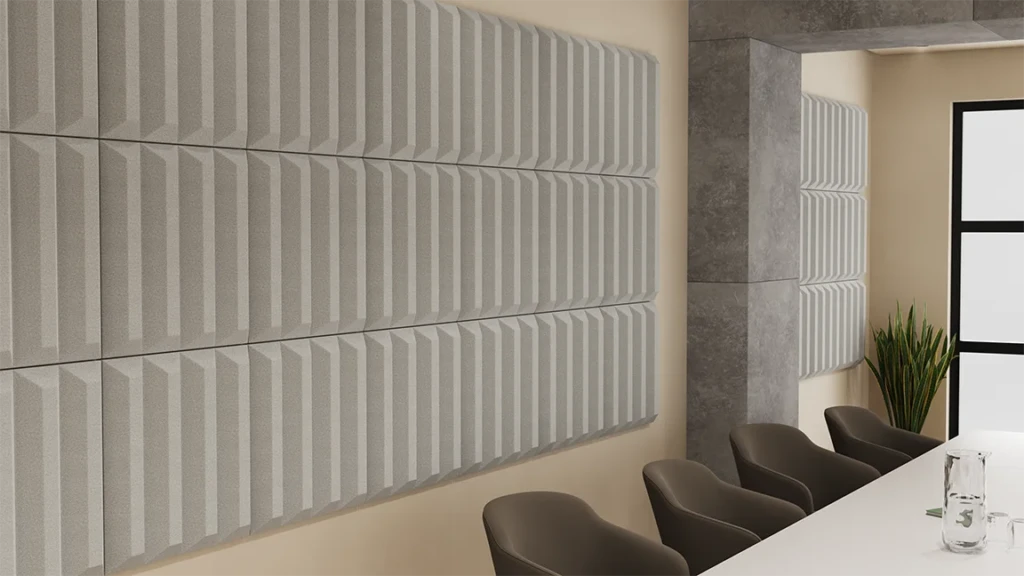
Personalisation is a central part of Selador’s proposition. How do you balance flexibility with efficiency?
It is an essential balance. We have a team dedicated to managing customised projects and responding to the specific needs of each client. At the same time, we continuously optimise our production processes to improve efficiency and control costs. This allows us to offer tailored solutions without sacrificing competitiveness. For us, customisation is not an exception, but a structural part of the product.
What is the evolution of spaces in acoustic terms?
We observe an evolution towards a more holistic conception of comfort. Acoustics ceases to be a secondary technical element and is integrated from the earliest stages of design. This implies greater collaboration between materials, architecture, and engineering. In this context, acoustic solutions provide both performance and aesthetic and environmental value. Our goal is to contribute to this evolution by developing materials that improve how spaces sound and how people live in them.