What do we look for in a vacation spot? Depending on the type of vacation we’re talking about, each person will have a different answer: some will primarily seek a place to disconnect, a place that conveys calm and tranquillity, but others, especially in more urban environments, will prefer a place that is very integrated into the city we are going to explore. Even so, globally and especially since the pandemic, the search for peace seems to be all around us.
Trends to break them
The world of trends is always an interesting place from which to observe how the behaviour and preferences of society (in general or by groups) change. It is also very broad and very varied. The 2026 report by the strategic design company Blackbot, for example, mentioned three major trends in tourism for that year: the inclusion of pets, algorithmic travel, and the reversal of the carbon footprint (travel with a positive impact). McKinsey, focusing specifically on hotels, speaks of a future marked by sustainability, personalisation, and technology.
How does all this ultimately translate into the spaces we choose to spend our holidays? This journey from the abstract to the concrete takes into account, according to the London School of Design and Marketing, all the variations in culture, technological progress and consumer behaviour to find the solution that best suits the current moment. It should be attractive, read as contemporary, and also be economically sustainable.
In the case of holiday destinations, this evolution is reflected in, for example, the abandonment of rules that until recently were commonplace. “Previously, it was strongly stipulated that designs in light tones were geared towards vacation hotels, coastal hotels, and designs in darker tones, such as walnut woods, were more focused on urban hotels”, says Guillem López, consultant in the Hospitality sector for Finsa. Now that distinction is not so marked. We review the six main trends.
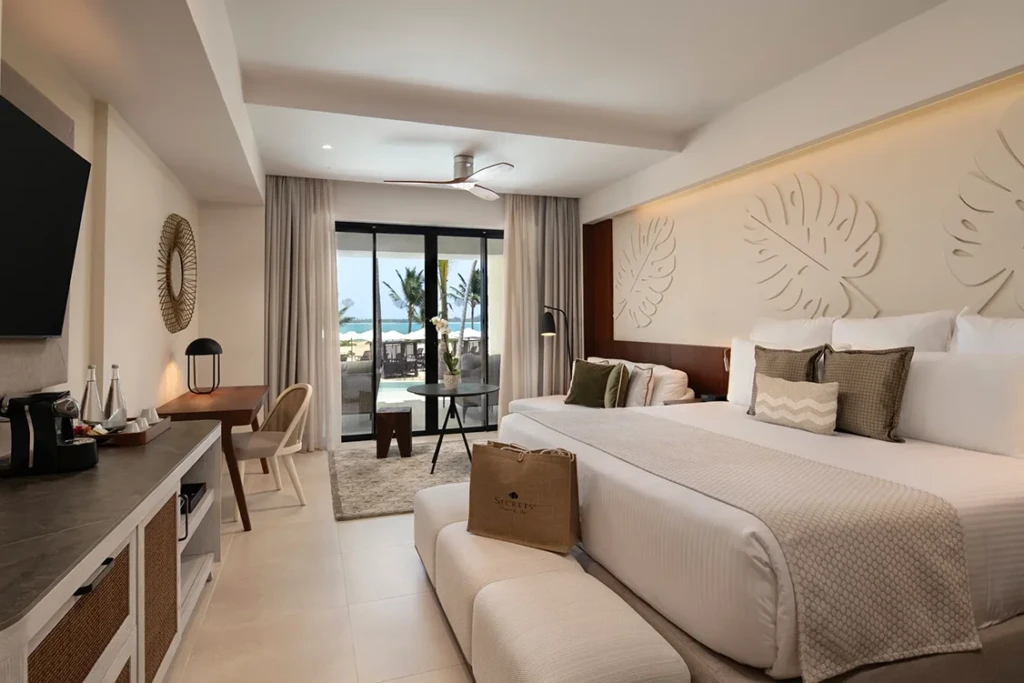
1: Virtue lies in the middle ground
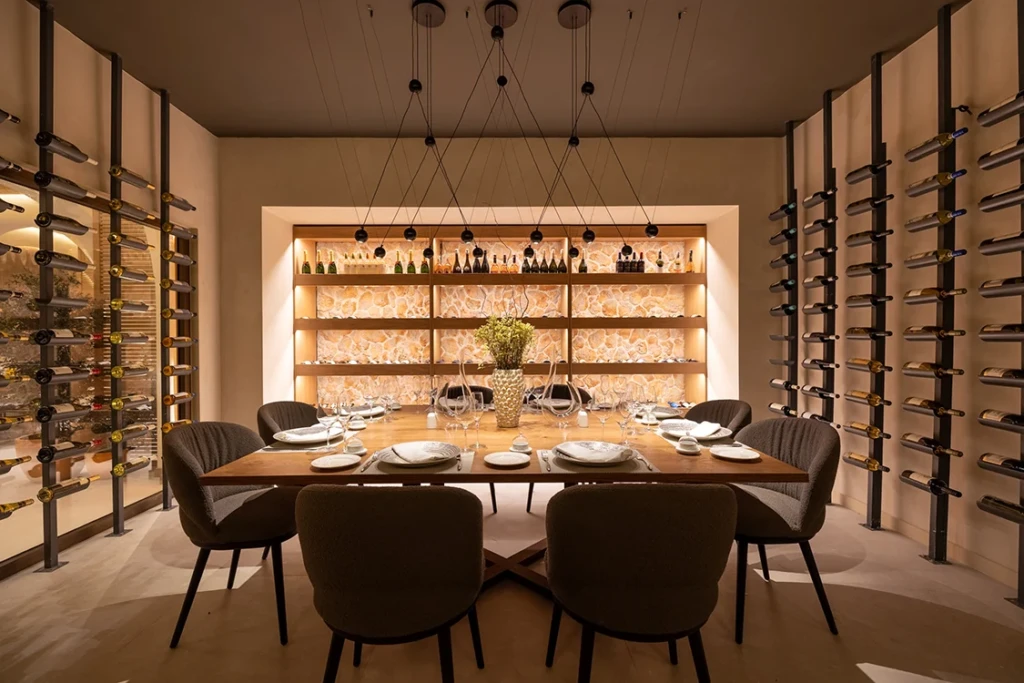
This is precisely one of the macro trends that López sees in terms of design and materiality in vacation spaces. “The idea of light tones for coastal hotels and dark tones for urban hotels is no longer the case. Now everything is more mixed, it’s richer“, he notes. In fact, as a general rule (there are always exceptions), the trend is towards medium tones: medium tones of oaks and walnuts, which are still “the most popular species”.
2: Touch wood to calm down
One of the major global macro-trends in almost everything, as a response to the turbulent times of current geopolitics, is the search for calm, peace and tranquillity. In holiday spaces, this is reflected, among other things, in the choice of woods with soft and linear designs. “Woods with knots or rustic textures are not at all fashionable, quite the opposite”, says López. Those somewhat aggressive woods would clash with the peaceful refuge we are seeking.
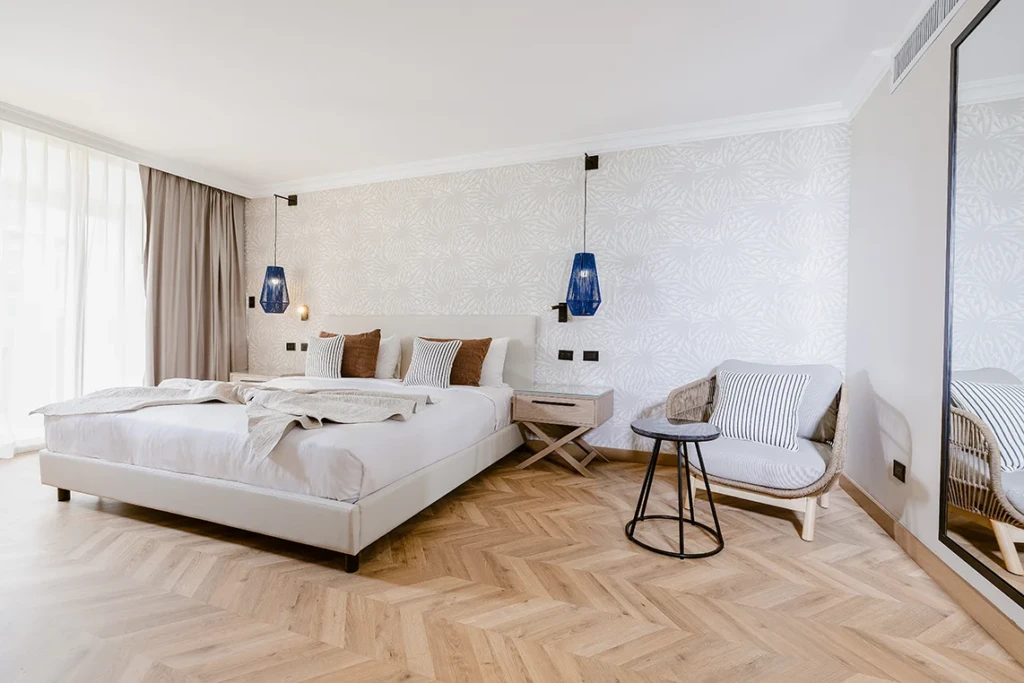
3: In full colour
“Colour is here to stay”, the expert points out. After years of minimalism, neutrals and clarity -something that is still seen in many spaces- colours have once again reclaimed their space in our vacation spots. It is mainly about greens, which have been creeping into hotels for some time now in their softer and medium shades (in line with that search for calm) and blues, which never lost their association with the sea and the coast. Both colours are also combined in turquoise and, completing the palette, light greys and sand colour help to give the vacation space some life, but always from the opposite of chaos and stress.
4: Hypertextures to personalise the experience
That idea of an oasis of tranquillity does not necessarily mean avoiding all types of curves or textures. Used in moderation, these bring variety and authenticity. “It’s not about the rough textures we saw years ago”, López explains, “but something much softer”. These textures appear on all kinds of materials, such as tile, textiles, and wood.
5: Outdoor areas to renew our interior
One of the impacts of the pandemic and lockdowns on consumer preferences is that spending time outdoors is now valued much more. In the world of design, this translates into taking much better care of the outdoor spaces of the places where we spend time, both in our home and, of course, our holiday accommodation. The aim is to create a sense of continuity between the interior and exterior, a kind of marriage of materials, whether for furniture (a wardrobe, the headboard) or for the floors.
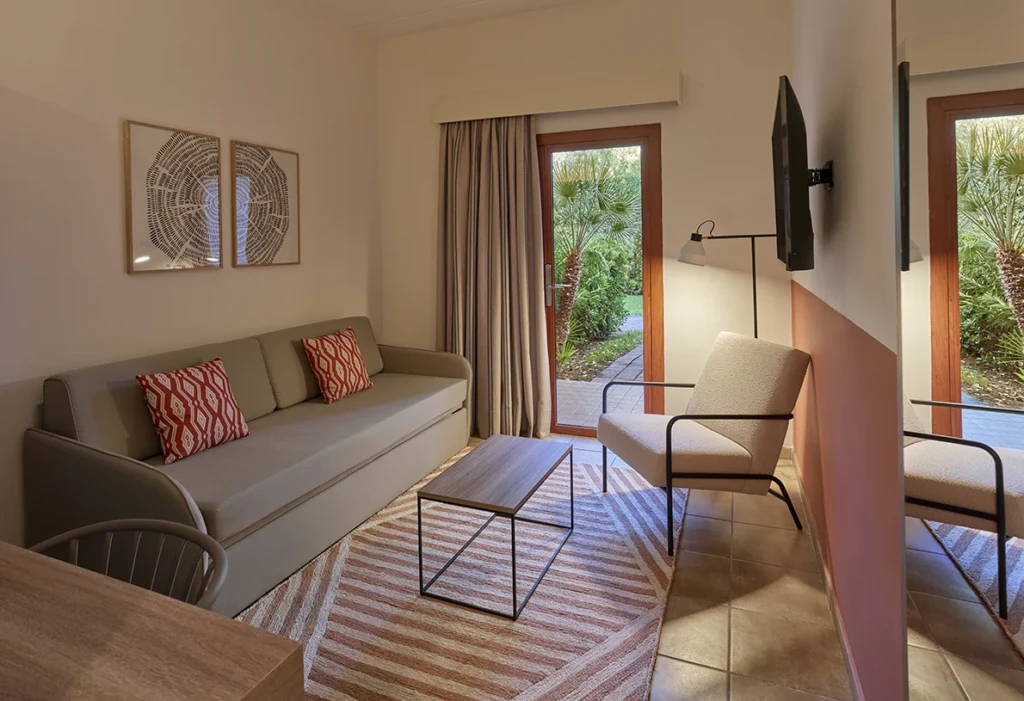
6: Holistic design to avoid the copy-paste effect
Another major trend mentioned by the expert is holistic design. “If the hotel wants to differentiate itself, it has to be focused on a very specific target audience. It must have a real storytelling behind it, not just copied and pasted”, he points out. This personalisation, now essential in any consumer trends report, must always be accompanied by another keyword: experience.
Vacation accommodations should offer more than just a roof and a bed. They should be places where that particular person wants to spend time, places that will become part of what is remembered when, back in the routine, one fondly recalls how much one enjoyed the holidays. This means that when people ask us about those days or weeks we spent away, we not only recommend the city or area, but also the specific accommodation that gave us that much-desired break.