We tend to think of architecture and construction as a process that culminates in a building. People will pass through this constructed place to live in it, visit it, work in it, receive a service or acquire a product, among many other uses. But what if we broaden our focus and look towards a more distant future? Will that building remain standing and continue to be used as if it were an ancient Roman building, or does its life cycle have an end? And what will that ending be like? A demolition? Where will the remains of that apartment tower that is to be replaced go? In recent years, with the popularisation of the circular economy philosophy, this framework of thought has also begun to be applied to the construction sector. Wood is one of its best allies.
“Buildings have a finite lifespan and it would be great if, once their useful life is over, they weren’t just waste”, explains Felipe Vieites, director of ACTIA, a factory specialising in the industrialization of wooden buildings, born from the collaboration between the construction company CERTIS and the architecture studio Ruiz Larrea, one of the companies participating in the presentations at the International Forum on Wood Construction 2026. Thanks to industrialised construction, achieving that circularity is easier.
“Since you necessarily have to design for assembly, you can also do it for the opposite, for disassembly or decommissioning”, the expert assures. One of the strategies being worked on for this is to opt for increasingly dry joints. “There is a growing shift away from adhesives and towards mechanical joints, with screws and hardware that allow for much more efficient assembly, as well as the possibility of disassembly and reuse of the material for later reuse”, he points out.
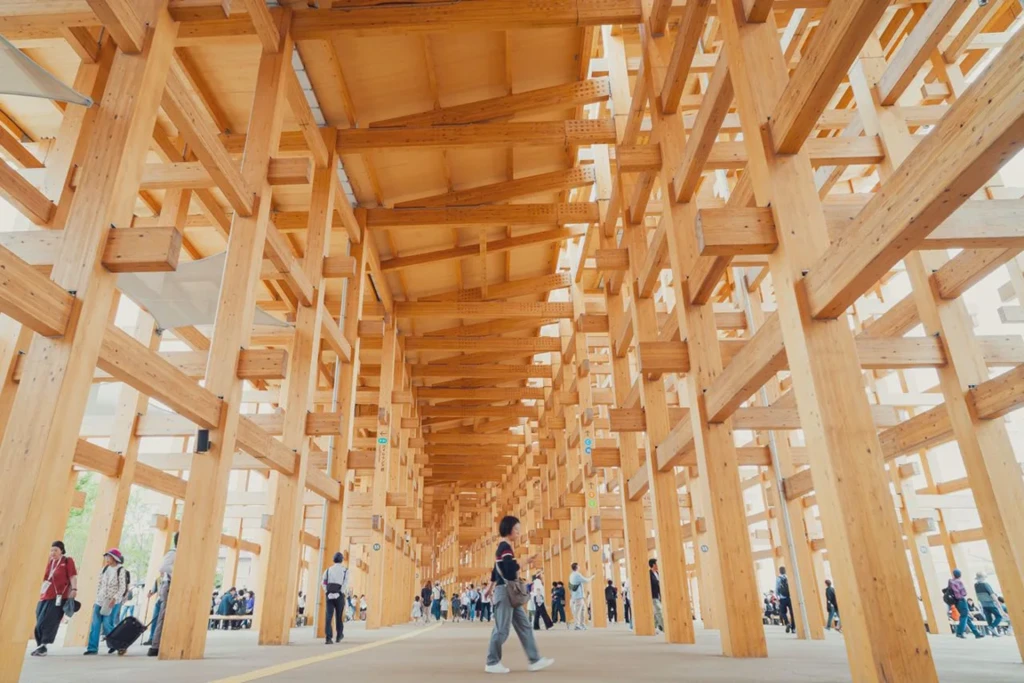
Wood + architecture + industrialisation: the win-win
Although everything explained so far could be achieved with other materials, wood offers many advantages that contribute to the desired circularity. As the report Circularity Concepts in Wood Construction, prepared by the Food and Agriculture Organisation of the United Nations (FAO) in 2023, shows, if it comes from a well-managed forest, wood is a renewable material that is also produced thanks to a renewable energy source, the sun. No less important is that it is a carbon sink, as Vieites points out. “Today, wood is the only material that, when it grows, sequesters CO2 from the atmosphere and stores it. If we are smart when we cut that wood for construction in a controlled way, we are sequestering that CO2 in the form of a building for decades”, he says.
The FAO report lists some further benefits of using this material for architecture: it is both strong and lightweight, allowing for taller buildings; it is a natural thermal insulator, protecting against heat while preventing its loss; it is recyclable, as it can be reused at the end of the building’s lifespan or converted into energy through combustion; and, moreover, it is beautiful and healthy for humans.
How to design for circularity
When designing a building to promote its circularity, a strategy that, for Vieites, is fundamental, is to standardise and modularise. In other words, the solutions, “without being restrictive”, should tend to use standardised and modular components that are “easily interchangeable”. What would be the purpose of this? An example: a load-bearing wall, which will always be 140 mm thick, regardless of its length or width. “That makes it very easy to swap parts and reuse them, to repurpose them in other processes. This greatly reduces waste”, he says.
Ver esta publicación en Instagram
Another important element in this architecture designed from a circular perspective is the selection of locally sourced materials. “This is easier than it seems and has a very big impact on transport and reuse”, he argues. In this sense, in countries with timber production that is also generated sustainably (and is thus certified), the use of this material is even more advisable. “In many cases, construction was more circular 400 years ago, because they couldn’t use anything other than what was right next to the building they were going to construct. Therefore, exotic materials from the other side of the world were not being used, and obviously the transport cost was lower, because it was going to be made with materials from the area”, the expert explains.
Some examples of circular buildings
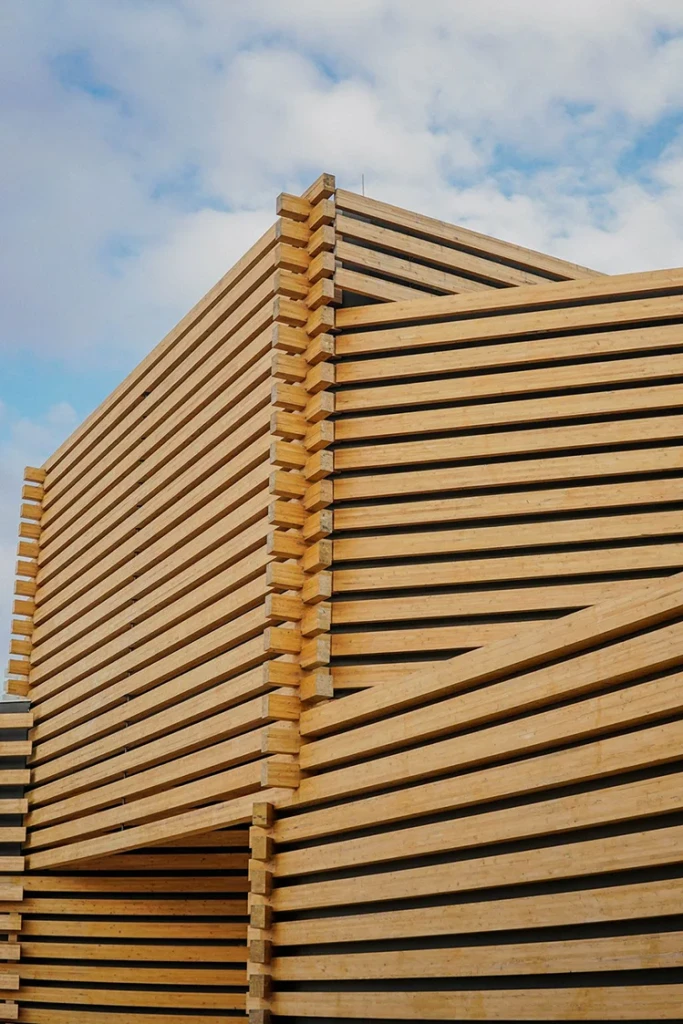
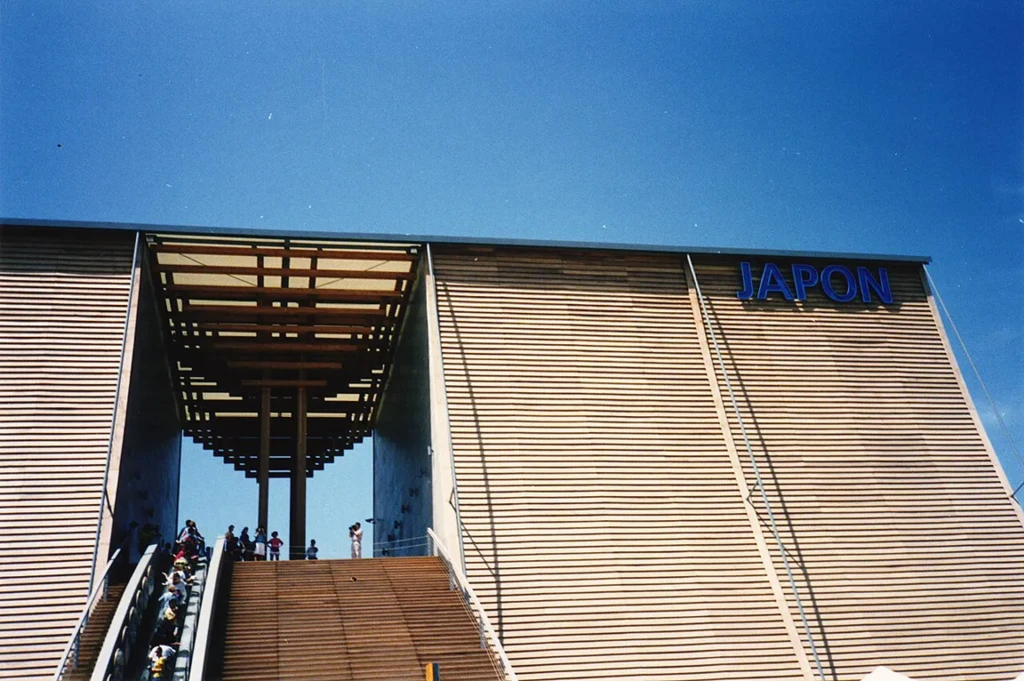
There are already many “wonderful” examples of circular wooden structures, Vieites remarks, but rather than choosing one, he prefers to focus on “this movement toward being mindful of how we use buildings and the fact that they have a limited lifespan and will eventually disappear”. What he does choose is an older example of wooden architecture designed for assembly and disassembly: the Japanese pavilion at the 1992 Expo. “Apart from being, possibly, one of the most beautiful pavilions at the entire Expo, it was a building designed to be assembled, disassembled, and transported back to Japan. For me, it’s a beautiful example of circularity in the sense that they decided they couldn’t afford to build a building and destroy it, but rather the exercise was to design it to be transported, assembled, disassembled, and taken back so that it could have a second useful life”.
The FAO report on circularity in wood highlights some other examples of good practices to promote this type of construction that are already underway in different parts of the world :
Holzhochhaus (Vienna, Austria)
Also known as Hoho Wien, it is a 24-story building (two of them underground) built of wood in the Viennese district of Seestadt Aspern. Concrete was used only when absolutely necessary, resulting in very low CO2 emissions from the project, and a modular design was also chosen. It is estimated that the amount of energy saved was equivalent to a car travelling 40 km daily for 1100 years.
Ver esta publicación en Instagram
Unbuilders (Canada)
Demolitions in Canada cause millions of tons of waste every year, of which 37% is wood suitable for reuse. Unbuilders is a company that dismantles buildings to recover the materials, which they then process, recycle, and sell.
Ver esta publicación en Instagram
Wood Promotion Centre (Jata, Poland)
This centre, built following the principles of passive buildings and with circularity in mind, seeks to do what its name indicates: promote the use of wood.
Ver esta publicación en Instagram