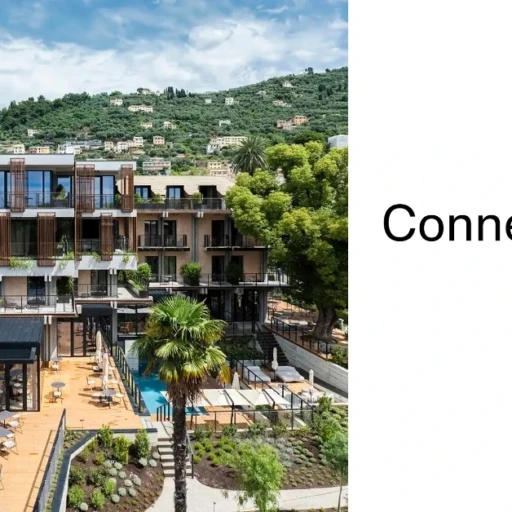
What do people look for when they decide to spend their holidays at a resort? Typically, they want to escape their daily routine for a few days and find themselves in a place that invites rest and relaxation. This, which seems so universal to us, has taken different forms in different eras. Currently, according to the Beach Resort Market Research Report 2034, some of the elements that are generating the most demand are wellness, experiential and sustainability.
Those who design resorts must take these trends into account, but also know how to look further ahead to build lasting spaces that will not seem obsolete in a couple of years. These are the 3 most important keys in resort design:
Respect for the landscape
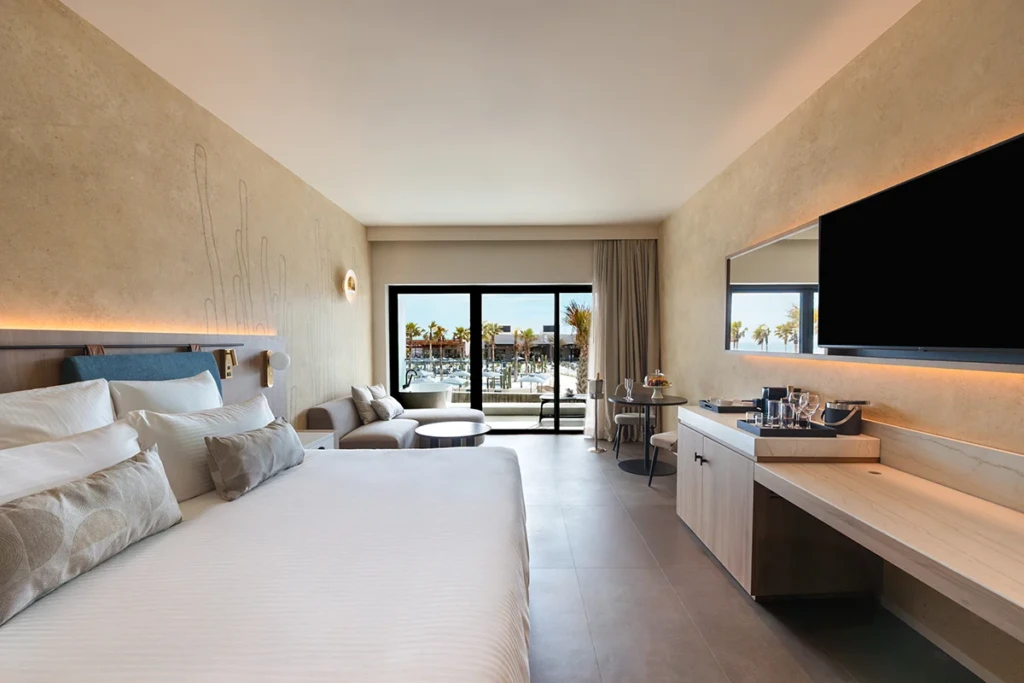
Very much in line with the increasingly demanded element of sustainability, one of the issues that architecture and design take into account most when creating a resort is that it does not alter the landscape in which it is inserted too much. “Sometimes these hotels are several buildings, like a small city, and you have to try to make them look in harmony with the territory”, explains Alejandro Alférez Aledo, Director of Architecture at Grupo Martinón and one of those responsible for Secrets Baby Beach Aruba.
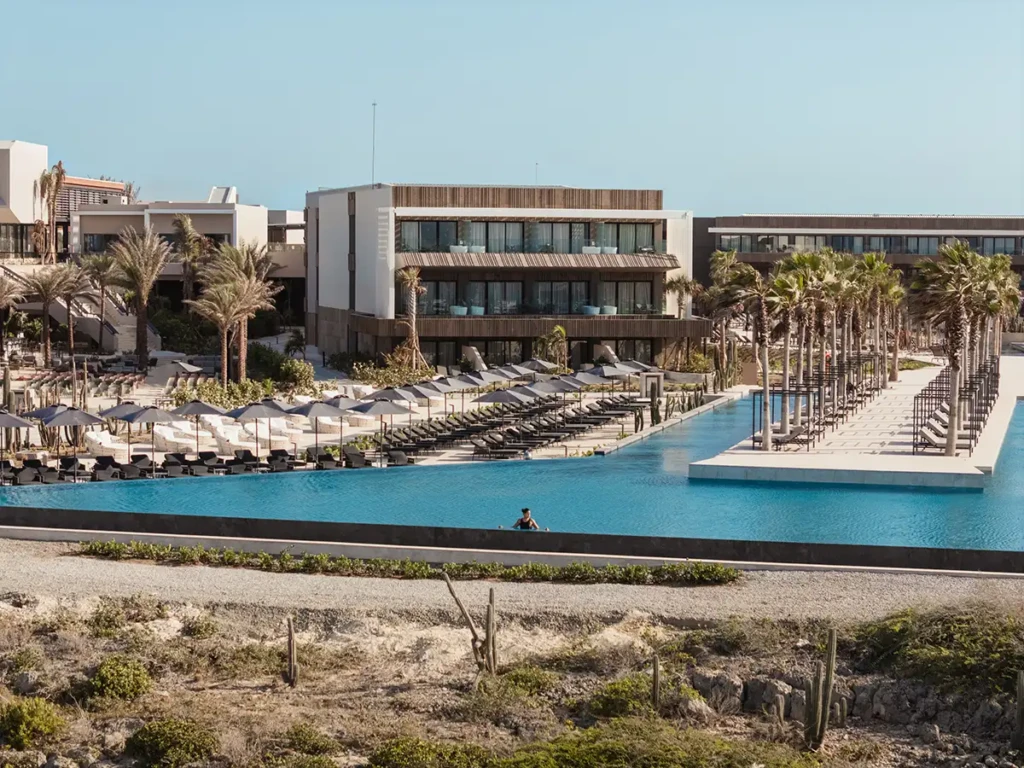
In this specific case, they achieved that integration through the use of several strategies. On one hand, they avoided creating a built barrier that was too high up on the beach, moving the bulk of the construction away from the edge of the plot facing the sea. “We tried to make it so that from the beach it wouldn’t look like a barrier, but rather something more fragmented. That the tallest buildings were located away from that edge”, he points out. In addition, they used tones that were in harmony with the colour of the landscape and chose plants that matched the flora surrounding the hotel (in this case, cacti).
Local identity
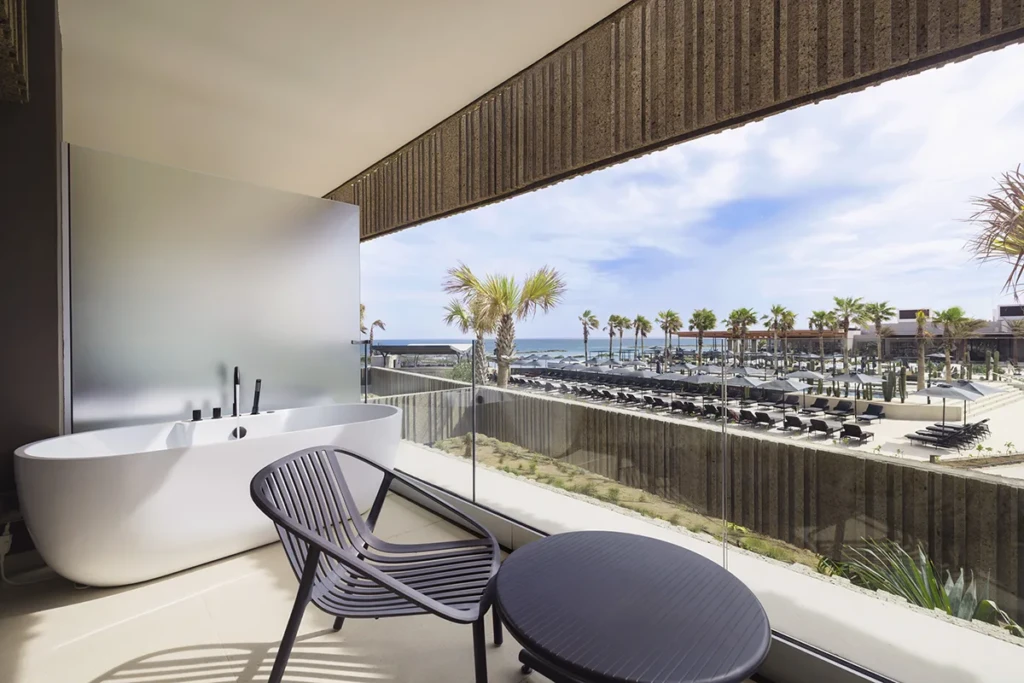
As recounted in an episode of Mad Men, one of the goals of the Hilton chain was for its hotels to be identical and recognisable wherever they were located. Alférez seeks the opposite: to show that the hotel has been designed for that specific location. “We want each guest to recognise that they are in a building or a place that could only exist there, not to say, ‘Well, I’m in a hotel, and I could just as easily be in Houston as in Toulouse’”. To achieve this, the integration with the surroundings is recreated: “that the design, from the decorative to the architectural, is all in harmony, that everything creates a single atmosphere”, he maintains.
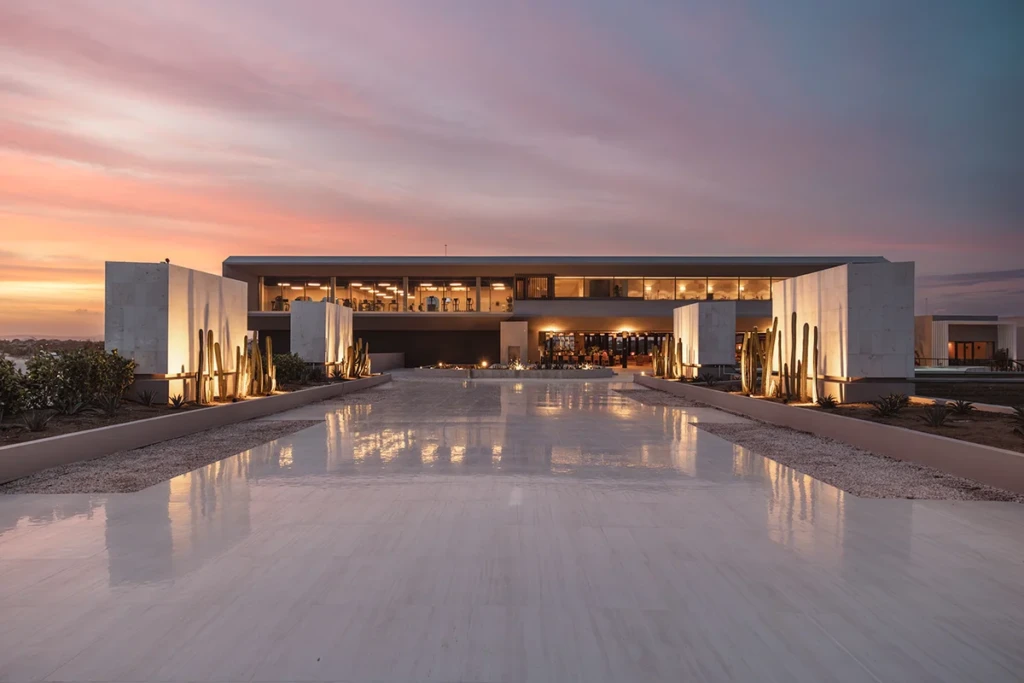
To achieve all this, they opted for Finsa materials both in the interior design of the rooms and for the facade, where this integration with the landscape was achieved. “The colours of wood bring tranquillity and serenity. Furthermore, they allowed for quick and lightweight construction, which was another of the project’s premises”, he explains.
A comprehensive experience
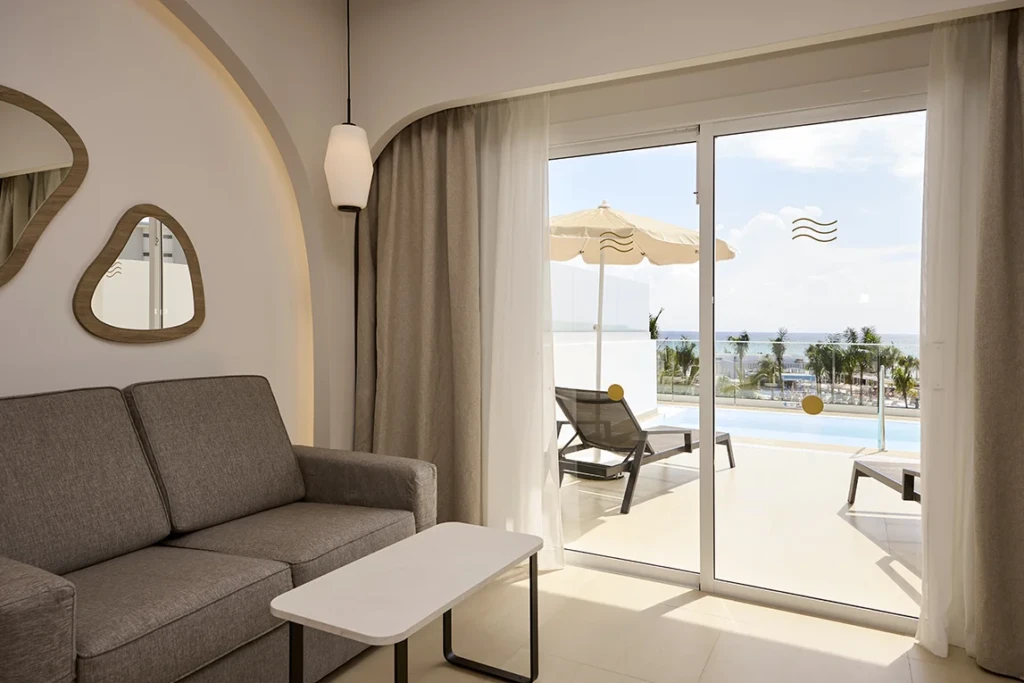
“Design should not be conceived solely from an aesthetic point of view”, but should also take into account how people live in and perceive each space, says José Soria, from the architecture studio DEART Hotel Design, responsible for the Riu Palace Aquarelle. To achieve this, he continues, it is essential to “balance the identity of each hotel according to its location, always considering the environment, functionality, comfort, lighting, colour range and a choice of materials that generates well-being. We always like to pay special attention to the details that will help the guest feel comfortable and emotionally connected to the place”.
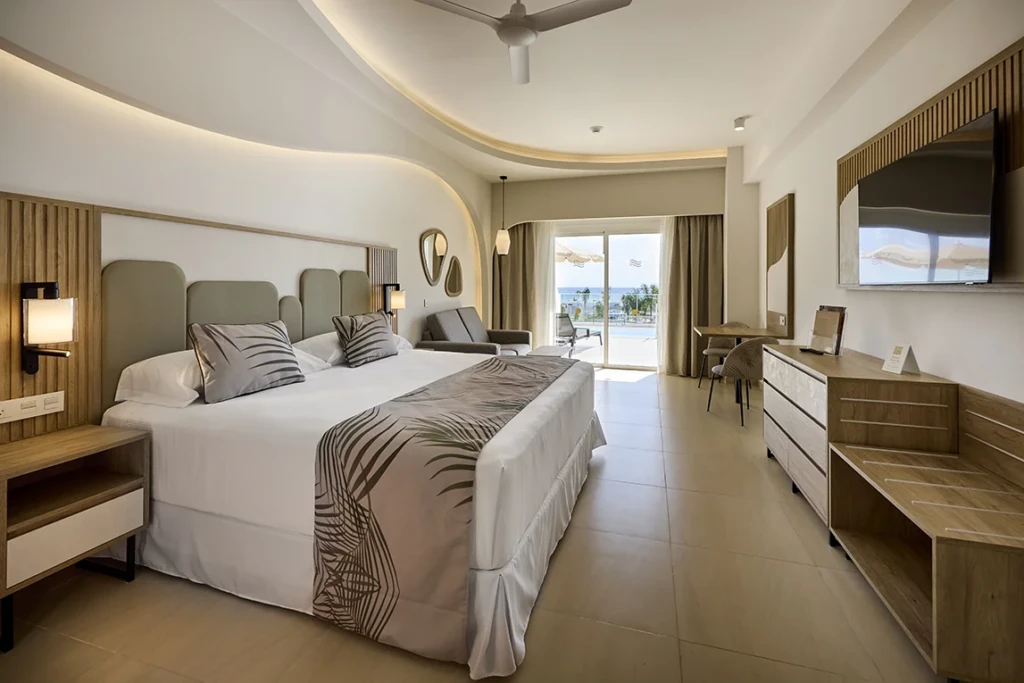
In the design of the Riu Palace Aquarelle, they used Finsa materials because they were able to provide “warmth, a sense of comfort, and an emotional connection to the space”. They also valued their timeless character and the fact that these materials will perform well throughout the project’s lifespan.
Have you already taken these three key points into account in your projects? Tell us about it on social media using the hashtag #ConnectionsByFinsa and connect with the community of architecture and interior design professionals.