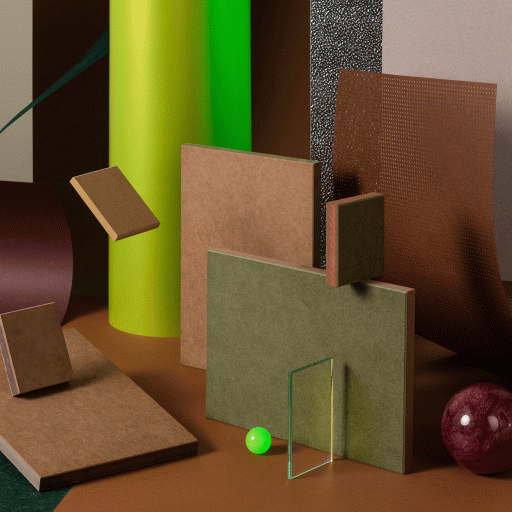
Internalities, the exhibition of the Spanish Pavilion at the 26th Venice Biennale, is based on the idea of seeking internalities in architecture. Although there is a lot of thinking about the future, exploring what a paradigm shift would mean from the most common externality today to building from within, an important part of the installation focuses on the present: how is this idea already being developed in Spain? This is what can be seen in the central room, Balance, for which curators Roi Salgueiro and Manuel Bouzas selected 16 projects from the more than 200 that were submitted to an open call. These are five of them:
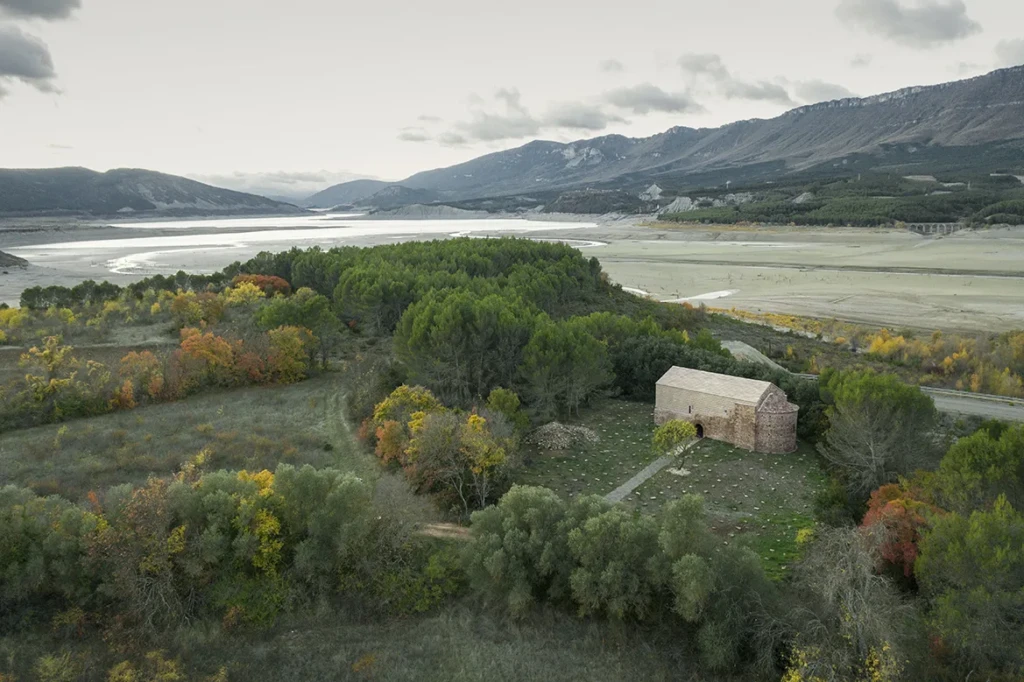
Rolling Stones, Restoration of the Hermitage of San Juan de Ruesta (Ruesta, Aragon)
A 12th-century Romanesque chapel that was left in ruins after a partial collapse in 2001. How can we recover it by establishing a dialogue between matter, memory and territory? Sebastián Arquitectos shaped the silhouette of the chapel with local sandstone masonry, evoking traditional construction systems and reducing dependence on external resources. Outside, the stones from the collapse are used in a land artwork to commemorate those twenty years of oblivion.
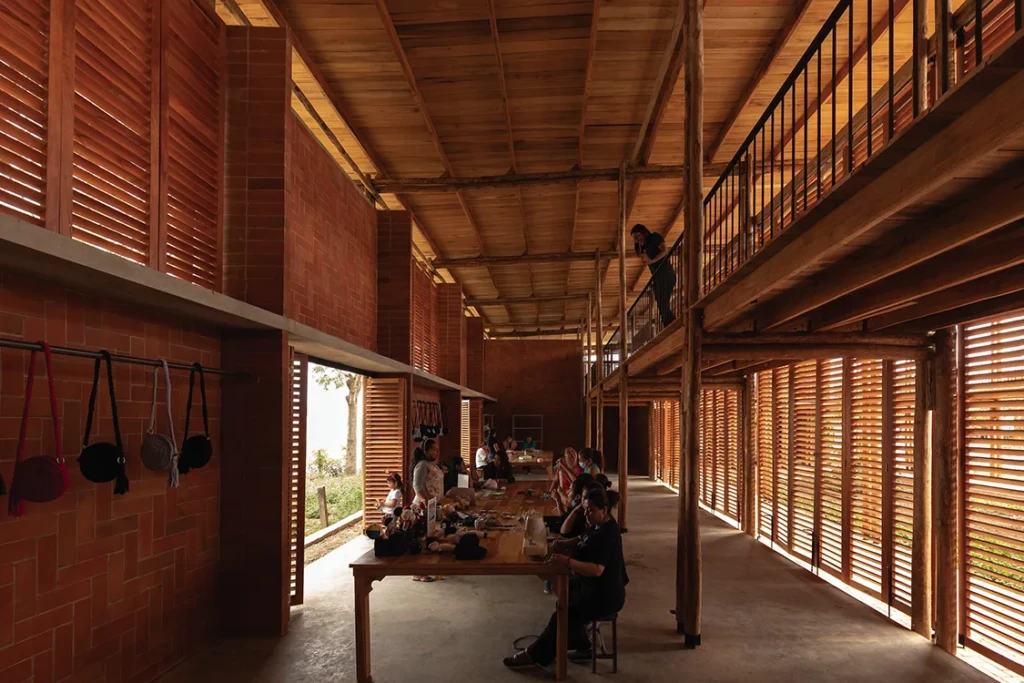
Las Tejedoras – Community Production Centre (Chongón, Ecuador)
This project, developed by Bamba Studio and Natura Futura, seeks to regenerate the tropical dry forest ecosystem and implement low-cost local construction systems (local wood and bricks). The structure of the space, designed to empower unemployed women and also serve as a manifesto against deforestation, is inspired by the region’s ancient stilt houses.
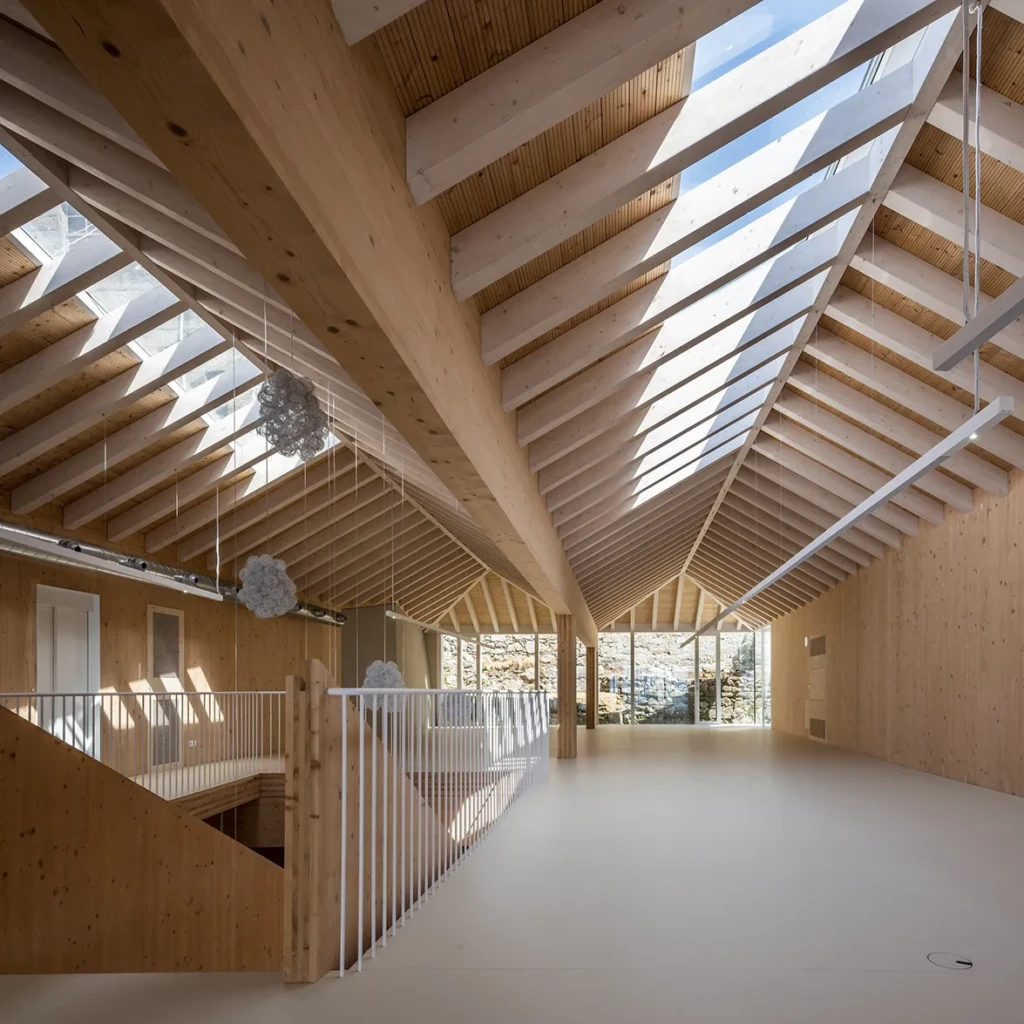
Berbes UVigo (Vigo, Pontevedra)
How can we bring the University of Vigo, whose campus is located far from the city centre, closer to the city? Bringing one of its institutional headquarters to one of the oldest parts of the city through the rehabilitation of three buildings in the historic centre, on the old Berbés beach. For the project, Abalo Alonso opted for industrialised systems inspired by nearby shipbuilding, which optimise the use of materials (lots of wood) and their durability.
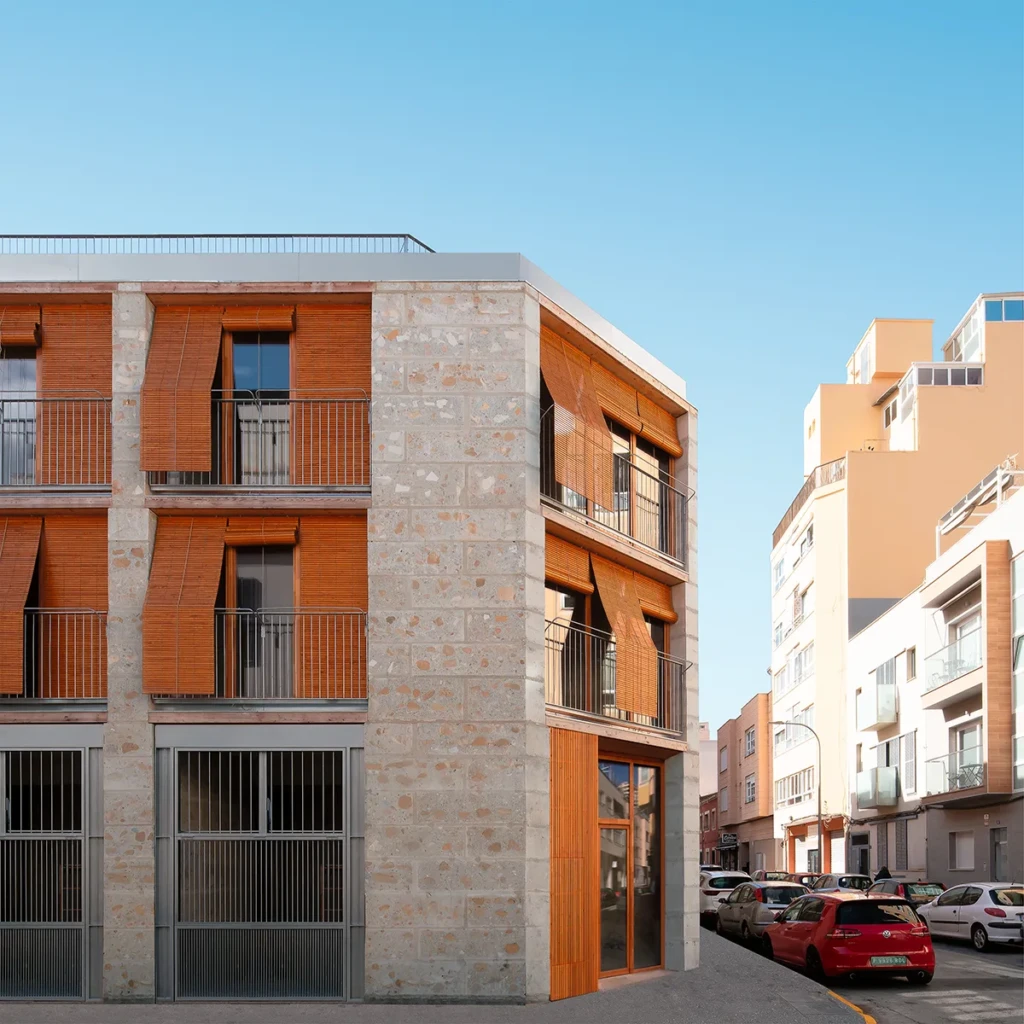
Social Housing 2104 (Palma de Mallorca, Mallorca)
One form of internality is to use what already exists, even if it is the material from the demolition of a previous building. This was HARQUITECTES’ strategy for this housing project. To make use of almost the entire ruin, each type of material was assigned a purpose: the pieces of ceramic and concrete were poured into foundation pits, and all the sandstone was used to build large, cyclopean concrete blocks.
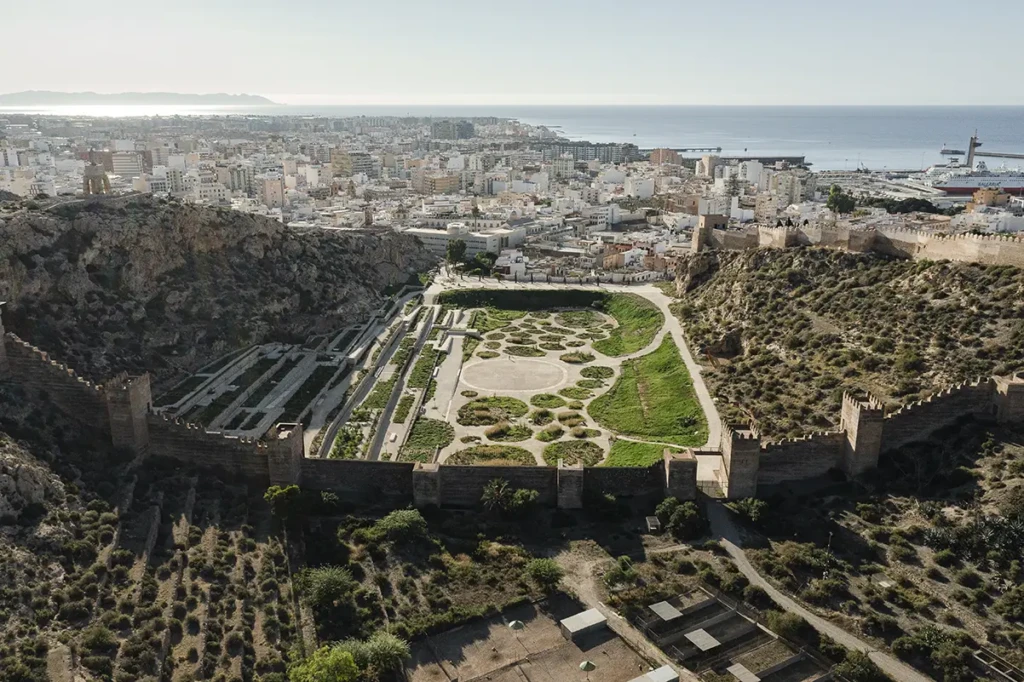
Mediterranean gardens of La Hoya (Almería)
For this park, located between the urban centre and the territory of Almería, we sought internality by working with local stone materials. To achieve this, KAUH architects opted to reuse waste material from quarries and to reuse waste by using offcuts from larger pieces for smaller stonework. In addition, concrete bases and foundations were removed, among other strategies.
The rest of the projects selected for the Balance room, as well as the finalists, can be consulted on the Internalities website.