
“In architecture, we obsess over energy efficiency issues, such as ensuring we insulate buildings well, but in reality, more than 60% of a building’s ecological footprint occurs before it’s even built”. This is how architect Daniel Ibáñez, one of the curators of the Materials room at the Spanish Pavilion at the 19th Venice Architecture Biennale, sums up one of the starting points for his work on the exhibition. “Where you source your materials and what they are becomes one of the most important decisions”, he says.
This year’s Spanish proposal for the Venice event is called Internalities and explores the transition from externalities to internalities in architecture. In the Materials room, this translates into investigating how to abandon an outsourced production model that requires a planetary flow of materials that is often unmanageable and unquantifiable. To achieve this, they propose moving from a destructive extraction of materials to a model based on their metabolism. What does this mean? Using cellular metabolism as inspiration, a process in which “everything is recycled and recirculated, with no waste”, the metabolism movement in architecture proposes doing something similar with how we construct buildings. “In contrast to a very linear economic model, in which using resources and building something leaves destruction on the other side by extracting materials without much discretion, we are moving to a much more circular paradigm. What I do to extract the materials I need to make my buildings and my cities, I do in a way that, instead of destroying the territory, regenerates it”, explains Ibáñez.
The metabolism of wood
Now that it’s becoming increasingly clear that wood construction must be part of this sustainable future, it’s also important to point out that not everything is acceptable. “Imagine two buildings in Galicia that are exactly the same, one opposite the other. If one of them has been built using wood from local forests, in a sustainable, highly controlled, zero-kilometre way, and the other based on felling the Amazon, prefabricating it in New Zealand and bringing it back to Galicia, although they may seem identical, in reality, from the point of view of their metabolism, of the transformation processes that the material has undergone, they are very different,” exemplifies the architect, author of, among other books, Wood Urbanism. From the molecular to the territorial (Urbanism in wood. From the molecular to the territorial).
In this sense, it is important not to think of generic woods, but rather of metabolically specific woods. “This includes as much, if not more, where and how these materials were extracted than what the material itself is”, Ibáñez points out. In the case of wood, it must come from forests, be sustainably managed, be locally sourced, and use local industries, among other things.
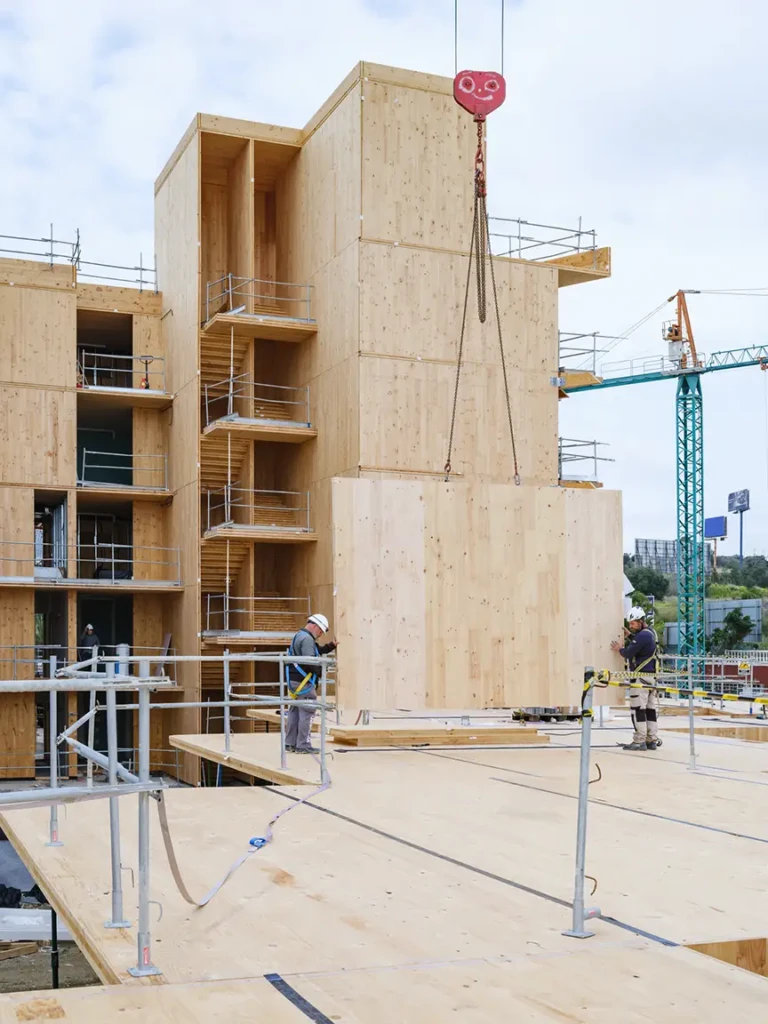
Bakpak architects. Maria Azakarate
The case of the Basque Country
In Spain, as a result of this need for more sustainable construction, the use of wood in construction has increased significantly in the last decade. Thanks to this boom, the timber production ecosystems of the Cantabrian and Atlantic coasts have been strengthened, as demonstrated in the Materials room, which focuses on the forestry and timber industry in the Basque Country. “What we have tried to do is not only see what architectures the Cantabrian coast itself generates, but what architectures have been built with the mountains, the forests, and the industries located in the region. There are many projects in the area, but they are also exporting to other parts of Spain to help build more regenerative architectures”, Ibáñez points out.
The Basque Country is a good example of this whole process because it has managed to maintain historical continuity and an industrial fabric based on wood that has been lost elsewhere in Spain due to the introduction of other materials, explains architect Carla Ferrer, the other curator of the exhibition. This creates know-how linked to the territory in this way.
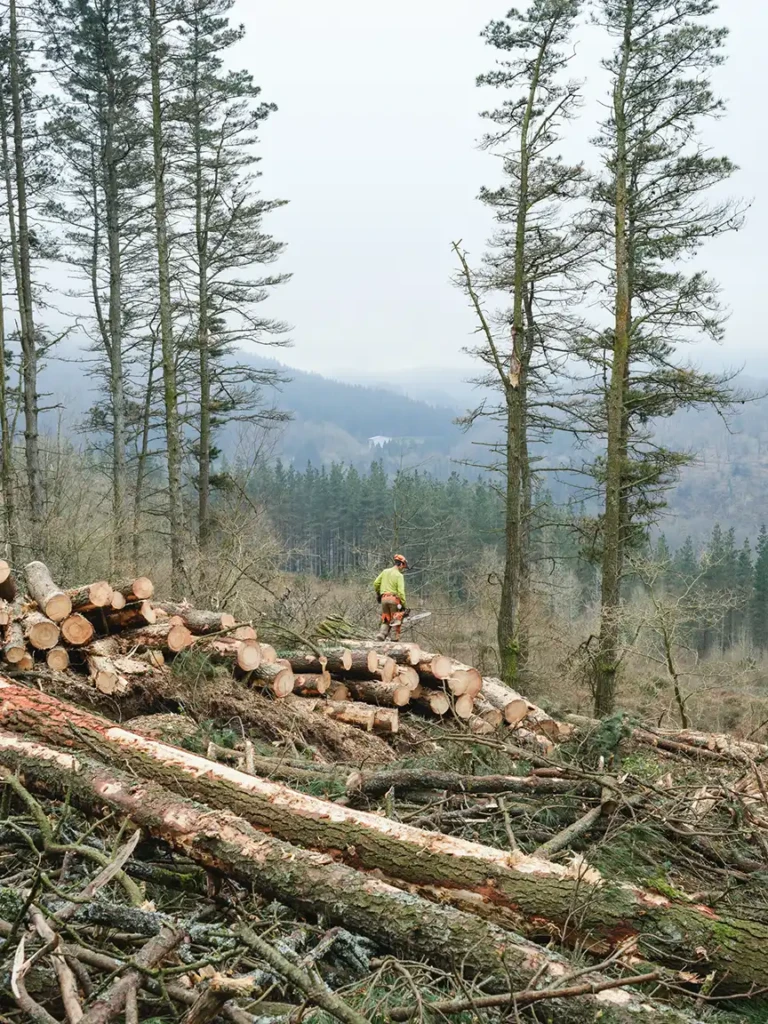
As for the wood itself, Basque forests are diverse, with radiata pine —a species introduced in 20th-century reforestation projects— and native species. The radiata pine, which is the focus of the exhibition in the room, with photographs by María Azkarate, “is a material that works relatively well for structural wood”, explains Ferrer.
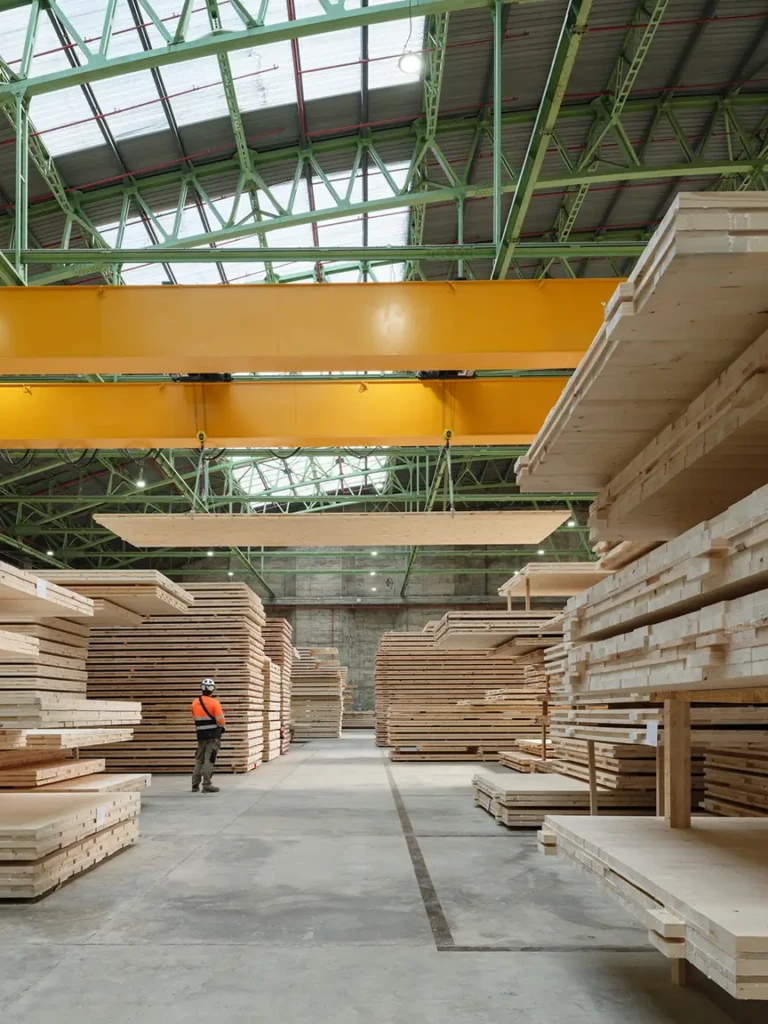
When transforming that wood, proximity is also important. “We need to transform it close to the resource so that transportation is as efficient as possible”, the architect points out. But it is a complex process with challenges that have not yet been solved. Sawmills are considered primary processing industries, so in many cases, they can be located on agricultural land. But once you move into CLT production or the assembly of large, more complex systems, it’s no longer possible to use land designated as agricultural. It’s a challenge, because if you want to grow, it can often happen in the same place; you have to reach agreements, municipal development plans, etc.”, he exemplifies.
The four agendas for a future in wood
The fact that wood has become established as a construction material in Spain doesn’t mean that everything has been achieved in terms of decarbonization and territorial balance. To continue advancing this project, the curator of the Materials room explores four strategies for the future:
- Biodiversity. Diversify the number of species used in construction, thus strengthening ecosystems. Carla Ferrer uses the beech as an example and mentions the Life project, which seeks to put beech forests into production. “When the use of resources is demanded for construction, it usually results in a better-maintained, healthier forest”.
- Redensification. Expanding buildings vertically with wood (a lightweight material), in addition to turning them into carbon sinks, reverses the process of suburbanization.
- Monomateriality. Wood can comprise all the elements of a construction system, so it is interesting to extend its use beyond its load-bearing capacity.
- Industrialisation. More efficient manufacturing and implementation systems will contribute to increased use.