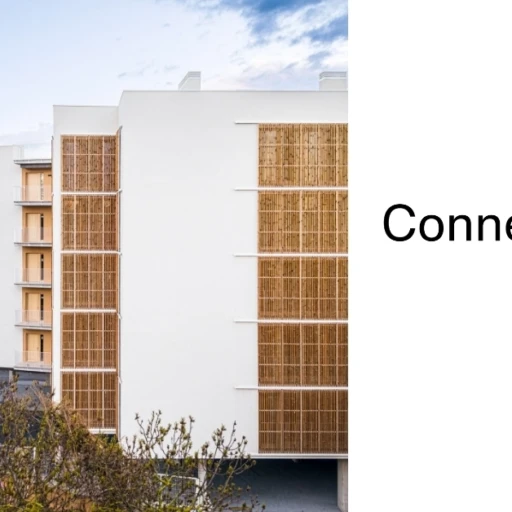
Wood surrounds us. It’s in many of our pieces of furniture, perhaps in the floor of our house or in its structural beams, in some kitchen utensils, in the frames of our photos and paintings, in many street benches and other types of urban furniture… The list is endless. However, we don’t always remember its origin or think that the table we write on, the pages we read, were once a tree. A forest gave us that pencil and the doors of our house, but some look towards the mountain through the window and do not establish that relationship.
“Wood is much more than a material. In its first phase, the first factory where this product comes from is our environment: where we go for walks, where we go to breathe, where that same wood that made up those trees helped for many years the infiltration of water into the bags in which it accumulates so that we can later drink it… It is a product that has life, very different from other inert ones”, explains Xosé Covelo, director of the Galician Forestry Association (AFG).
The relationship between wood and the land is very close because wood comes directly from it. Furthermore, it is a renewable and infinite material because “as long as we have land and manage it well, we can have all the wood we want to use, as long as the wood allows us to”, adds Alejandro Bustelo, from the forestry team at Veta, the responsible forest management brand of Finsa.
All of this, which seems obvious when we read it, hear it, or reflect on it, tends to be forgotten in our daily lives. Some people inherit a small plot of land in the mountains (something very common in places like Galicia, due to the smallholdings) and see it more as a problem than as an opportunity. “Many people defend that view of ‘I have a mountain, I plant it and it won’t give me anything else’, but there are many possibilities. Forestry farming can be supported with other products: honey, mushrooms…”, exemplifies Betsaida Curto, founder of the architecture studio Copla. The three of them, Covelo, Bustelo and Curto, participated in the 2026 MARCO festival in a colloquium on Architecture and territory. The goal was to try to convey the idea that “land or timber can provide benefits, offering multiple uses and endless possibilities”, Bustelo summarises.
Ver esta publicación en Instagram
Forest and people: a relationship between equals
Producing wood is not always synonymous with sustainability or respect for the environment, but if the land is cared for, if after cutting down one tree another is planted, if it is considered that this forest can provide more uses than the productive one, the relationship between the forest and the community of people who inhabit or manage it becomes much closer. Xosé Covelo points out that there must be a “one-on-one” relationship, in which the forest gives us something, but we must replenish it so that it can produce a benefit again for future generations. “Carbon accumulates and there are other intrinsic benefits closely linked to the economy and current production. Wood plays an important role in the fight against climate change; it goes far beyond a product made from inert materials”, he says.
However, as we have moved further away from rural areas, we have gradually lost that awareness of our connection to wood. “It seems there is no relationship between the wood material I may have in my house and that mountain or forest I visit on the weekend”, Covelo says. Furthermore, a certain bad reputation persists regarding the production of this material. “When you lose that continuity, you don’t quite understand that that cultivated or managed forest is going to provide benefits and you consider the extraction to be an undesirable procedure, an outrage. But then you get home and you’re at your wooden table, your house is restored with wooden beams, you feel great comfort and you don’t make the connection that someone had to cultivate it and someone, in a sustainable way, is managing and extracting it from that mountain to bring it home”, the expert reflects.
Ver esta publicación en Instagram
In the construction sector, wood has been making a comeback in recent years. “For a while, we forgot that it existed and it didn’t seem modern to us. Now, although it has never gone out of fashion, it seems to be gaining value again”, explains Betsaida Curto. She is bothered by criticisms of this material that highlight the need for special maintenance. “What in life doesn’t require maintenance? Your car needs maintenance. And plastic might not, but it degrades in the sun. Wood does not degrade in the sun, but it changes colour and can be restored with very fine sanding. There are granaries that are 200 years old, the wood of which hasn’t been altered at all, and they’re still there”, she says.
Ver esta publicación en Instagram
Spread the word to chart the path back to the forest
“One of the things we do at Veta is outreach to people who inherit land that they have become detached from. We try to emphasise that it is an alternative, that management doesn’t mean having to be on top of things every day, that with good practices we can make it work”, explains Alejandro Bustelo.
In their presentation at the Marco festival, he and his colleague María Fernández, from the Veta Forestry Team, focused on explaining, through the example of A Panda da Dá, that forests not only have productive sections, but also protective parts that provide a service that everyone can enjoy: walking, having water at home to drink, oxygen to breathe… The new generations find this very interesting. “There is a trend towards conservationism, but when you show that these two aspects, the productive and the protective, are compatible, the idea is very well received”, he points out. They have also been to places like the Cans Festival or Festa Raxada.
Ver esta publicación en Instagram
Bustelo also mentions that it is precisely the well-managed forests, those that are not abandoned, that best withstand fires, the main reason why forests appear in the media. “In some television programs focused on the agroforestry topic, perhaps out of 50 chapters, only four are dedicated to forestry topics. And two of those four are about fires”, laments Xosé Covelo, who believes that it is necessary to separate, at a dissemination level, that the mountain is a forest fire.
The AFG director also speaks of the need to campaign for this resource that occupies thousands of hectares in the northwest of the peninsula. “We promote our beaches with advertisements, but not all of that forest area”, he explains. He emphasises that there should be more content about forests in educational curricula. “It is inconceivable that in Galicia there is no clear and forceful thematic unit on the forestry field, both on the industry and on a property system as unique as the communal forests. And that education of closeness, of valuing where things come from, is lacking”, he explains.
Ver esta publicación en Instagram
New generations who have learned about this, who once again value forests not only as places to walk but also as sources of water or wood, who once again show curiosity about how that relationship works, would help to fight against one of the biggest challenges that Alejandro Bustelo sees today, and that is that the disconnection from the territory turns the form of ownership of the forest in Galicia -some 600,000 owners- into a problem, with abandoned lands, and not into a strength by allowing a great distribution of wealth. “There are many misconceptions. The biggest challenge is to energise the new generations so that they can take the reins again. Let them say: ‘These are my properties, I’m going to take care of them, I’m going to plant things and I’m going to make a profit'”.