2025 confirms an intuition that had been brewing: interior design embraces a warm aesthetic where the tactile reigns supreme. The novelty is not so much the “return” of the artisanal -that imaginary of carving, weave, clay and marked grain- as its industrial translation: panels and technical surfaces capable of scaling the craft look to housing, contract and retail without losing consistency or viability. It is the neo-craftsmanship that we already talked about in Connections by Finsa: a balance between craft and innovation that shuns perfect production and values the piece with soul, even when the project requires real measurements and construction deadlines. We trace how this material code is being expressed in three languages –workshop-type reliefs, architectural textiles, and stones– and in a fourth way that today forms the backbone of many programs: the wood that is touched.
1) The tool as ornament: “workshop” reliefs
Neo-industrial craftsmanship understands the tool’s shape as an aesthetic language. In construction, these gestures translate into textured boards with real relief -not printing- that capture the tempo of the workshop.
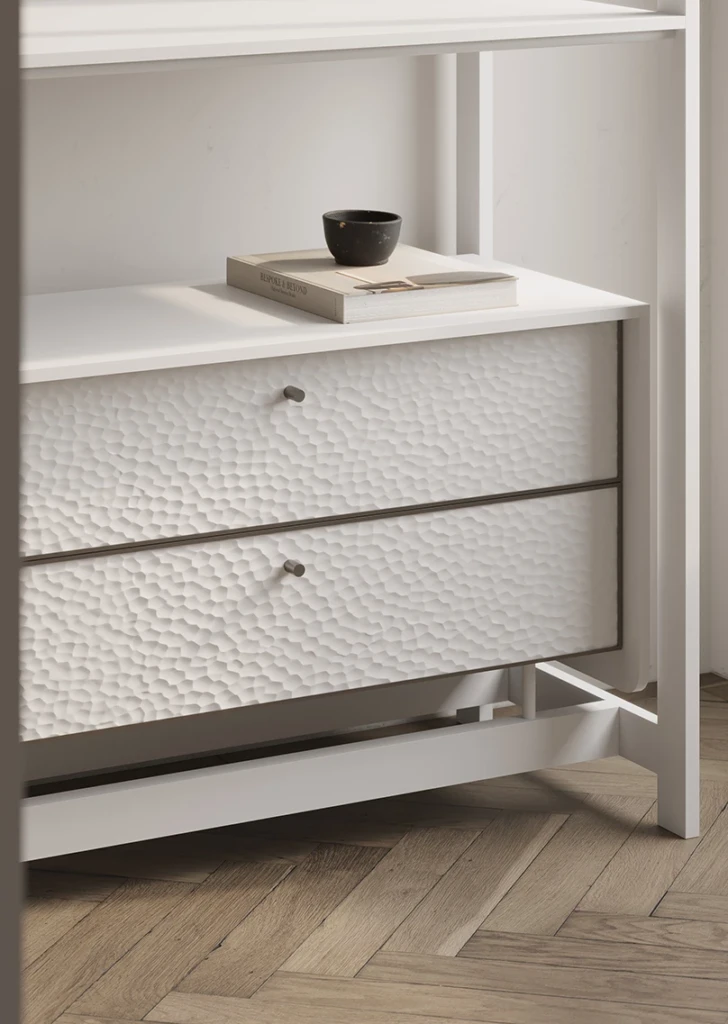
FibraPan® Tex Carved transforms hand carving into a deep, organic texture with controlled irregularities that are visible both in raking light and through tactile grip. Ideal for fronts, counters or cladding that need character without overloading the floor.
FibraPan® Tex Yute recreates the diagonal braiding of natural fibres (rattan, esparto grass) in an interwoven pattern that provides shade, depth and a very controlled handmade feel for hotel corridors, retail backs or headboards.
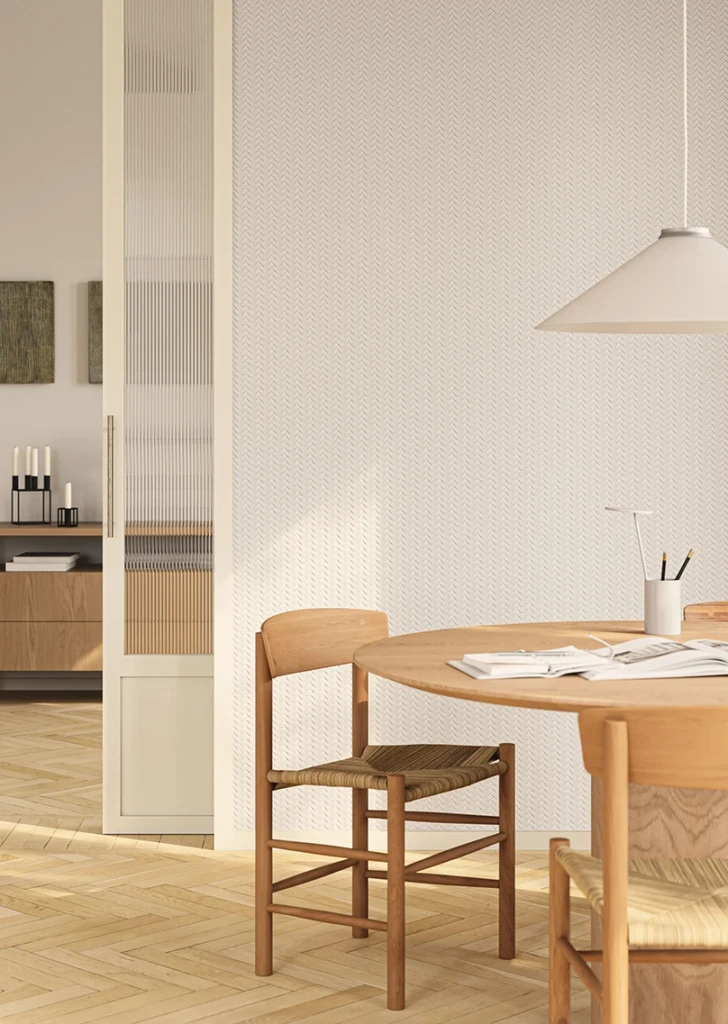
Both families also exist on other bases -from technical MDF to versions with natural veneer- and are part of a range of textured panels that allow for staining or membrane lacquering to adjust colour and gloss per project.
2) Architectural textile: when the cloth becomes a surface
The second block of this neo-industrial craftsmanship is literally textile, but conceived as architecture: robust, ready to use and coordinated.
Linum brings linen fibre to panels for a visible, matte and highly architectural weave result (ideal for boiseries, island sides or partitions). An example: Linum Marrón.
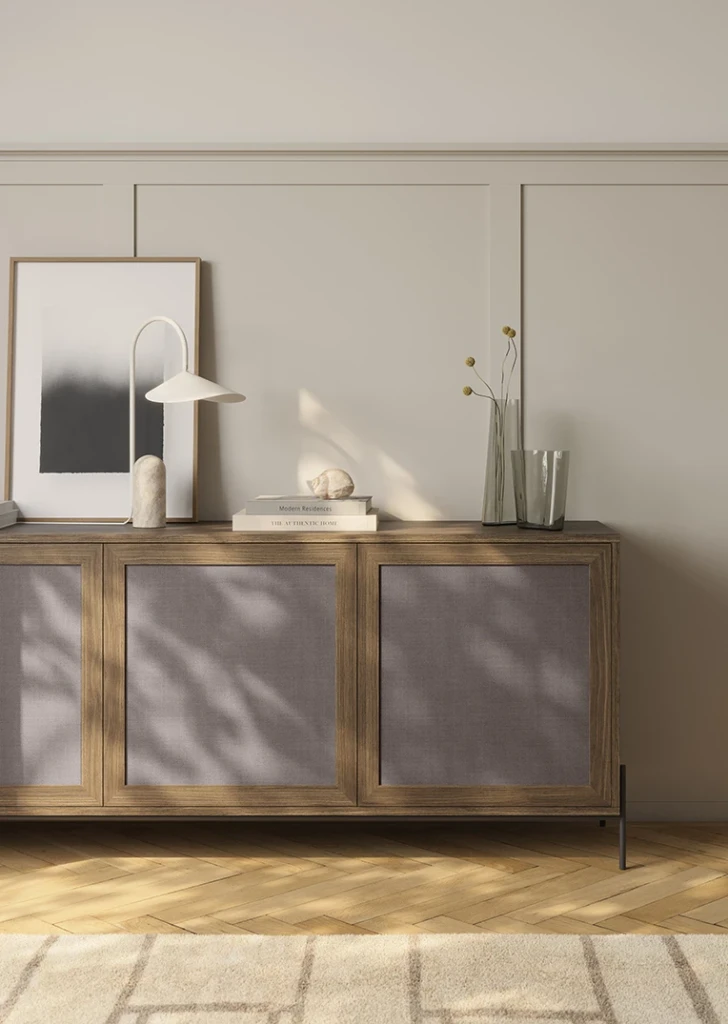
Suede offers a technical velvet with that velvety feel that “calms” residential and hospitality spaces. See Suede Crudo.
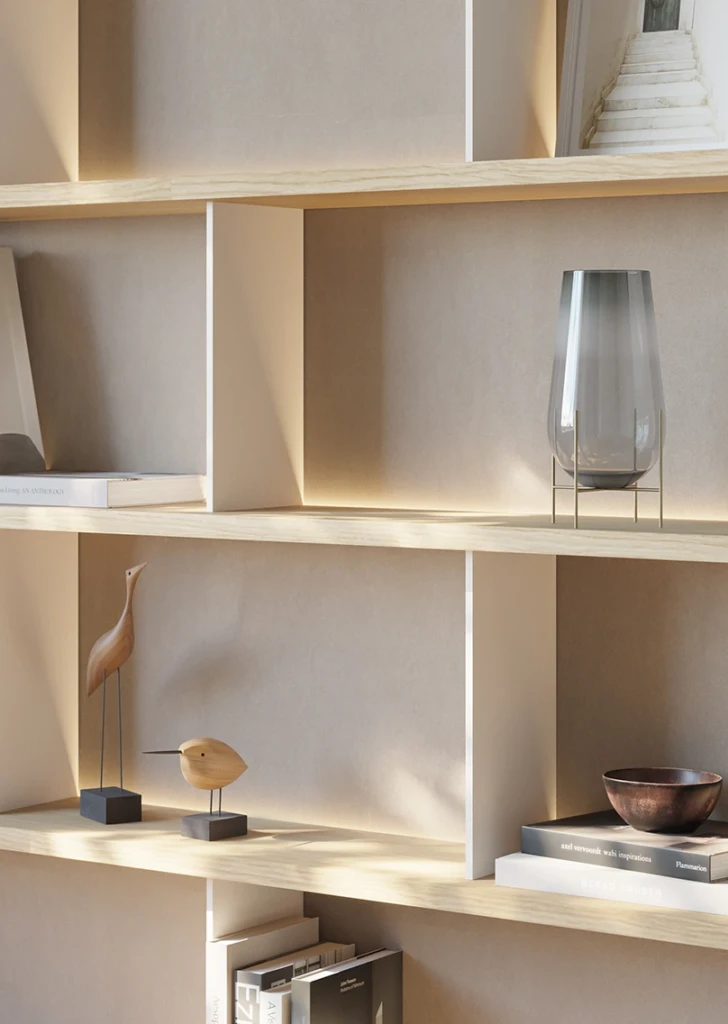
Pelle introduces recycled leather with a fine finish and characteristic aroma, useful in fronts and headboards when we are looking for a discreet and circular luxury. Examples: Pelle Arena or Pelle Duna.
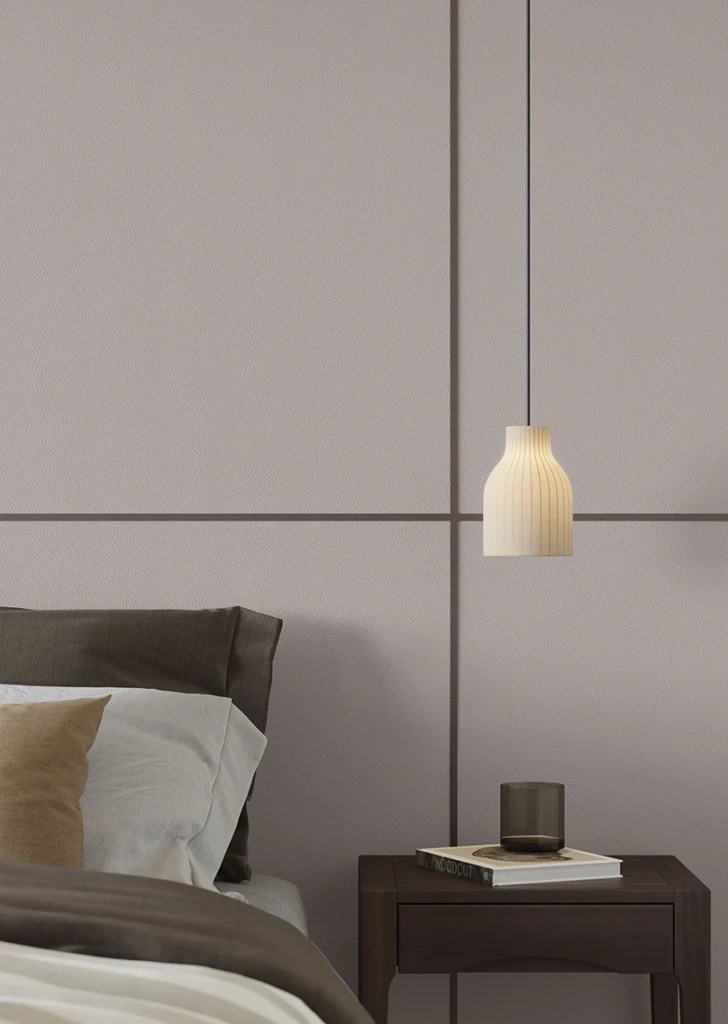
The three types are grouped in the Fabric range, which sums up the idea well: authentic textiles and recycled natural leather, pre-applied to the board and with resistance, antibacterial and R2U performance, ready for installation.
3) Natural minerality: “workshop” stones
Far from excessive marble shine, the mineral trend of 2025 calls for stones with a human touch: cream glazes, patinas reminiscent of levigate, coloured slate. On technical surfaces, this translates into designs with micro-relief and warm mattes. We offer you four alternatives that fit this trend:
Atacama: a family inspired by baked clay – organic, irregular – that works very well for interior facades, retail walls or transit plinths. See Atacama Cemento or Atacama Terra.
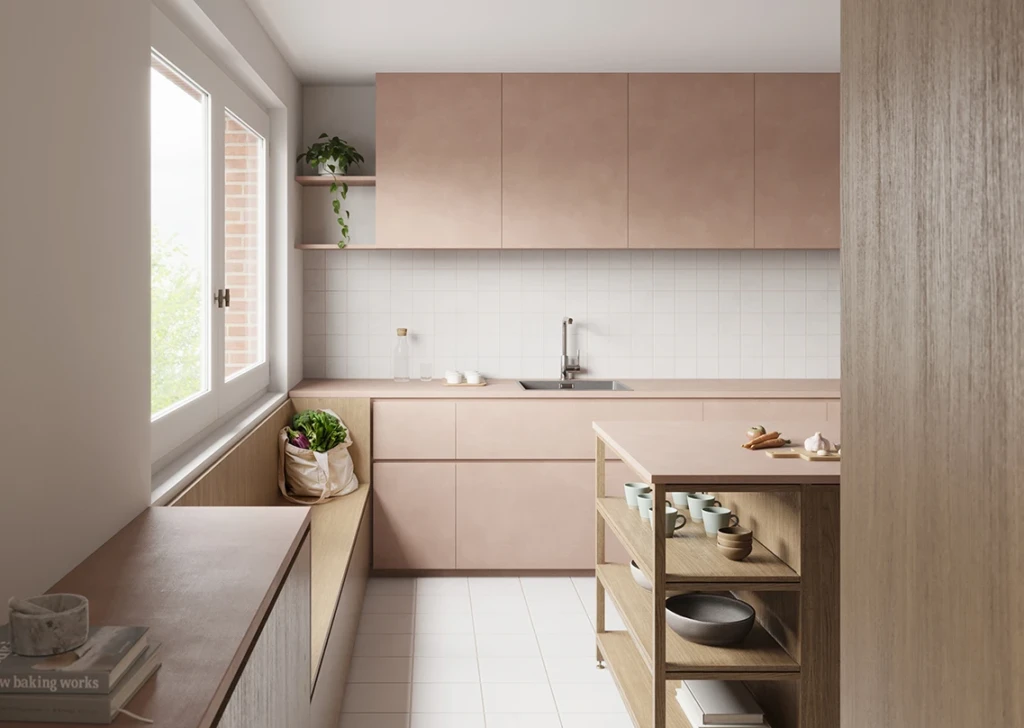
- Creta: a reinterpretation of limestone/slate with two very applicable tones -Basalt and Bronze- designed for kitchen furniture, cladding and decoration where the shadow of the relief matters more than the vein. Look at Creta Basalto or Creta Bronce.
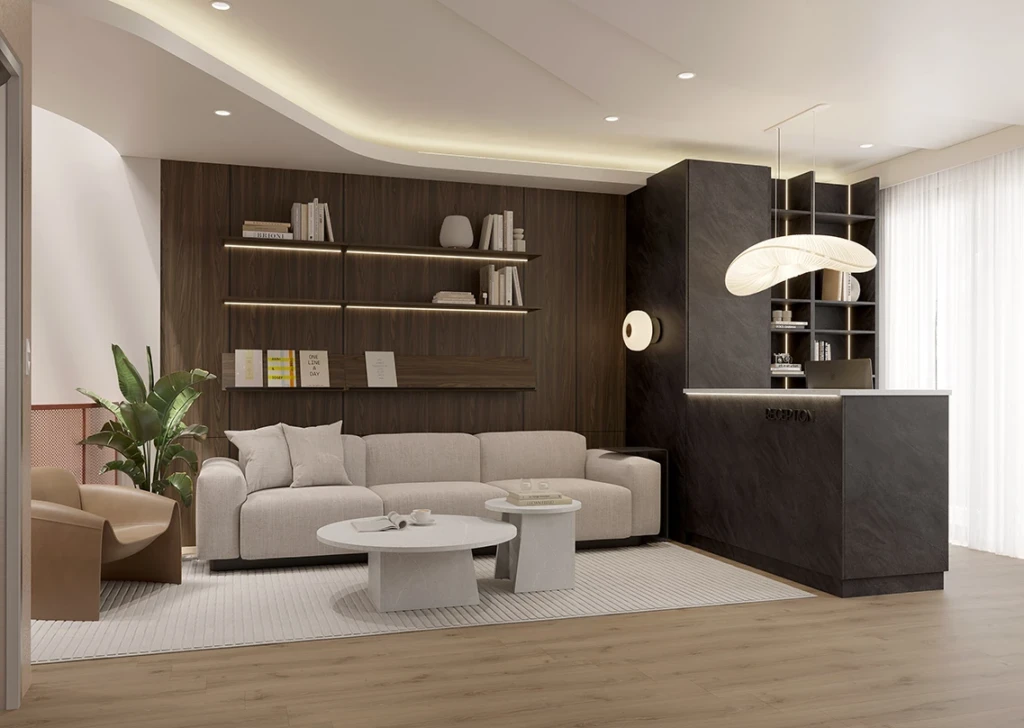
- Creamy Travertino: an updated, neutral (less yellowish) travertine that matches light woods and muted greens; the super matte Balm finish provides a warm feel and low reflectance.
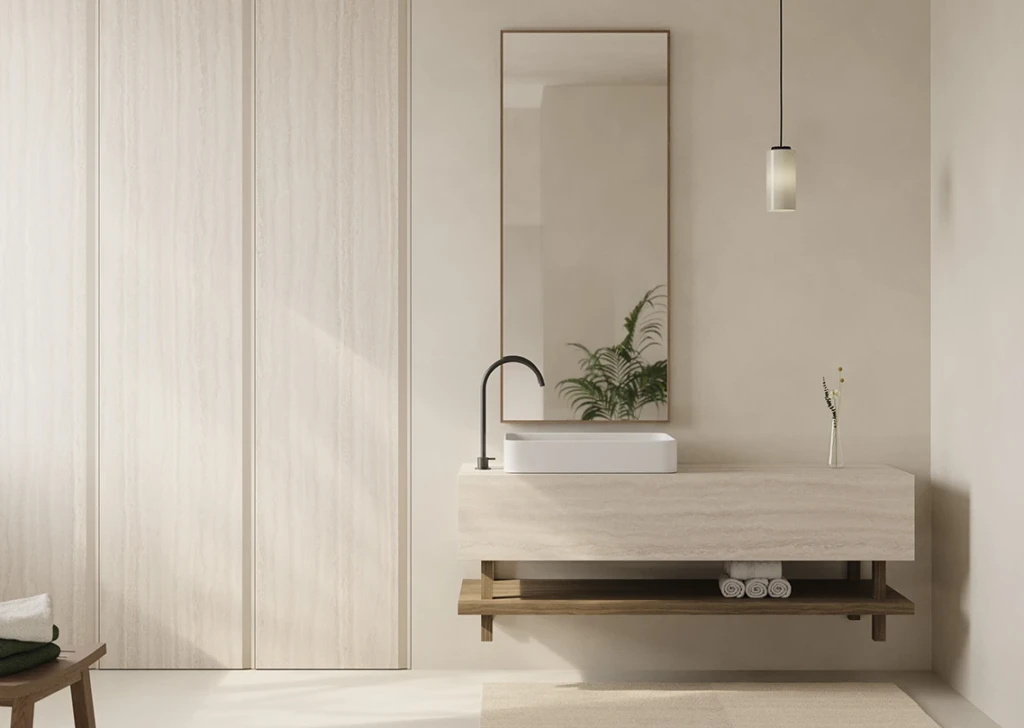
- Pietra Alba: Piasentina in light grey with subtle quartz veins; available, for example, in Fintop Xtrim thin countertop with Moa texture. Keep an eye on Pietra Alba.
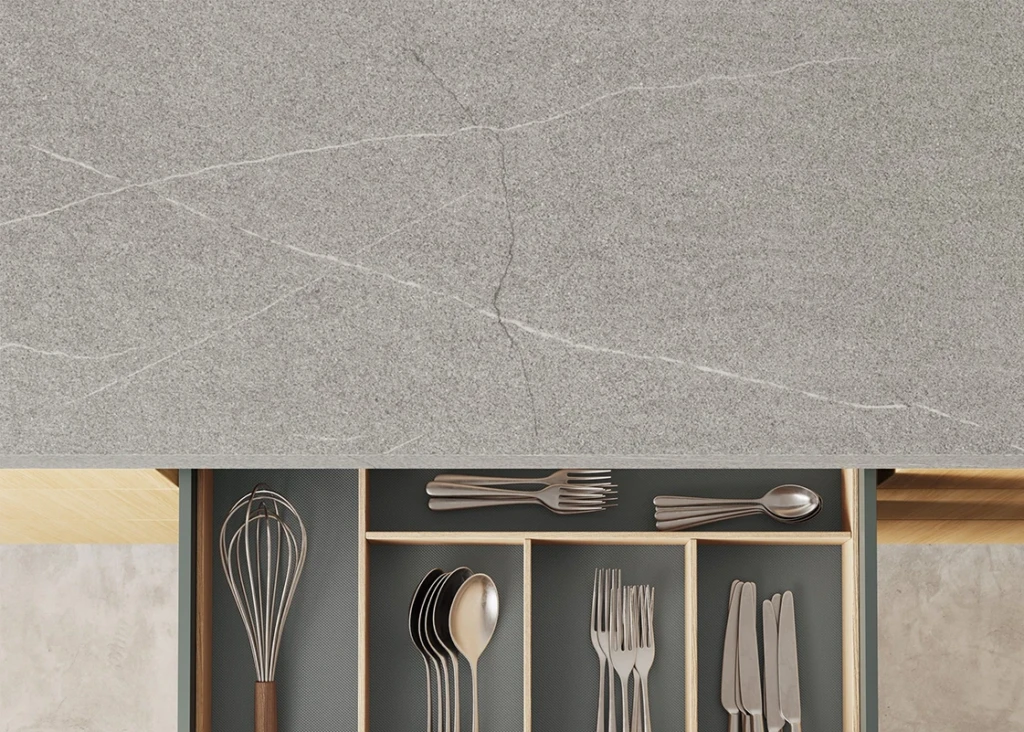
The result: the mineral reading ceases to be cold and approaches the stonemason’s workshop, with visible traces of process and appealing mattes.
4) The wood that is touched: sincere pore and expressive grain
If there is one area where neo-industrial craftsmanship unfolds its full potential, it is technical wood. In 2025, Yoku stands out, an oak pore developed from real samples that alternates pores of different depths to maximise naturalness to the touch. On that pore live collections that prioritise expressive grain and natural colour:
Serenade: four mesh oaks -Alba, Garden, Rose, Sunset- to cover different readings of “nature” according to latitude and material culture. We highlight Serenade Garden Yoku and Serenade Alba Yoku.
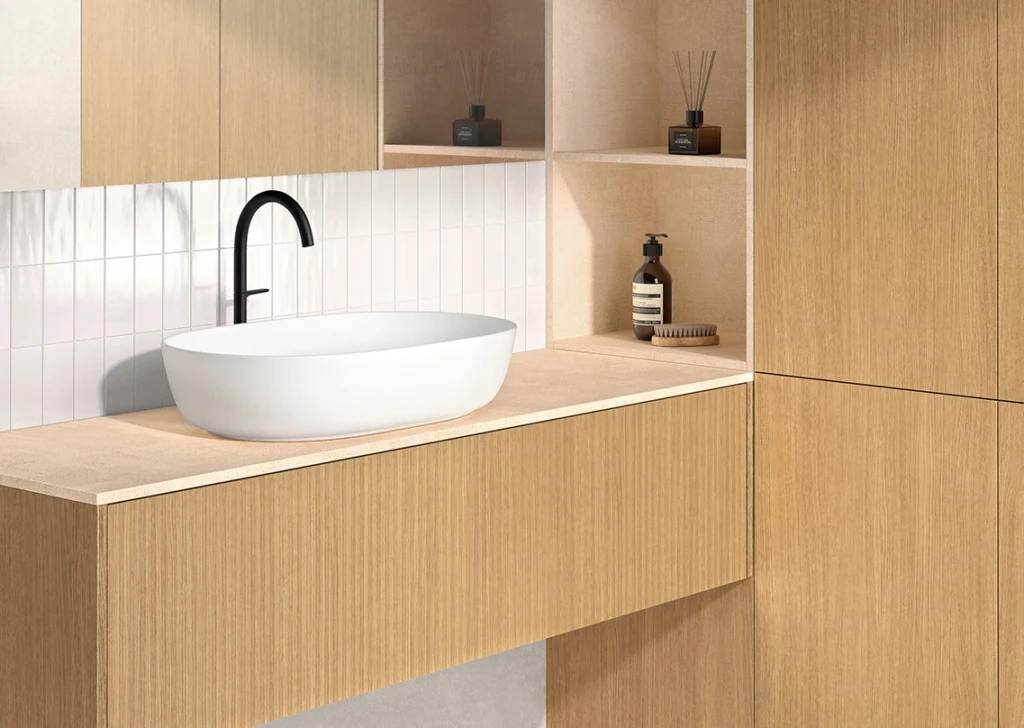
- Carya Wood: wide cathedrals, scattered knots and high-definition chromatic play; perfect for passage panelling and furniture that demands presence.
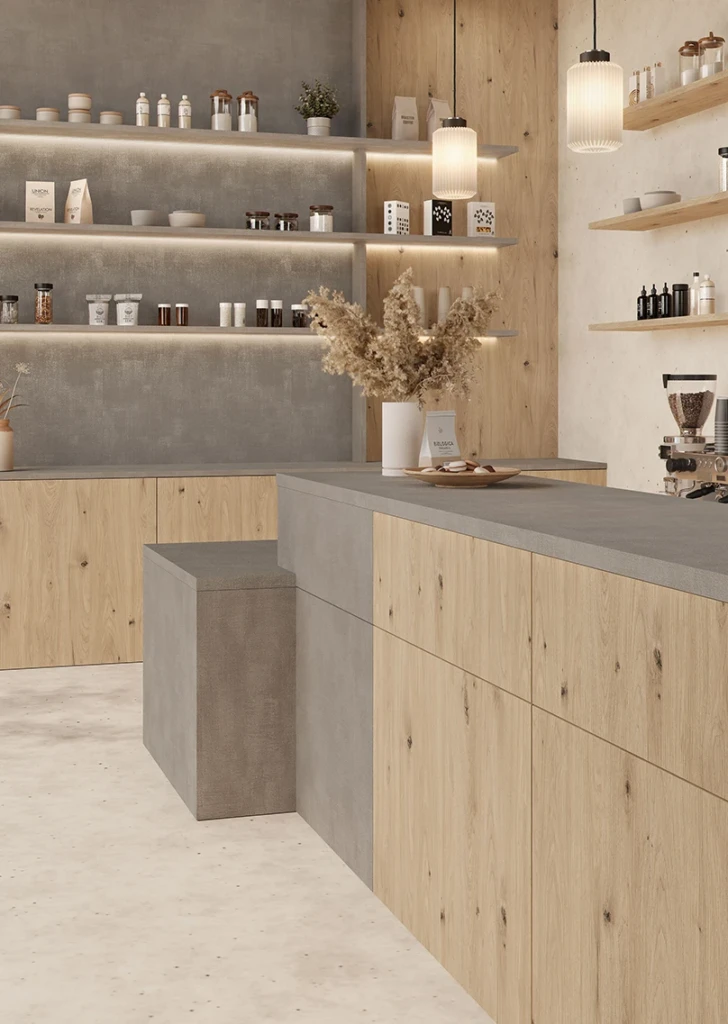
Beyond the catalogue, the message is tactile: woods to “touch and see” that solve the eternal dilemma of the project (feel + durability) with anti-fingerprint surfaces, warm mattes and synchronised pores.
Why is industrial neo-craft making a comeback now?
Because the market (and the end user) demands sensory appeal with discernment: materials that evoke emotion, but that can withstand intensive use and the repetition inherent in the work. Neo-craftsmanship no longer remains confined to the unique object: it is industrialised without being diluted, thanks to surfaces that encode the gesture of the workshop and replicate it coherently. That line, from the craft to the controlled series, is what differentiates a project “with texture” from one that is simply coated.
How to combine without losing the thread: CMF at the service of the project
The risk of mixing reliefs, patterns and stones is to break the harmony. Here, the CMF design acts as a skeleton: a consistent colour palette, warm mattes, and compatibility of thicknesses, formats, and edges. Ecosystems like Habitat 360 organise it in a One-Stop Shop way: from inspiration and prescription to logistics, with families designed to match (textures, laminates, edges, profiles) and avoid mismatch of tone or shine on site.