Materiality returns to the centre of discourse in architecture and interior design. Surfaces are no longer chosen solely for functionality or colour, but for their ability to generate atmospheres and convey sensations. In this context, matt, gloss and glass-effect finishes take centre stage in a new aesthetic of contrast, layers and quiet sophistication.
From the visual calm of super matt to the luxury of mirror shine, passing through satin surfaces that evoke lacquered glass, 2026 will be a year of carefully orchestrated combinations. And not just in kitchens or bathrooms: also in retail, hospitality and hybrid spaces that demand durable, tactile and emotionally resonant solutions.
The aesthetics of matt: tactile naturalness and discreet sophistication
The matt finish continues to grow in popularity, not as a passing fad, but as an established design language. In its most extreme version -super matt- it offers a surface that absorbs light, reduces reflections and adds chromatic depth. To the touch, it conveys warmth and closeness, attributes that are increasingly valued in post-digital design.
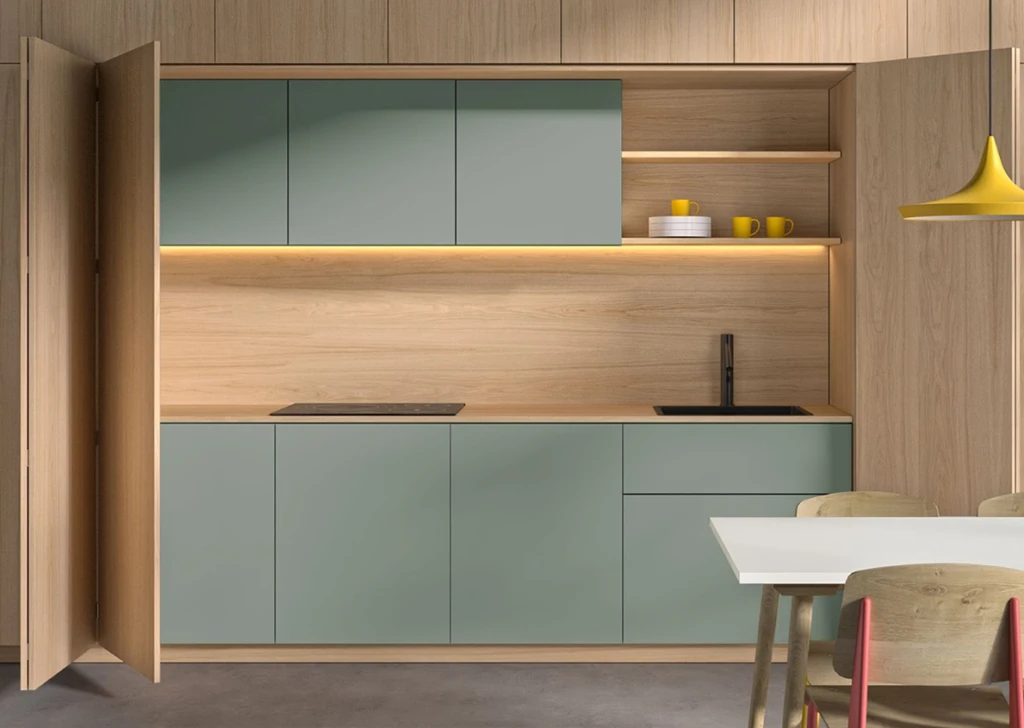
New surface solutions, such as those based on mass-coloured polymers, explore this aesthetic from a functional perspective. This is the case with materials like Solid, which combines a soft touch, mechanical resistance and a neutral or slightly coloured palette -with both matt and gloss options- designed to be integrated into kitchens, furniture or high-traffic vertical applications.
With options like Verde Java Solid Matt or Gris Lava Solid Matt, Solid becomes a versatile solution for vertical applications, especially in high-traffic environments such as kitchens or retail. Its low density -which reduces the carbon footprint- and its mechanical resistance make it suitable for sustainable and long-lasting interiors.
Glow effect and glass: light as a design material
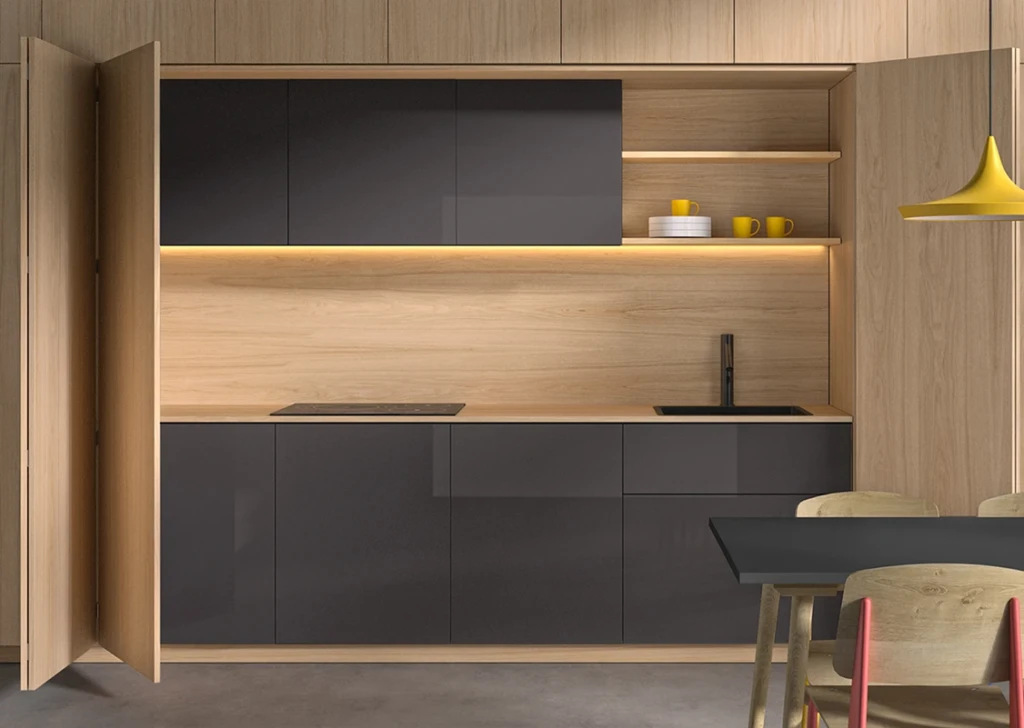
In contrast to the matt sobriety, finishes that reflect light are resurfacing, but from a more restrained perspective. Today’s brilliance is sophisticated, almost architectural. It does not seek to dazzle, but to amplify natural light, generate spatial depth and give a scenographic character to the interior. At this point, the glass effect takes centre stage.
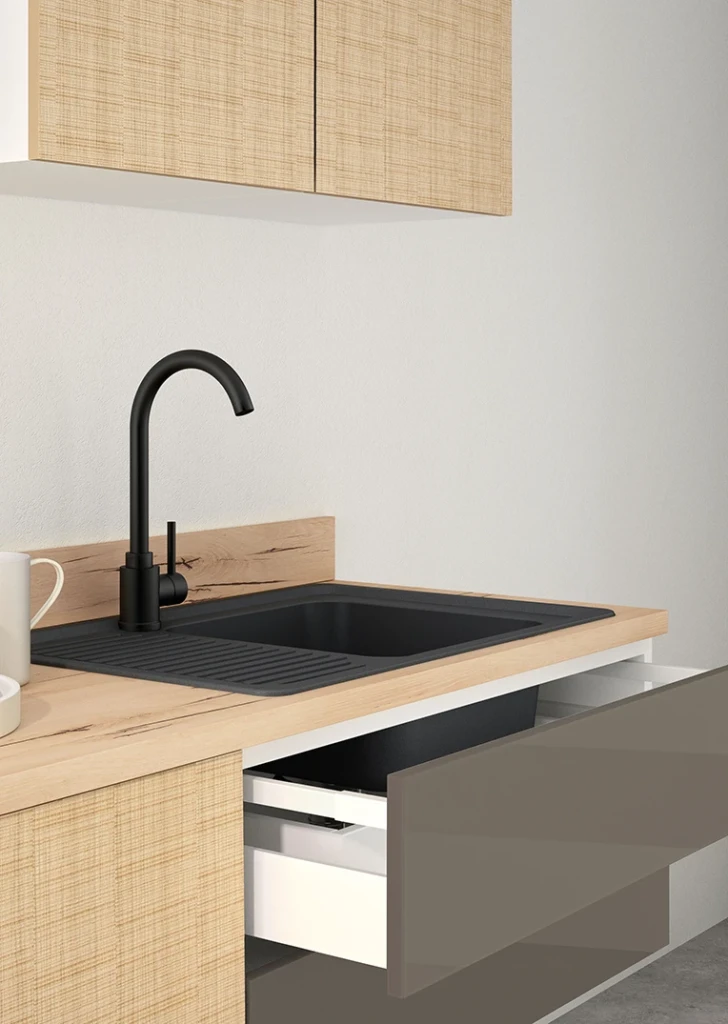
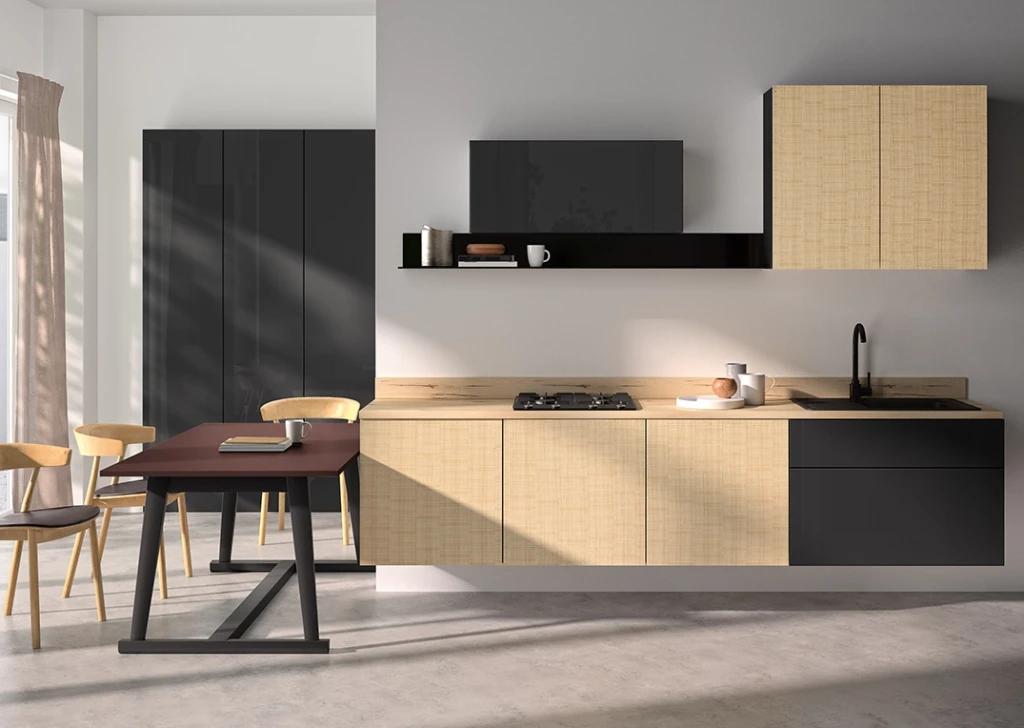
In this regard, solutions such as those in the Topglass range stand out, which work on brilliance from a sobriety, through a high-definition surface layer, similar to lacquered glass. Decors like Gris Reno or Negro Memphis are already used in compositions where the glow finish coexists with natural materials, fabrics or technical surfaces. These proposals do not seek prominence on their own, but rather to be part of a coherent visual narrative.
Gloss and matt: contrast as an aesthetic strategy
What will really set the trend in 2026 is the coexistence of both finishes in the same space. Alternating matt surfaces with glossy or satin elements creates a richer material language, allowing for the hierarchical organisation of areas, the creation of visual rhythm, and the reinforcement of the project’s identity.
Matt fronts with glossy details, glow shelves framing satin backgrounds, or modular wall coverings that alternate both finishes, are some of the most seen compositions in trade fairs and trend editorials in 2025. This approach is supported by materials such as those in the L100 range, which offers glossy and matt versions of the same colour -such as the classic White SR209– allowing for coordinated interiors with subtle changes in texture.
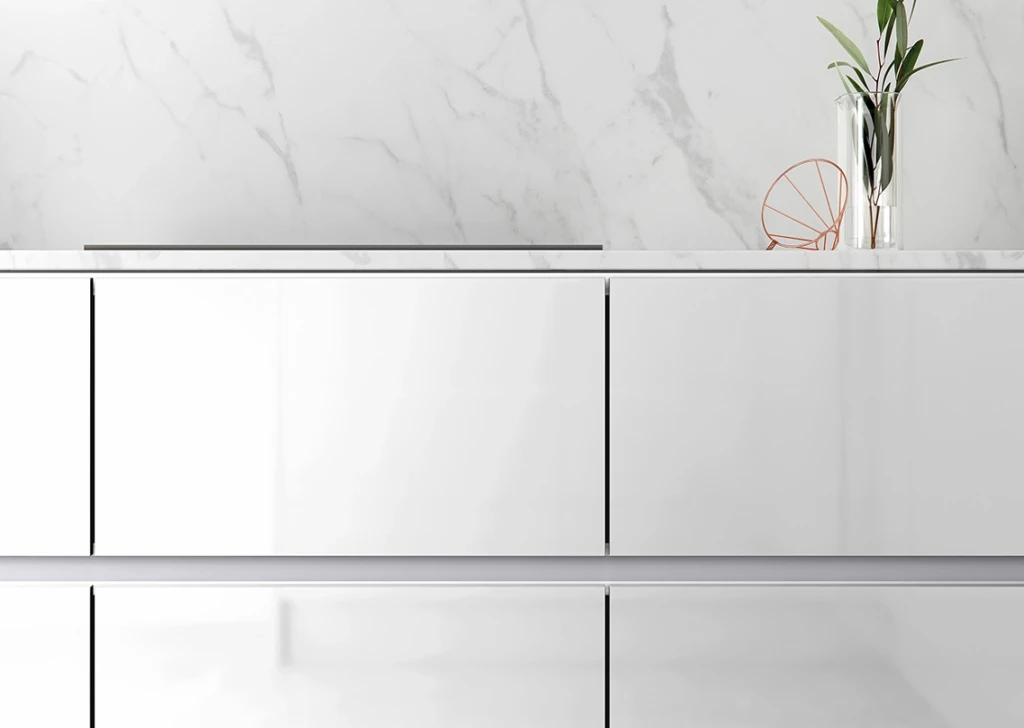
Surfaces have become expressive tools of contemporary design. And it is in their mixture -not in their purity- that interiors find their identity today. In contrast to the maximalism of the past or cold minimalism, 2026 outlines a new material language: silent, balanced and deeply sensory.