José Manuel Ferrero‘s professional career is closely linked to Valencia. It was at the 2003 edition of the nude show, at Feria Hábitat, where the first appearance of his work took place, coinciding with the birth of his firm, estudi{H}ac. 22 years later, he is responsible for conceptualising this same nude salon to give way to more young professionals.
He describes his firm as a design studio, specialising in custom product projects, interior architecture and the creation of ephemeral assemblies. This tailored suit turns Ferrero into a gentleman of design, as he defines himself. In his career spanning over two decades, he has won international awards such as the German Design Award, IFF, Restaurant & Bar Design Awards, Archiproducts, ADI FAD, ADCV, and was awarded Best National Designer 2023 by Interiores magazine. We spoke with him to learn more about his current perspective on the profession following this period of success.
You say that Phileas Fogg is a character who has left a special mark on you and is similar to your experiences around the world. Besides England, what other countries have left their mark on you and why?
England has been key for its culture of detail and tradition, but Japan has also left a deep mark on me because of its way of understanding silence, sobriety and respect towards the materials. Italy, on the other hand, represents for me the passion for beauty and design as a lifestyle. And, of course, Spain, because from here I have learned to appreciate the richness of the craftsmanship and industry that surrounds us.
What part of the work you do you enjoy the most: product design, interior architecture, ephemeral assembly…?
Each discipline has a different language, and that fascinates me. The product allows me to work on the most intimate detail, on a close scale to the user. Interior design creates complete atmospheres that surround. And the ephemeral assemblies are pure creative energy, an instant laboratory. I enjoy everything because each field enriches the other.
What did it mean for you to participate in the nude show in 2003?
It was the starting point, a place to show my way of understanding design unfiltered, in direct contact with the industry and with other designers. Nude gave me visibility, but above all, confidence: the certainty that there was a possible path from my own voice.
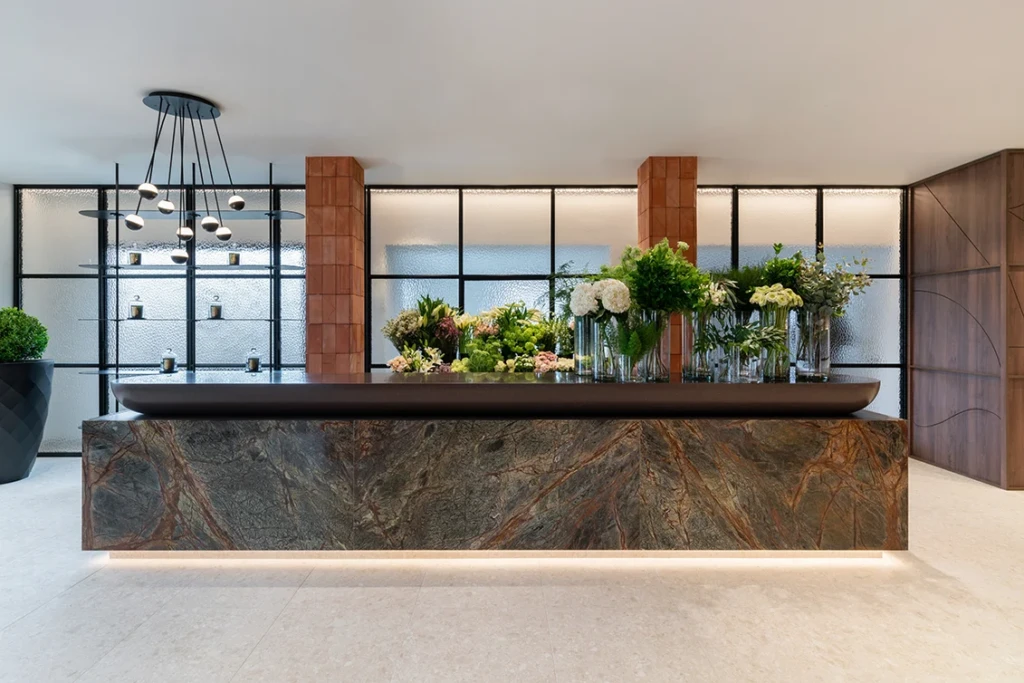
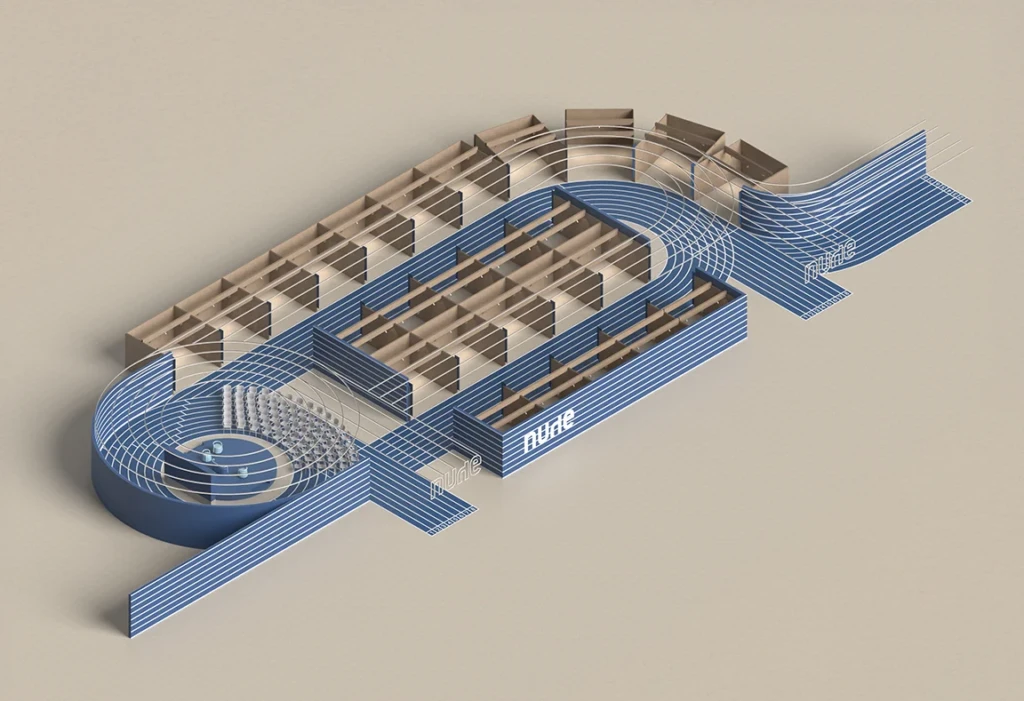
In this edition of the Feria Habitat, the nude area is transformed into an athletics track. How do you see the long-distance race of design and architecture in these times?
Design is not a sprint, it’s a marathon. It takes endurance, patience and long-term vision. We live in a time of constant change, where the immediate seems to prevail, but I believe that the true contribution of design is in building solid and coherent trajectories.
What is your favourite material to work with?
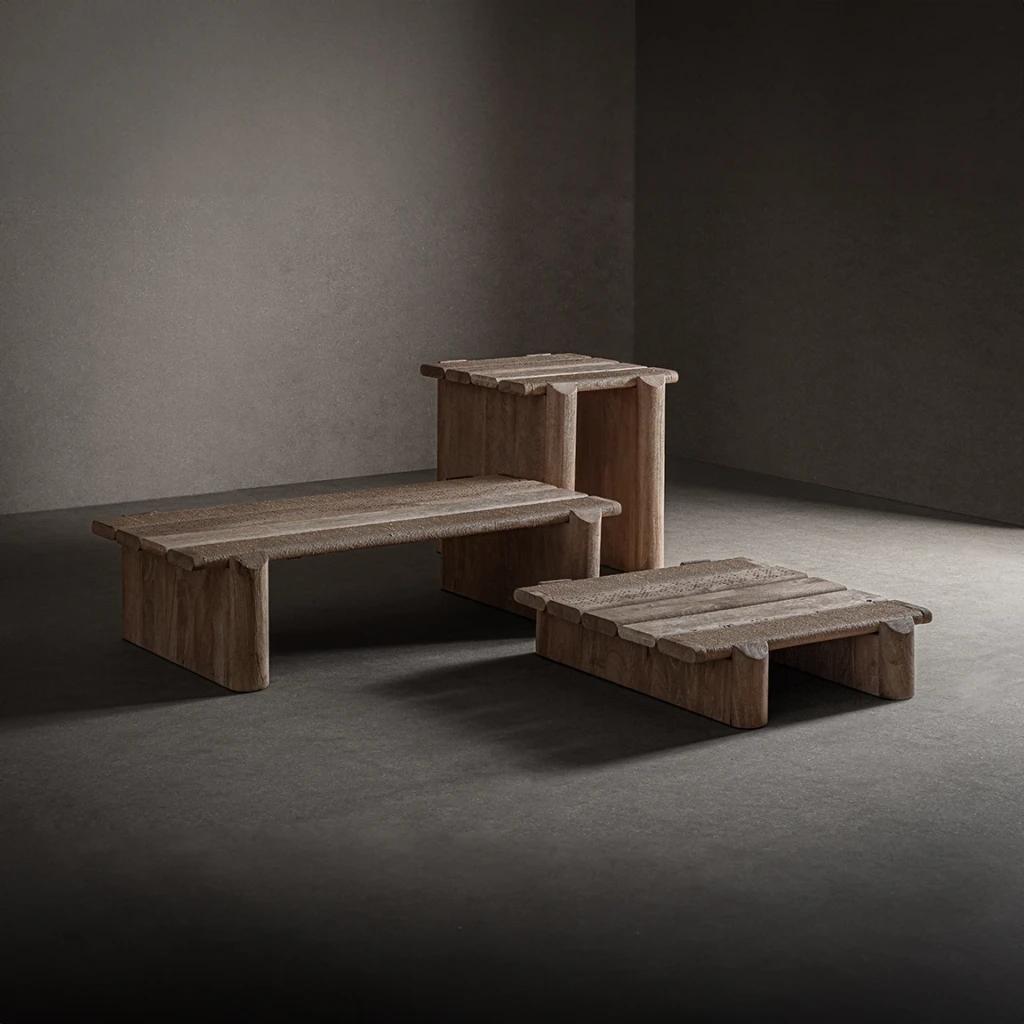
I am very interested in wood, for its warmth and versatility, but also textiles, because they carry with them history, memory and a very powerful emotional bond. The combination of both is a field in which I feel very comfortable.
For your origins, you are closely linked to the textile industry. What weight does the imagination of fashion and tailoring have in your creative universe?
It is essential. Tailoring has taught me the value of precision, of the perfect cut, of the detail that changes everything. I work on design like a tailor-made suit: each piece, each space has to adapt to whoever lives in it. That “tailor-made” vision is an essential part of my language.
How do you assess the more than twenty years you have had your own company?
These have been years of great effort and continuous learning. The balance is positive: we have managed to consolidate our own, recognisable style, and at the same time keep ourselves open to new ways of working. I’m proud of my perseverance and of having created a team and a studio that continue to evolve.
About what project do you feel the greatest pride?
It is difficult to choose, because each project has its moment and its value. But I would probably say I’m most proud of the ones where we’ve managed to create an emotional connection with people. That can occur both in a chair and in a hotel.
How do you find inspiration when you hit a creative block? Are you more digital or analogue in your creative pursuits?
I’m more analogue. I like to draw, touch materials, and observe. Many times, inspiration comes from everyday things: a fabric, a found object, a conversation. The digital aspect is important for development and communication, but the creative spark always comes from the tangible and the human.