The way we inhabit spaces is changing in parallel with our way of life. Housing, work, and leisure are beginning to coexist in the same environments, and interiors are being designed to respond to uses that are no longer fixed. This evolution is evident in areas such as housing, hospitality, transformed offices or hybrid spaces, where the boundaries between functions become more porous and projects adapt to new ways of living. In this context, the trends that will mark 2026 are beginning to consolidate: more flexible spaces, attentive to well-being and capable of accompanying the changes of those who live in them.
This approach sets the course for a new way of designing, where functions are mixed and interiors are no longer divided by strict uses. Interior designer Francesc Rifé calls this process integration, and explains it like this: “There are fewer and fewer boundaries between the functions of a space. We’ll also see smarter modular systems that allow you to adapt your home or business without major construction work”. The pursuit of silence, efficiency, and order is also gaining prominence. According to Rifé: “We are looking for well-being and efficiency. And I also see more awareness about what we buy: fewer objects, more meaning”.
New geographies and typologies
International design brings another perspective that is beginning to consolidate in 2026. Alessandro Baccari, design director and senior partner at DesignAgency, notes: “We anticipate a significant increase in the development of residential and hotel destinations in lesser-known locations across the EMEA region”. This expansion redefines the concept of a desirable location and reinforces the trend toward more remote, less urban environments that are better connected to nature.
Architect Betsaida Curto, founder of Estudio Copla, agrees that sustainability and material comfort will continue to grow in design in 2026: “We expect the trend to continue towards the use of natural materials and showing them in their essence. It’s positive in every aspect: sustainability, culture, and comfort”.
Hybrid and adaptable spaces
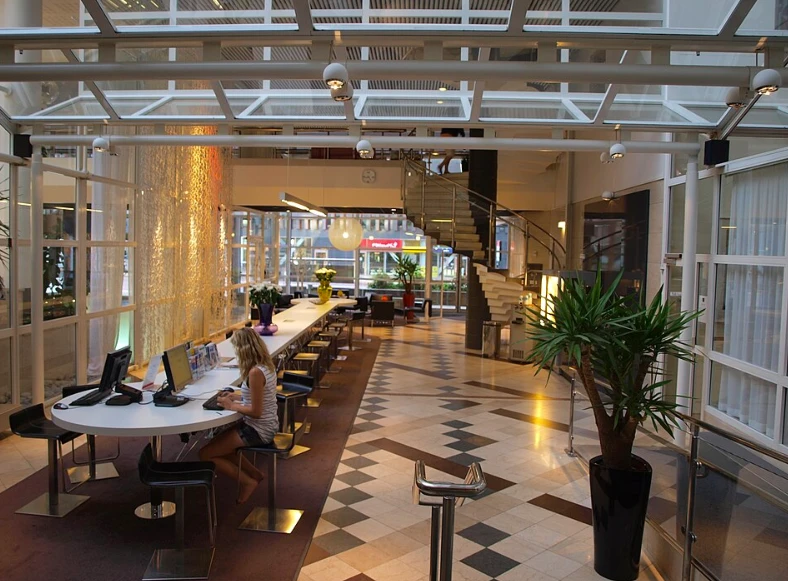
One of the most obvious trends is the disappearance of barriers between uses. Housing adopts hospitality criteria, hotels incorporate work areas, and commercial spaces seek a domestic character. The lack of space and changes in living arrangements are accelerating this evolution. For Rifé, hybrid spaces will shape the immediate future: “We need places that change as we change, that can be for work, rest or meetings depending on the moment”.
Baccari identifies a clear trend towards residential projects that incorporate hotel services: “We are seeing a global boom in branded residential projects. These buildings bring the hospitality experience, resort amenities, and new interpretations of renowned hotel brands into the daily lives of their residents”.
Ver esta publicación en Instagram
This approach affects architecture and also furniture: modular systems, mobile solutions, transformable pieces and design that avoids invasive works. The idea of flexibility is also at the heart of residential and rehabilitation trends. Curto considers it an urgent necessity: “In reality, the world is transforming at an accelerated pace; not all of society follows the traditional family model anymore. I believe it is our responsibility as professionals to design flexible spaces that can evolve with current and future needs”.
Ver esta publicación en Instagram
Lifestyle changes and affordable housing
Social changes are transforming the way we think about housing. New family models, teleworking and the scarcity of square meters are driving more accessible and flexible typologies. Affordable housing becomes a challenge for contemporary design and opens paths such as coliving, which combines private spaces with common areas. For Baccari, these spaces respond to a new type of inhabitant: “For these projects we create turnkey interiors for modern nomads, people who travel frequently for personal or professional reasons and whose income does not depend on a single place”.
In hospitality, he points to another emerging pattern: “In a digitally saturated world, silence and escapism are emerging as the most desired new luxuries. Brands are looking for remote and off-the-beaten-path locations to transform them into the best possible guest experience”.
Ver esta publicación en Instagram
Conscious materiality and connection with nature
The trend towards natural and sensory materials will continue to grow in 2026. Biophilia ceases to be a concept and becomes a structural part of the projects: more natural light, plant presence and greater connections with the outdoors. The colour palette is oriented towards earth tones, deep greens and clays. Wood, stone, and ceramics provide warmth and visual depth.
Curto emphasises the territorial component: working with local resources as a principle of sustainability. For Rifé, sustainability is also understood from a time perspective: “Sustainability is no longer an added value, it is an obligation. A sustainable material lasts, ages well, and doesn’t require frequent replacement”.
Baccari links sustainability with social well-being: “Many of our residential projects include spaces that can be quickly transformed to facilitate sociability, learning, coworking, physical activity and enjoyment of the outdoors”.
Ver esta publicación en Instagram
Design as a quality of life
Professionals agree that trends are not born from aesthetics, but from the way we live. The design responds to the search for well-being in everyday life: ergonomics, silence, natural light, flexibility and invisible technological solutions that improve the experience without dominating the space.
Rifé summarises this view in a phrase that sums up why these trends are taking hold in 2026: “Flexibility, sustainability and well-being are the three pillars of the present and the future. And well-being, in the end, is the true reason for design. If a space doesn’t improve your life, it’s not well designed”.