The CMF (Colour, Material, Finish) is no longer “the last thing to be chosen”, but a tool to decide how a space feels from minute one. At Connections by Finsa we have been clear about this this year, and we have analysed it from three different perspectives.
1) The base: finishes that acclimate the project
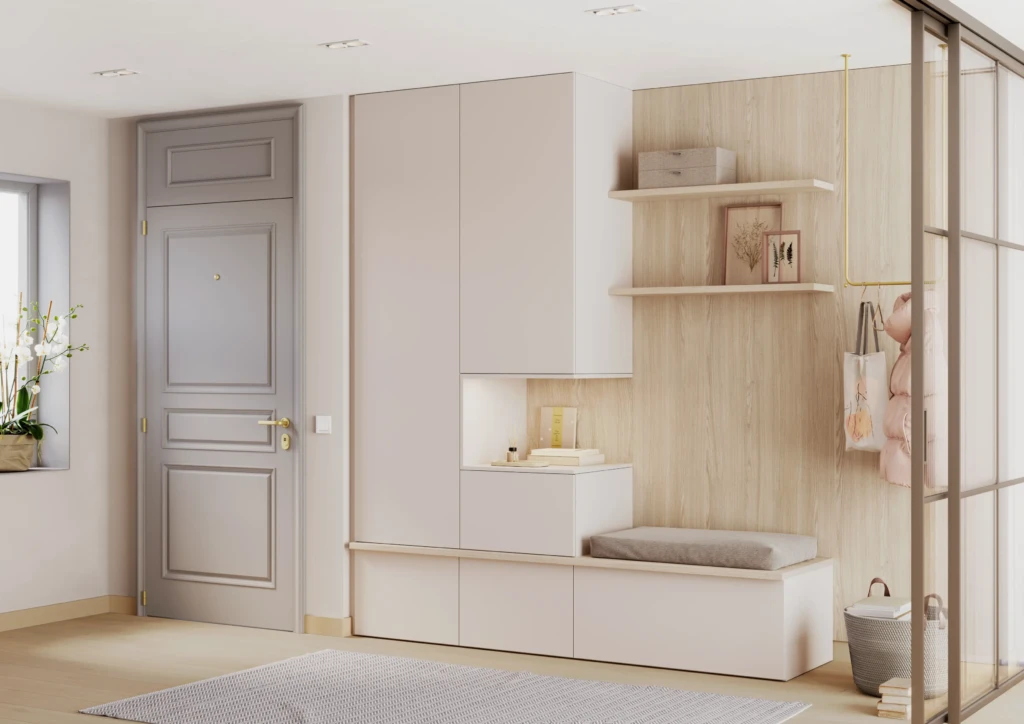
In “5 finishes for 360 habitats”, we talk about those materials that form the backbone and support the coherence of the whole without seeking all the prominence. Look at:
- Merino, in warm grey, has established itself as that neutral that almost always works: serene, modern and very compatible with calm interiors (yes, also with the famous “silent luxury”).
- Siena Calypso took earth tones to a richer place: browns, terracottas and tans that give depth without darkening the project.
- Tivoli Ash in Yoku finish immersed us in the tactile: light wood, Nordic inspiration, and a texture that begs to be touched.
- And in the same sensory vein, the Yute-type grooves (with that nod to braiding) and the ready-to-use varnished natural veneer bring practicality to the concept of craftsmanship.
In this way we have interiors designed in 360º, where panels, doors or fronts speak the same language.
2) The expressive layer: fantasies that function as micro-scenes
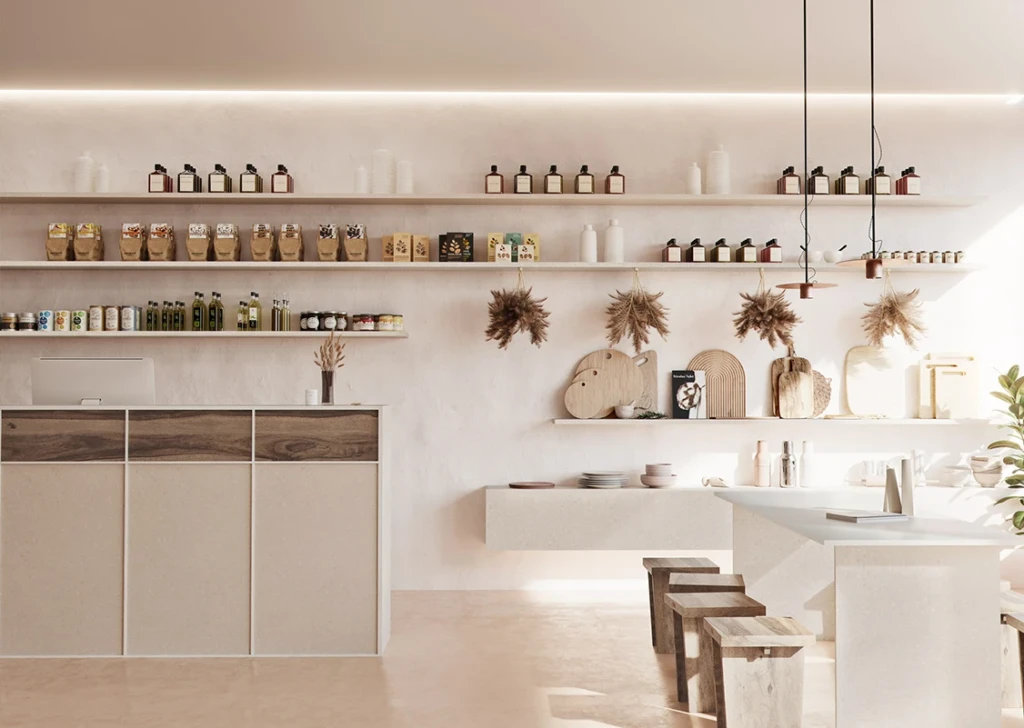
On that calming foundation, 2025 also made room for materials with more character, as we saw in “Five abstract designs that rewrite contemporary interior design”. Here, abstract decor appears as a narrative resource. We highlight these three examples:
- Gravity Hueso suggests the materiality of stone.
- Canvas Greige introduces that canvas effect with subtle imperfections.
- Papira White and Selene Gris work with neutral tones using whites and greys charged with depth.
Where do they fit best? In pieces where a single plane can change everything, such as a retail counter, a boutique hotel headboard, or the back of an office.
3) The near future: when technology amplifies colour
The third angle we explored was “How technology is transforming our perception of colour in interior design“. This approach demonstrates that colour is no longer static.
The reference was clear: Google’s Making Sense of Colour at Milan Design Week, featuring rooms where colour was modulated with light, sound, and vibration. From there, the scenario is easy to imagine (and increasingly less like science fiction):
- A lobby that adjusts its colour temperature according to the time of day.
- A hospital waiting room that softens the atmosphere if it detects stress.
- A workspace that accompanies moments of focus or pauses with subtle changes.
It’s not about a constant “wow” effect; the key is to use technology to make the space more responsive.
CMF as a strategy
If we put the three pieces together, the message becomes very clear: CMF is a way of designing the experience, not just the aesthetics.
- Neutrals and textured woods to create coherence.
- Abstracts to add identity without being strident.
- Technology to make colour more vibrant and adaptable.