The working-class neighbourhood of Balsas de Ebro Viejo, built in the seventies in Zaragoza, is undergoing a transformation that serves as a model for Europe. The InCUBE project is renovating a group of homes using innovative techniques, which aim for speed and less disruption to the neighbourhood. The pilot project in Zaragoza is part of an initiative that is also being tested in Trento (Italy) and Groningen (Netherlands) and has Next Generation funding.
Specifically, the program focuses on four buildings in the same urban complex where forty families live. The goal is not cosmetic: it is about correcting real, everyday problems to achieve more comfortable housing and improve the quality of life for the people of this working-class neighbourhood. The improvements focus on energy efficiency, by improving the building’s thermal insulation and installing renewable energy sources; accessibility, with the installation of lifts; and building conservation, with the renovation of some of the facilities.
Modular architecture, key to reducing time and costs
Modular architecture is key to accelerating these processes. “Execution times are considerably reduced. Furthermore, costs are much more controlled, since many of the unforeseen events that usually arise during a conventional construction project are avoided”, assures Mapi Dal, project manager at Minimal Metro7 studio, responsible for the stairwell cores with lifts. “Working conditions also improve, because manufacturing takes place in covered environments and is not dependent on weather conditions. In short, it provides speed and cost control”, he adds.
The practical advantage for its inhabitants is obvious. “One of the most important things during the renovation was the short time people had to leave their homes: just three weeks, when the usual time is about a year. That’s thanks to the modular architecture, which greatly accelerates processes and makes them simpler”, points out Boniface Mselle, technical manager at CIRCE (Centre for Research on Energy Resources and Consumption), the entity in charge of monitoring the InCUBE project.
The potential for replicating these solutions is high. “These are buildings of which there are already several examples in Zaragoza “This type of solution has great potential to scale”, says Mselle. This is especially relevant in neighbourhoods built around the same time and with similar structures and aesthetics, where a standardised intervention can be applied to several properties.
Ver esta publicación en Instagram
Active and passive energy efficiency of almost 89%
Energy improvement addresses both passive and active aspects. Clear deficiencies were detected before intervention. “For a while, a worrying trend was observed: the air quality was not good. There were very cold houses in winter and temperatures that exceeded 30 or 35 degrees in summer. “We also detected high levels of humidity and carbon dioxide, especially during the winter months”, explains Mselle.
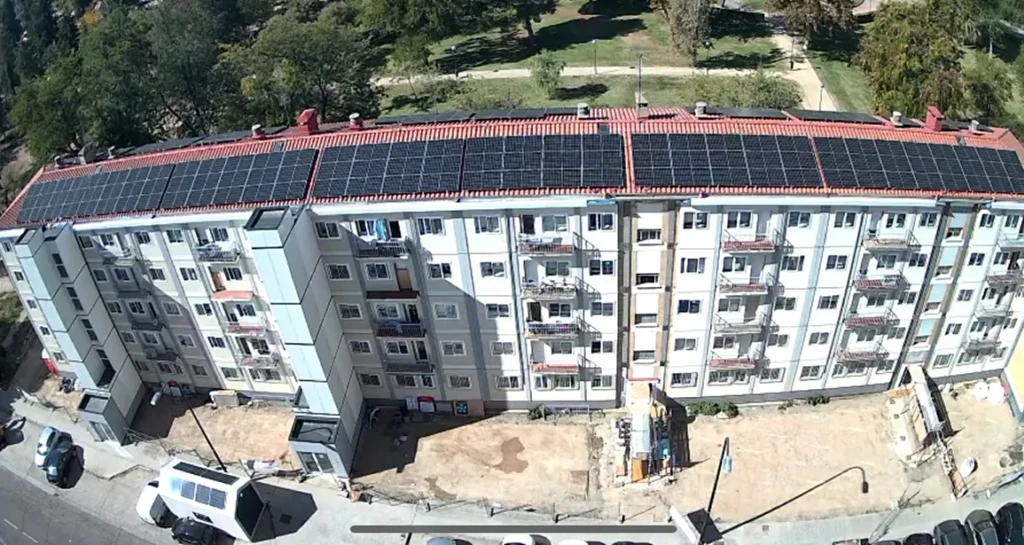
To address this, the company KOVER, specialising in industrialised modular facades, was responsible for placing a “new skin” on the building using prefabricated modules. A double outer skin is installed that integrates additional windows without removing the original ones; in this way, a continuous envelope is created, of which the facade becomes a part”, says Dal. In this way, the intervention respects the architecture and colours of the neighbourhood.
And it is more energy efficient. “The key is to improve isolation. Thanks to these implementations, the homes will go from an energy class E to a class A, making them much more efficient and significantly reducing energy consumption”, Mselle explains.
On the active side, the air conditioning and domestic hot water (DHW) systems are renewed, 77 kilowatts of photovoltaic energy are installed, and gas equipment is replaced by electric water heaters and high-performance heat pumps. “The aim is to electrify the entire production system, both for domestic hot water and for generating heat and cold, so that the energy source is electricity”, Dal explains. The project’s objective is ambitious: to achieve an 88.5% reduction in energy consumption, with an investment calculation that would amount to less than €70 per month per household, and self-consumption is maximised through storage and monitoring systems.
Industrialised accessibility
Minimal Metro 7 has manufactured the stairwell cores with a lift in its warehouses in Pinseque and has transported them to the building already finished. “All of this is done in an industrialised manner. We manufacture it in our facilities and then move it to the demonstrator area”, Dal explains.
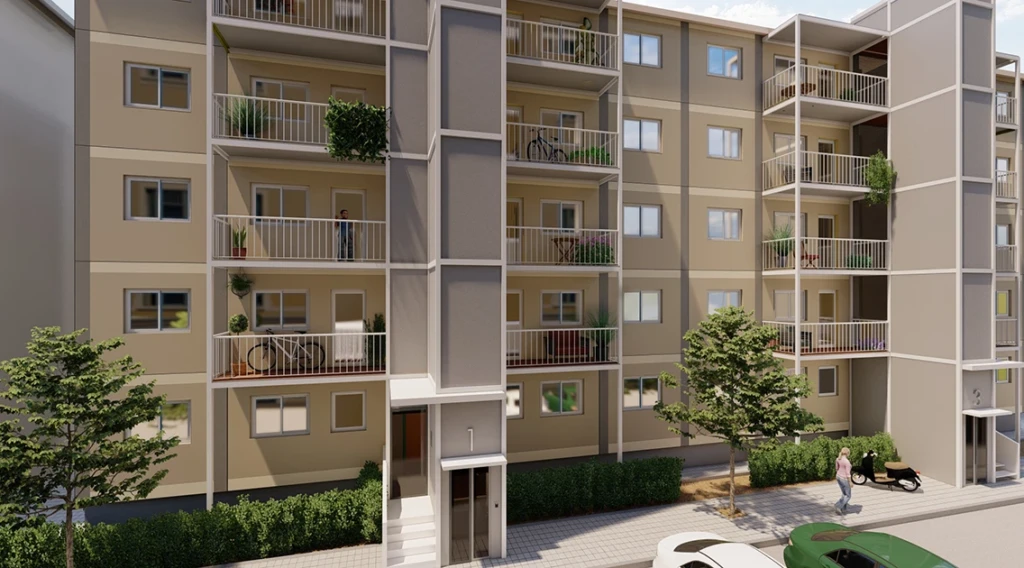
Precision through innovative techniques is fundamental to the process. “Since the beginning of the documentation process, 3D scanners and drones have been used”, Dal says, “the building was scanned and a point cloud was generated. This cloud is the basis for creating the BIM (Building Information Modelling) model of the current state and after the renovation. And this model contains all the information for the life cycle analysis of the materials used”.
Also, robots have been used in demolition tasks in order to improve safety and speed of work. “Innovative techniques are introduced throughout all phases of the rehabilitation process, including the execution and design phase”, Dal emphasises.
The structural intervention combines prefabricated elements with existing ones. “The aim is to create a connection between the existing building and the new one because, ultimately, both structures move in different ways”, she adds. That philosophy also translates into utilisation: “The same system can be applied to other buildings. Ultimately, it’s a process that is carried out in the factory. Therefore, all the leftover materials can be used in another renovation that uses the same system”.
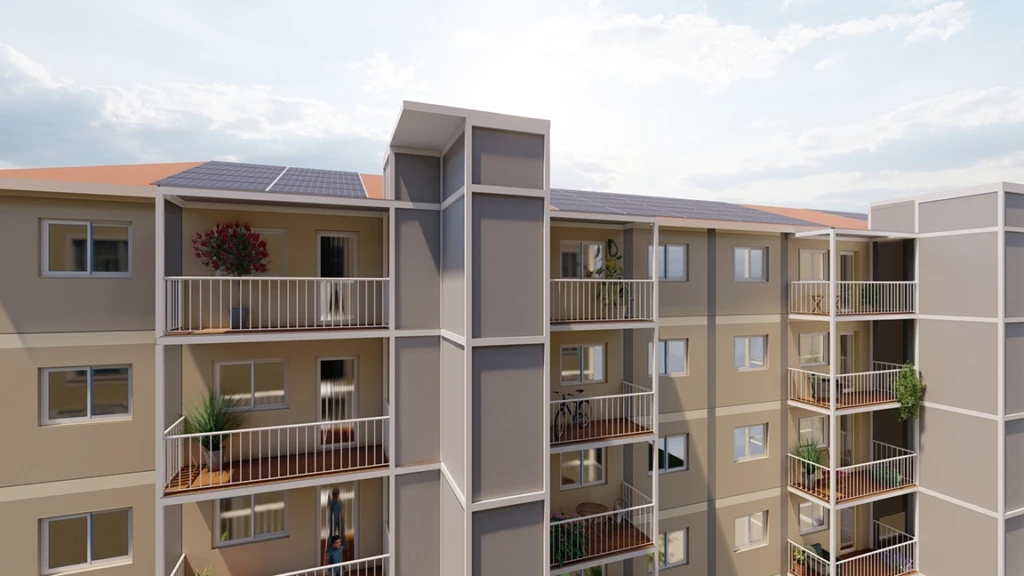
From Zaragoza to Europe, InCUBE seeks to generate a method that can be applied to similar contexts. The result, according to its promoters, is a faster, less invasive and more efficient way of rehabilitating: less construction time, less energy expenditure and homes adapted to current needs, while preserving the fabric and aesthetics of the neighbourhood.