
Spending the summer in the city has become an increasingly complicated activity, especially in Europe, the continent whose temperatures have increased the most in recent years. Furthermore, the hot season lasts longer: according to a study from Climate Resilience for All, in some European cities, that hot season lasts up to five months. How can we better cope with those weeks and, at the same time, manage to lower the temperature? One proposal is the 3-30-300 principle: that each home, workplace and school should allow you to see at least three trees from the window, be in a neighbourhood with more than 30% vegetation cover and a maximum of 300 meters from a decent park.
“In this year of 2026, with its heat waves, we have realised that trees are essential for cooling and providing shade”, explains Dutch researcher Cecil Konijnendijk, co-director of the Nature-Based Solutions Institute and the originator of the principle, coined in February 2021. As the expert points out, making cities greener is not a whim, but something whose benefits have already been proven. In addition to contributing to lower temperatures and thus preventing many heat-related deaths, trees “reduce pollution, help regulate water, provide habitats for birds and other animals, and make our streets and neighbourhoods more attractive and healthy”. Physical health improves, but so does mental health. “Generally, people who live in neighbourhoods with more trees and green spaces are happier”, Konijnendijk points out.
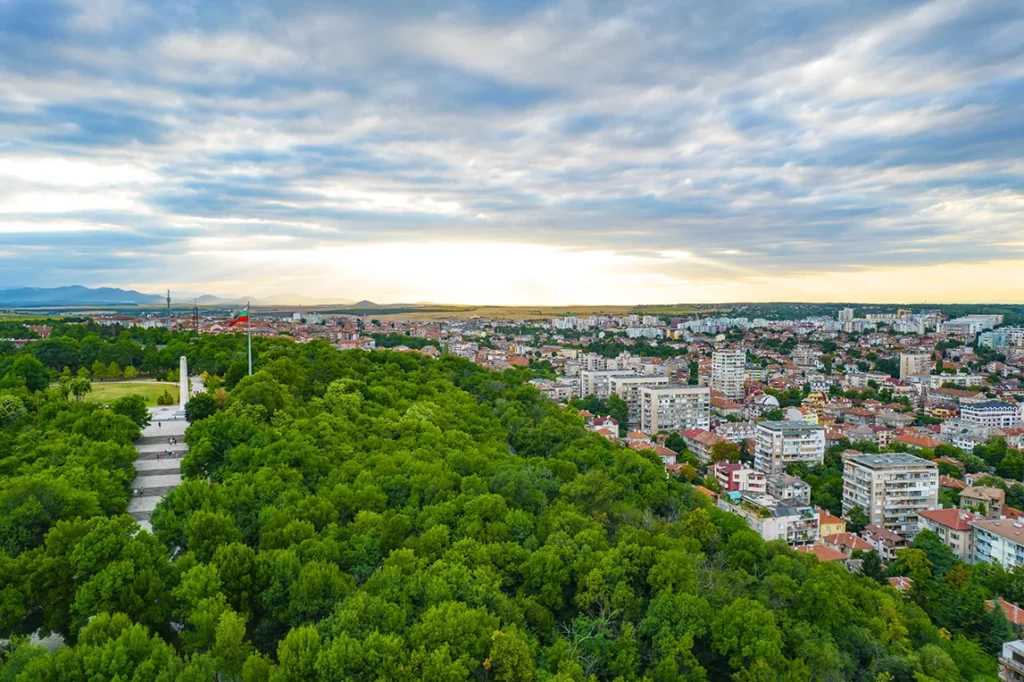
Trees for every street
One of the characteristics of the 3-30-300 principle is that it seeks to ensure that all people living in a city, regardless of the neighbourhood they live in, have the same access to nature. Given that studies show that the greenest areas of cities (those with more trees and close to parks) tend to be the most expensive, going neighbourhood by neighbourhood, street by street, allows us to gradually eliminate this discrimination.
“With the 3-30-300 principle, we can analyse how different neighbourhoods are doing. By combining this with, for example, public health data and socioeconomic information, we can see where the areas with the greatest need for trees and green spaces are located. Often, these will be areas with vulnerable populations where there is also little vegetation cover and insufficient access to green spaces such as parks or gardens”, the expert explains. The next step is for local governments and urban planners to prioritise these neighbourhoods when designing and implementing their urban greening strategies. “By working with local communities, they will be able to improve their conditions and make their neighbourhoods greener and healthier”, he says.
After announcing the principle shortly after the COVID-19 crisis, “hundreds of cities” contacted the researcher to express interest in the concept, many of which are actively working on its implementation. An example is Malmö (Sweden), which has included the model in its urban development plan. Another is Arnhem (Netherlands), whose City Council explains on its website that “some solutions are simple: young trees grow naturally and will provide more shade in the future. In addition, funds, such as those from the Tree Fund and the Climate Adaptation Fund, have been allocated to plant more trees and greener neighbourhoods”.
Furthermore, the European Commission was also interested in knowing how the cities in the eurozone are doing. To do this, in collaboration with the University of Copenhagen, they analysed 862 cities with at least 50,000 inhabitants in the 27 member countries of the European Union, Iceland, Norway, Switzerland and the United Kingdom. The results, published in the journal Nature, show that there is still much work to be done: only 13.5% of the European urban population fully complies with the 3-30-300 rule. And, as other research has shown, this study also confirmed the relationship between access to urban vegetation and economic conditions.
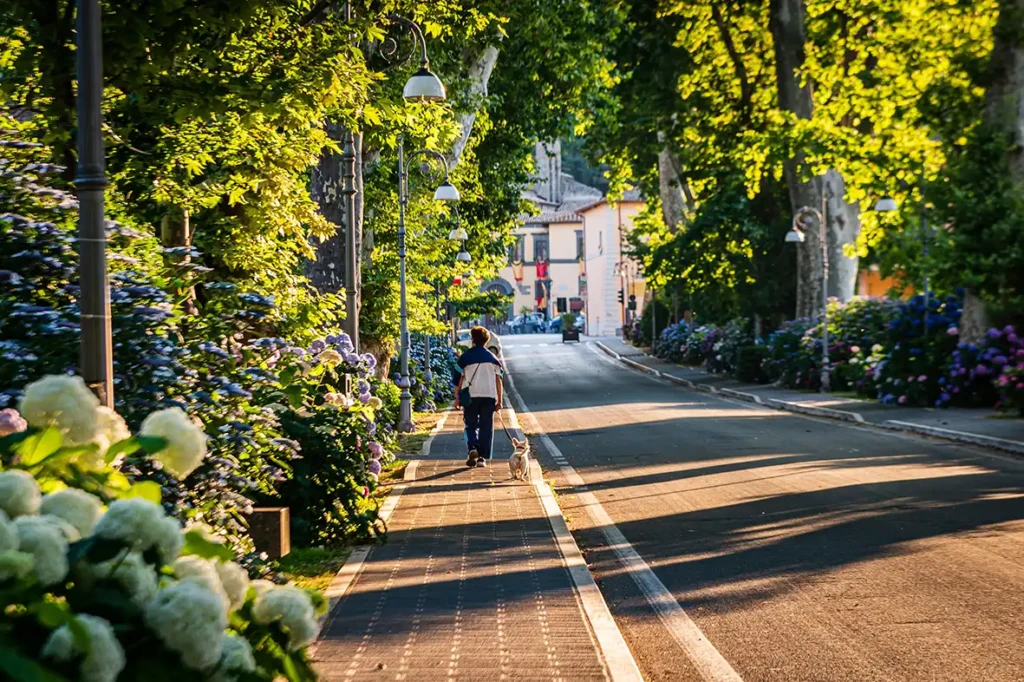
Why aren’t cities greener?
Biophilic cities have been discussed for decades, and it has been known that trees help make them more habitable. Added to this is the urgency with which climate change and the increase in the urban population are pressing, which makes it even more necessary to fill these habitats with nature. However, large urban squares continue to be inaugurated where there is not a single meter of shade. What is preventing urban planners from filling the streets with tree-lined streets?
“There are many barriers, such as a lack of awareness about the multiple benefits of trees and green spaces, the lack of political priority given to them, funding limitations, and the little attention given to the maintenance of existing trees so that they can grow and live for many years (providing even more advantages than small trees)”, Konijnendijk reflects.
Another problem identified by the expert is the lack of collaboration between different sectors and professions. “Trees and green spaces must be linked to ‘general urban planning, public health, architecture, economic development, etc.'”, he points out. In fact, this is why he developed the 3-30-300 principle in February 2021, to provide a useful tool for all those industries, serving as a kind of common standard.
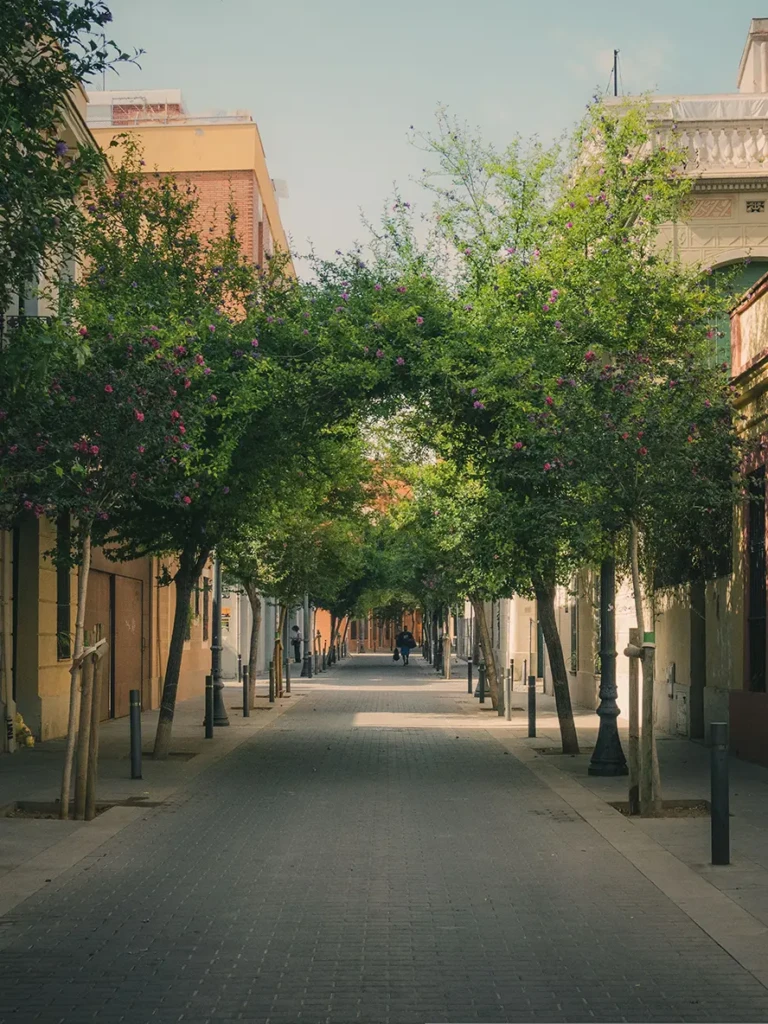
3-30-300, from the street to the university
Cecil Konijnendijk is also a professor (now honorary) at the University of British Columbia (Canada) in Urban Forestry, a relatively recent discipline that deals with the planning, care and maintenance of trees in cities. The expert argues that this is an increasingly necessary field. “With the increasing challenges facing our cities, for example, in terms of climate change, public health and biodiversity loss, there is a growing focus on the importance of trees and other vegetation”, he notes. Urban forestry “draws on a wide range of disciplines and fields, allowing for an integrated and long-term approach to the planning and management of urban green infrastructure. The field has grown rapidly over the past few years and I expect it to continue”, he explains.
It’s time to look out the window: how many trees can you see? If there are fewer than three, perhaps it will be necessary to write to the local authorities, attach a few studies and ask for a street that does not need awnings to provide shade, because it already has a leafy canopy formed by branches and leaves. In short, to live in an urban forest.