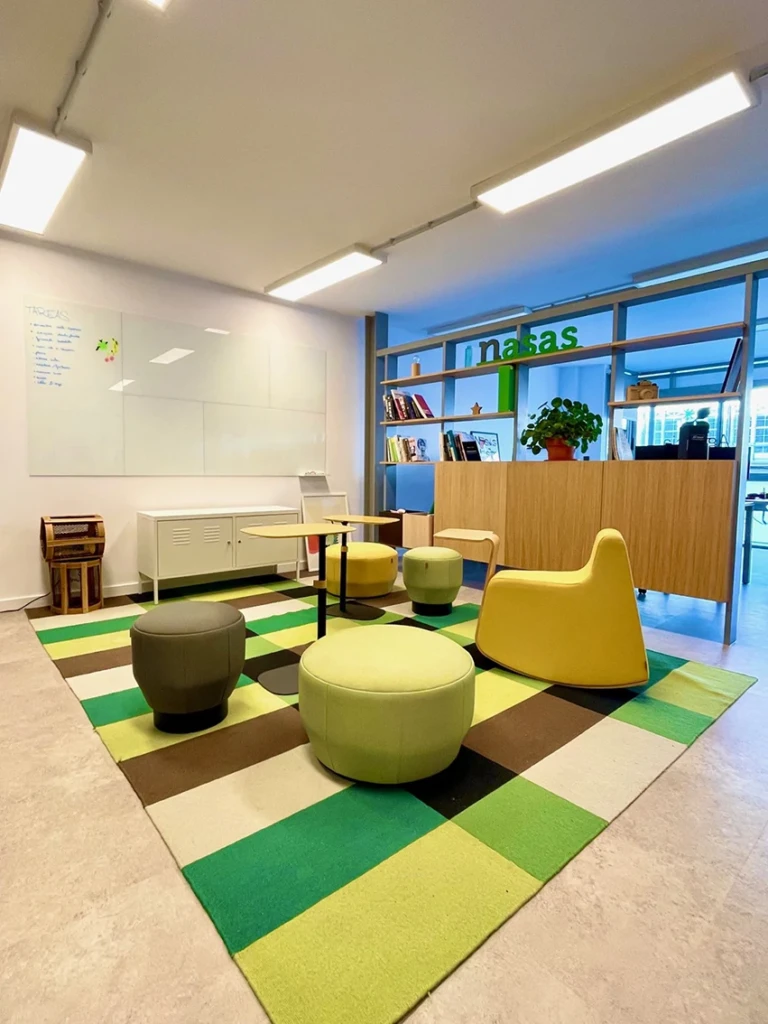
We know the theory: being outdoors, especially in natural environments, is good for your health. However, we cannot ignore what is actually happening: we spend between 80 and 90% of our time indoors. Our home, the office, the gym… is it possible to make these spaces also take care of us and be good for our health? This is one of the questions raised by biointerior design: how to make those places where we spend so much time not only visually appealing, but also promote our well-being and both physical and mental health. Bio-healthy furniture is part of those interiors.
“A bio-healthy space is designed to take care of the people who live in it. It’s not just about how it looks, about aesthetics, but about how it’s lived”, summarises biointerior design expert Carolina Pidal. To achieve this, aspects such as materials, air quality, light, functionality, and accessibility are taken into account, she explains.
Materials for bio-healthy furniture
The furniture in a bio-healthy space should also comply with these principles. Using a sofa as an example, Pidal explains that you have to look, first of all, at the materials. “The tissues must be respectful, biocompatible”, she says. In other words, they must not emit volatile organic compounds (VOCs), chemical substances that easily turn into vapours or gases and that can “damage indoor air quality”. This also includes foams, the expert clarifies.
Another important material is wood. “100% of bio-healthy products should have materials that are totally and absolutely natural as far as possible and without toxins, as well as being recycled or recyclable. Wood is a good example: it’s a closed cycle“, she points out, referring to the Cradle to Cradle (C2C) philosophy, a concept introduced by chemist William McDonough and architect Michael Braungart in 2002 and which already has its own certification. A C2C product –as all bio-healthy furniture should be– can be completely decomposed and reused to make something new, thus avoiding generating waste when its useful life ends.
Ver esta publicación en Instagram
Respect for the circadian rhythm
Another basic element of biointerior design is respect for the natural cycles of human beings, such as the circadian rhythm. That’s why lighting is so important. “It is essential. It’s lighting that accompanies us throughout the day with the different phases of the day, just like the sun”, says Carolina Pidal.
How can this be achieved? Raúl Romero, head of Communications at the Asturian lighting company Normagroup, explains that their R&D division has created SaLuz technology, “light fixtures that adapt to the circadian rhythm”. Using Madrid’s daylight hours and sunset times for each day of the year as a reference, they associate each moment of the day with a specific light spectrum. “This variation of spectra occurs in a continuous and imperceptible way to the naked eye”, he explains.
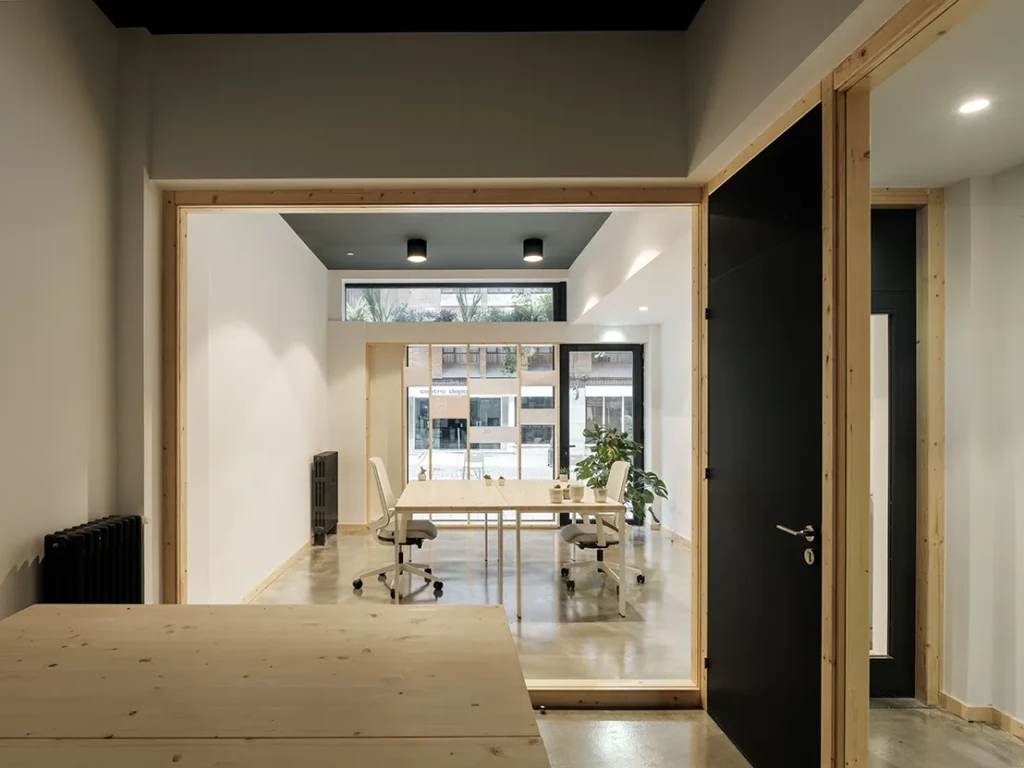
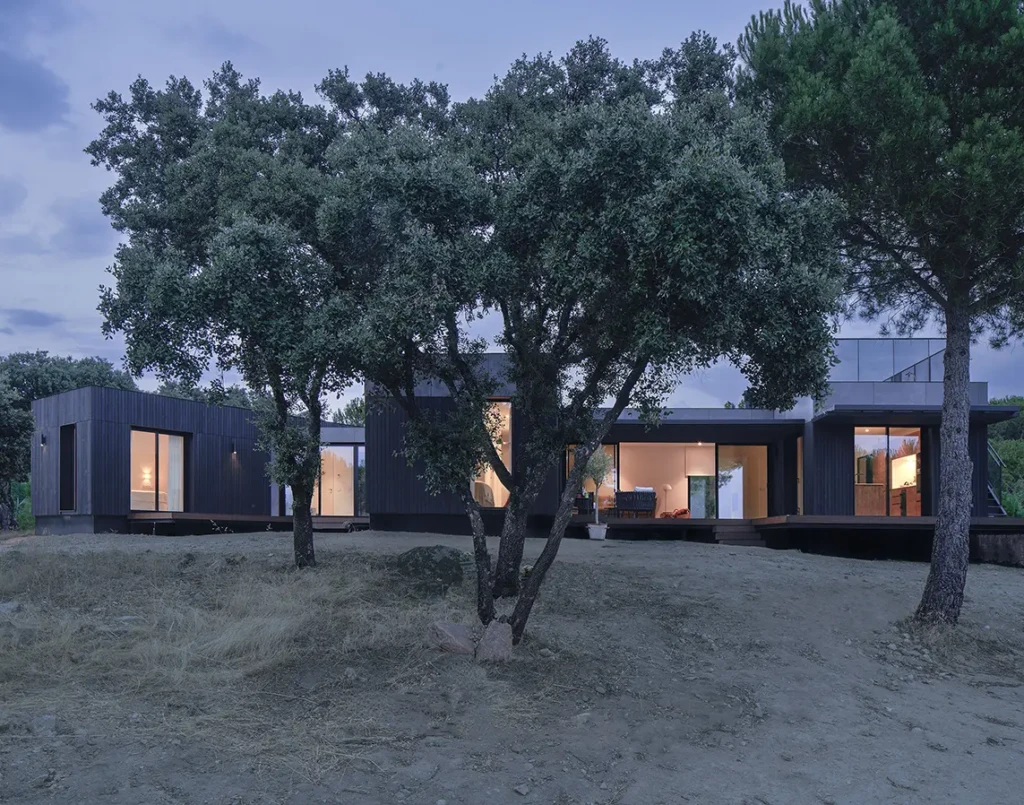
To get as close as possible to the experience of natural light, their luminaires also control flickering, the small fluctuations in the brightness of artificial light that manifest as a flicker and which in SaLuz are risk-free and are also in Risk Group 0 for the eye and skin according to European regulations. Normagroup’s technical lighting was used, for example, in Casa Tres Patios, a house designed under bio-healthy standards. To achieve this, in addition to the lighting, rest systems were also provided to promote physical comfort and recovery.
The importance of personalisation
Carolina Pidal always begins her projects, both for offices and for homes, by interviewing her client in depth. “I need to know exactly how you work in a space or how you live in it, ultimately. From there, I study the responses and look for the most suitable solutions, both for the space and for those who will inhabit it”, she explains. While there are universal elements, such as the use of natural and sustainable materials, seeking lighting that respects circadian rhythms or ensuring good air quality, everything must be highly personalised.
In places where there will be many different people, such as an office, the most adaptable ergonomics possible should be sought. “Chairs adapted for spending hours in them and that are adjustable, so that the tables are at the right height. There should also be footrests for optimal rest of the limbs, ergonomic mice, etc.,” she explains.
Even a sofa can be customised to suit different family members. “We are trying to reach a middle ground. If someone likes it a little more substantial, you can add an extra cushion in one area; if someone else likes to be wrapped up and hugged, we can think about cushions made of duck feathers, materials that are a little hollow and give me that possibility”, she explains.
Ver esta publicación en Instagram
Where to start with bio-healthy interior design
The fact that the spaces we inhabit have a direct impact on human health is not just a theoretical hypothesis: the World Health Organisation (WHO) has warned of the dangers of indoor air pollution, which it attributes to almost 3 million deaths annually worldwide. Although when starting an architecture or interior design project from scratch is a good idea to do so from bio-healthy standards, not everyone can afford to completely transform their home or office to comply with everything.
What to do then? Carolina Pidal recommends taking it one step at a time. “It’s about trying to have some basic healthy habits and then gradually changing small things”, she says. Thus, for example, if a chair breaks and is going to be replaced, it is better to do so with one that, in terms of quality, durability, ergonomics and materials, will be as bio-healthy as possible. Furthermore, she emphasises the importance of lighting (“one of the first things I would change”), as well as having good ventilation. “Sometimes, we achieve a lot with very little”, she reflects.
Although the world of bio-interior design and bio-healthy furniture is relatively new, demand has been increasing in recent years. “There is more interest, more curiosity”, Pidal says. It comes mainly from people who have started by changing their diet to make it healthier and more sustainable. Among parents, the boom in Montessori furniture also helped.
Finally, an easy tip about furniture: in addition to natural materials, think about ergonomics. “The furniture should adapt to the person, not the other way around”, the expert concludes. If, however beautiful and sustainable it may be, sitting down isn’t comfortable and causes bad posture and pain, then it’s not the right place. It’s best to keep looking.