Does ethical design exist? The climate crisis forces us to rethink how design and architecture professionals transform spaces. It holds a mirror up to us to rethink a design ethic that is not a mere label, but an exercise in responsibility and sensitivity towards the environment. We proposed this exercise to three voices of design.
Lucas Muñoz Muñoz: “to treat the environment in which we live with care”
For designer and artist Lucas Muñoz Muñoz, present at the 2026 edition of Madrid Design Festival, there is no such thing as ethical design in itself. What exists, he says, is “the designer’s ethics in relation to the information they handle when designing”. Ethics, therefore, arises from knowledge. “If I know that when executing a design it has a water, carbon, social, chemical, material or extractive footprint, that’s where my ethics lie. The more informed your decisions are, the more delicate you can be with the designs”, he explains.
For Muñoz, delicacy is a less extractive way of relating: “treating the environment in which we live with delicacy, treating the air we breathe with delicacy, treating the planet with which we collaborate with delicacy”.
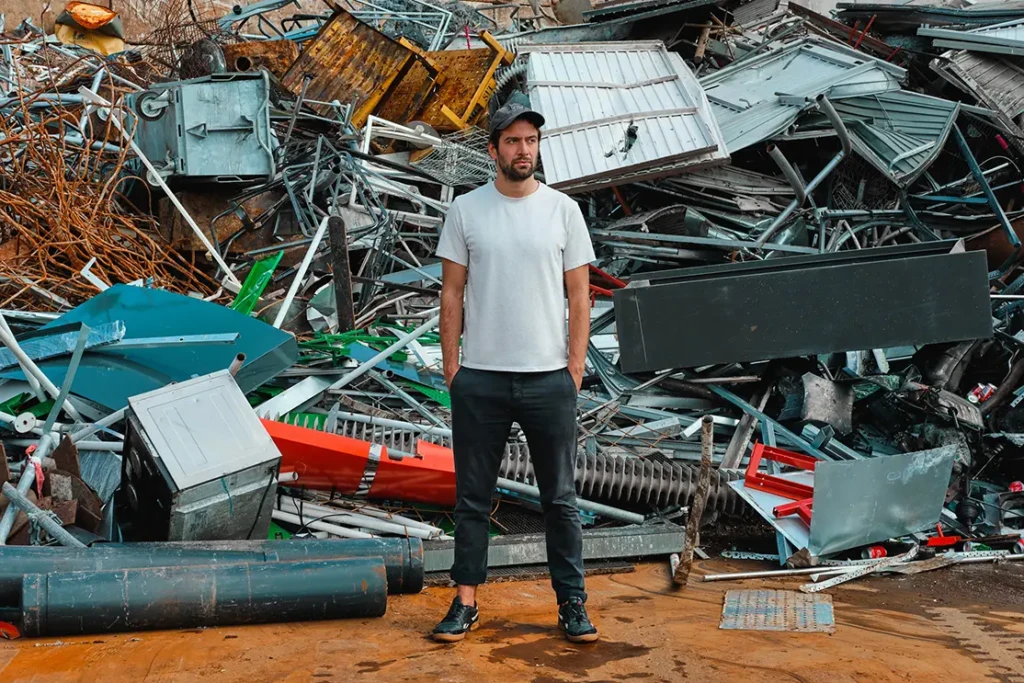
His projects, including the waste room of the Spanish pavilion at the 2025 Venice Biennale, the MO restaurant by Movimiento (awarded for its use of materials) and offices for Sancal in Madrid, combine local research, material experimentation and sustainability criteria that, he explains, must be informed from the origin. Muñoz emphasises that ethics are in the hands of the designer and the company: “ethics are always in the hands of economic exchange“.
Izaskun Chinchilla: Citizenship, Care and Circular Economy
In her book The City of Care, architect Izaskun Chinchilla defends the right of citizens to the outdoors, to biodiversity, and to improved mobility models. From his point of view, ethics in architecture involves the incorporation of the circular economy.
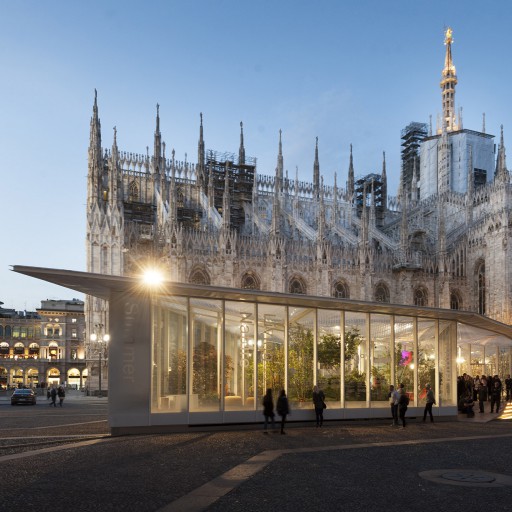
In 2015, she and her team designed a pavilion in Manhattan, New York, built entirely from recycled materials (550 bicycle wheels, 350 umbrellas, 120 photography tripods and 60 car wheels). In 2016, they created Arco’s first VIP lounge using 80% demolition material, and in 2018, they managed a 1500 m2 stand for the Madrid City Council and the Community of Madrid that produced zero waste because the entire set of materials used came from rental or was subsequently transferred by our team. “Our designs systematically consider the entire lifespan, regardless of the duration of the projects we undertake”, they explain on their website.
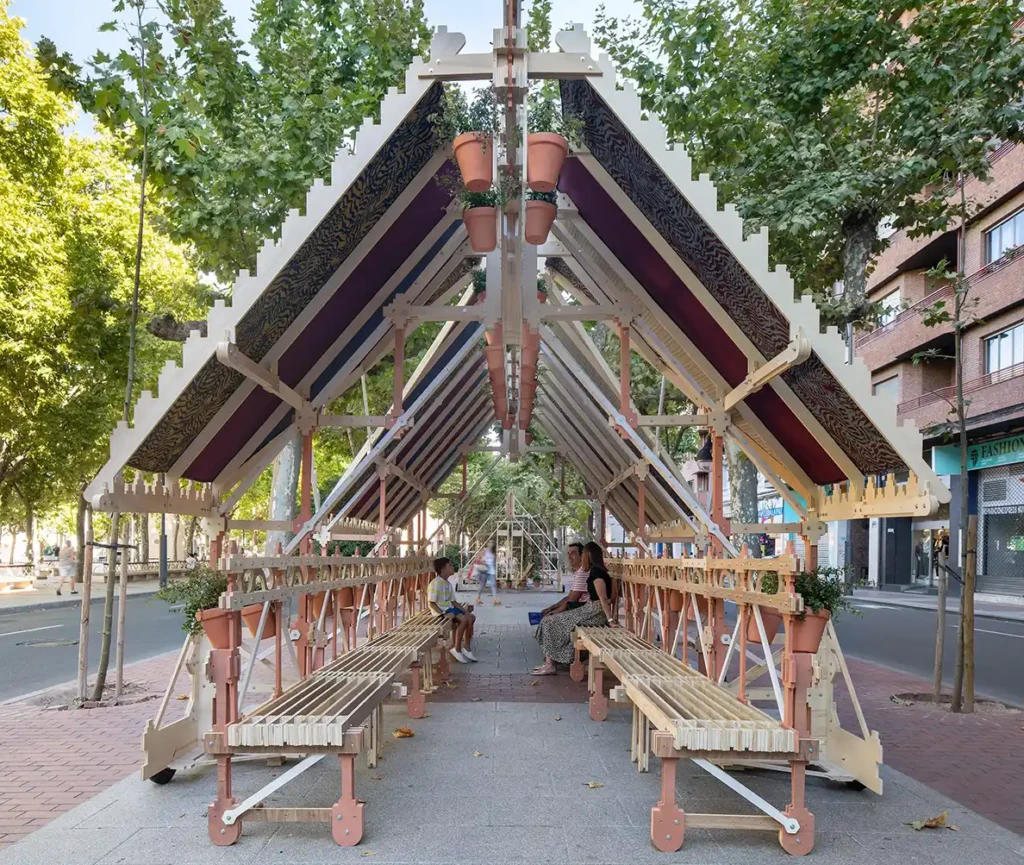
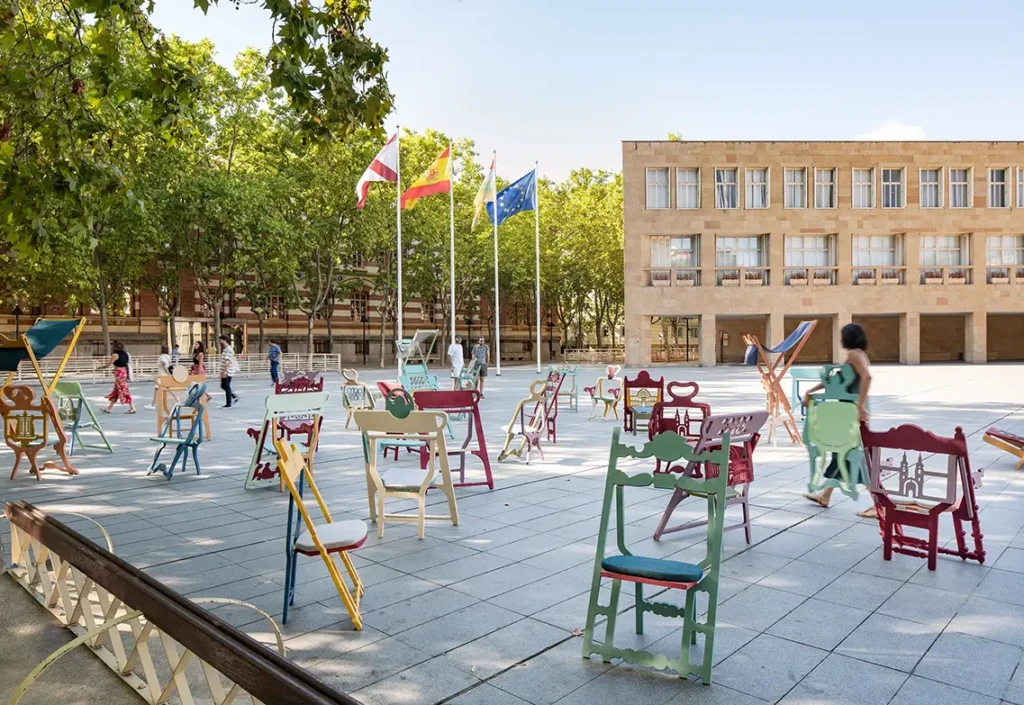
Another of their lines of work has to do with citizen participation. For example, at the Logroño International Architecture and Design Festival, Concéntrico 08, she and her team designed one hundred chairs and three urban lounges that fostered social interaction and the enjoyment of urban space. For the London borough of Camden, they implemented the “Bike to school” project, which consisted of a series of participatory workshops in three schools where they were able to discover the difficulties and opportunities of making the bicycle a regular vehicle in children’s daily journeys in the city. This experience is described in the book The City of Care.
Ábaton: the experience at the heart of architecture
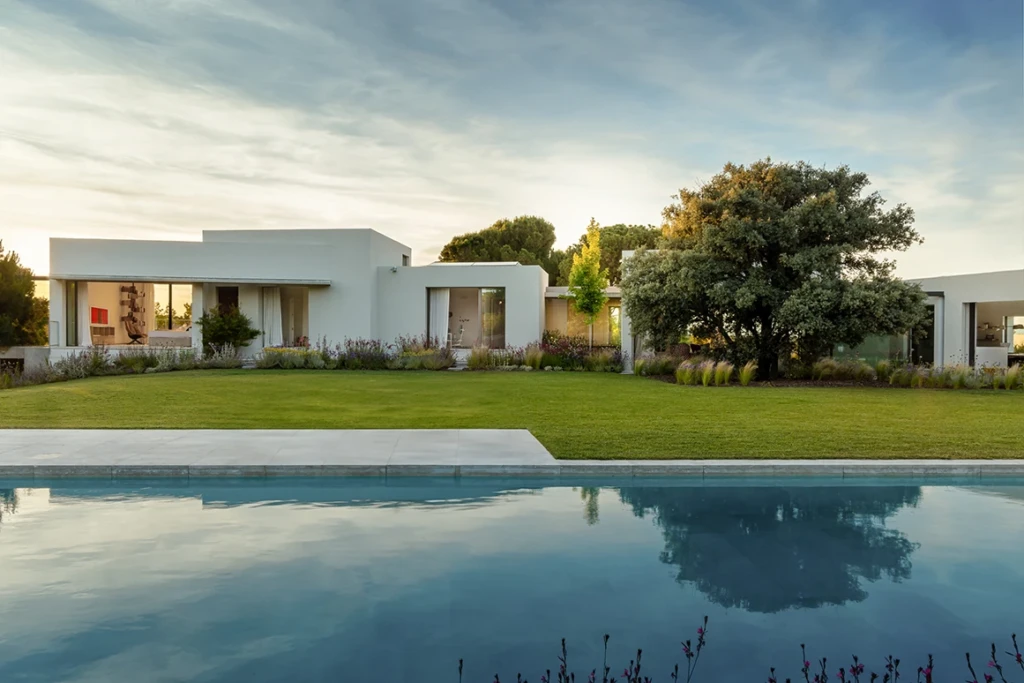
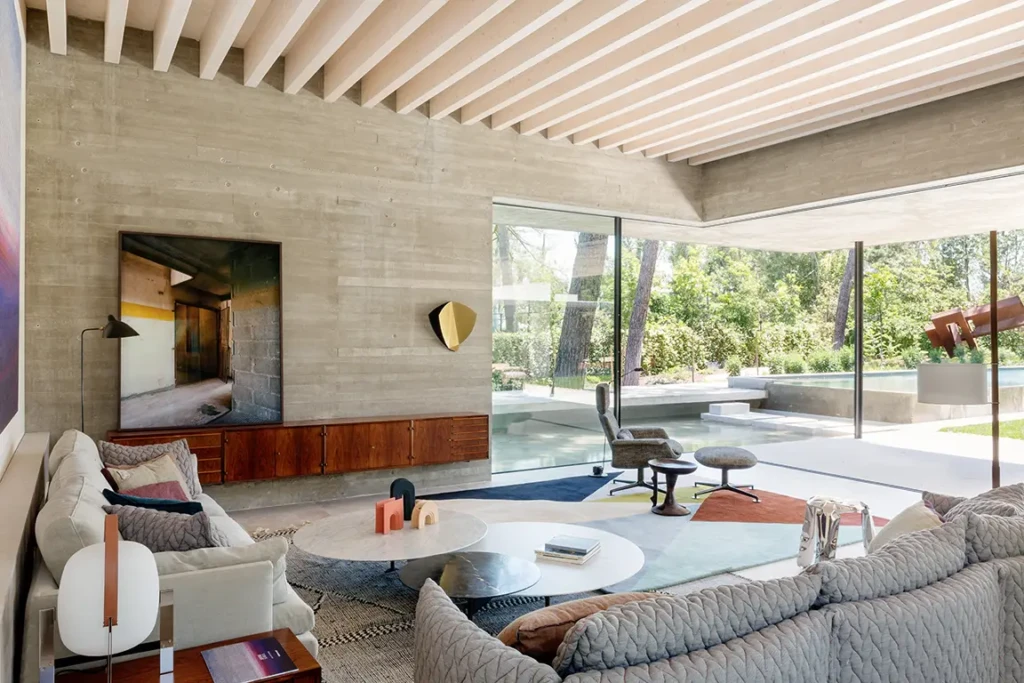
At Ábaton studio, architecture is conceived from the life experience of those who inhabit it. This determines decisions regarding form, material, and technology. The studio claims to implement home automation systems in all the houses they build. “We know it is operational and functional when home automation is not noticeable: it integrates, works and simplifies daily life,” explains Paula Cárdenas Giménez, head of communication at the studio. “We implement home automation only to solve a specific problem intuitively, and it should always have a manual control option in case the system fails”, she adds.
In his opinion, before integrating technological solutions into a project, every architect or interior designer should ask themselves the following questions: What human need does it solve? Is it consistent with the architecture? What happens if it breaks? Is the house still working properly? What is the cost over its life cycle? What data does it collect and who controls it? Does it compromise our privacy? Who maintains it and how?
In psychological and behavioural design terms, it is reminiscent of Yu-Kai Chou’s Octalysis theory, according to which there are eight impulses that guide decisions: some empower creativity; others can cause compulsion, anxiety, or a sense of scarcity. Translated to the project: design for autonomy and well-being, avoiding mechanisms that exploit human vulnerabilities.
Co-design is a fundamental element of Ábaton’s projects. “For us, co-design is deeply ethical when it is based on real empathy, and it is the method we use in all our projects: we understand how our client lives (or wants to live), and we translate that into spaces with criteria, designing from experience, knowledge and an honest conversation with those who will inhabit the spaces. This involves proposing solutions and ideas that fit the client’s real life, improving their quality of life, and avoiding merely aesthetic solutions”, Cárdenas explains.
Ethical design, those working on these lines conclude, is not a marketing label, but a daily practice that combines data, sensitivity and responsibility. It is not about punishing the form, but about designing with enough delicacy so that the objects and spaces support and do not exhaust the ecosystems and lives they pass through.