Born in Japan in the late 1970s as a functional refuge for travellers passing through, capsule hotels have ceased to be an Asian curiosity and have become a global trend laboratory. Amid the “less is more” boom, this model opens two paths: luxury capsules that elevate the experience without increasing square footage, and low-cost offerings that demonstrate that design doesn’t care about budgets.
In both cases, wood is key: it softens the impact of the small spaces, regulates acoustics, provides sensory warmth, and creates a sense of refuge that makes sleeping in a capsule more than just a functional night’s sleep.
Luxury capsules: microspace as a premium experience
Pangea Pod Hotel (Whistler, Canada)
Pods with natural wood finishes and boutique-style common spaces prove that luxury can be compact and social. A micro-boutique designed for skiers and urban travellers, where the capsules are dressed in wood and warm textiles, while the shared areas invite the conviviality of a social club.
Ver esta publicación en Instagram
Book and Bed Tokyo (Japan)
Sleeping among wooden shelves becomes a cultural, intimate and sensorial experience. Among shelves full of books, each capsule functions as a small private library.
Ver esta publicación en Instagram
3) Kanso Hostel (Madrid)
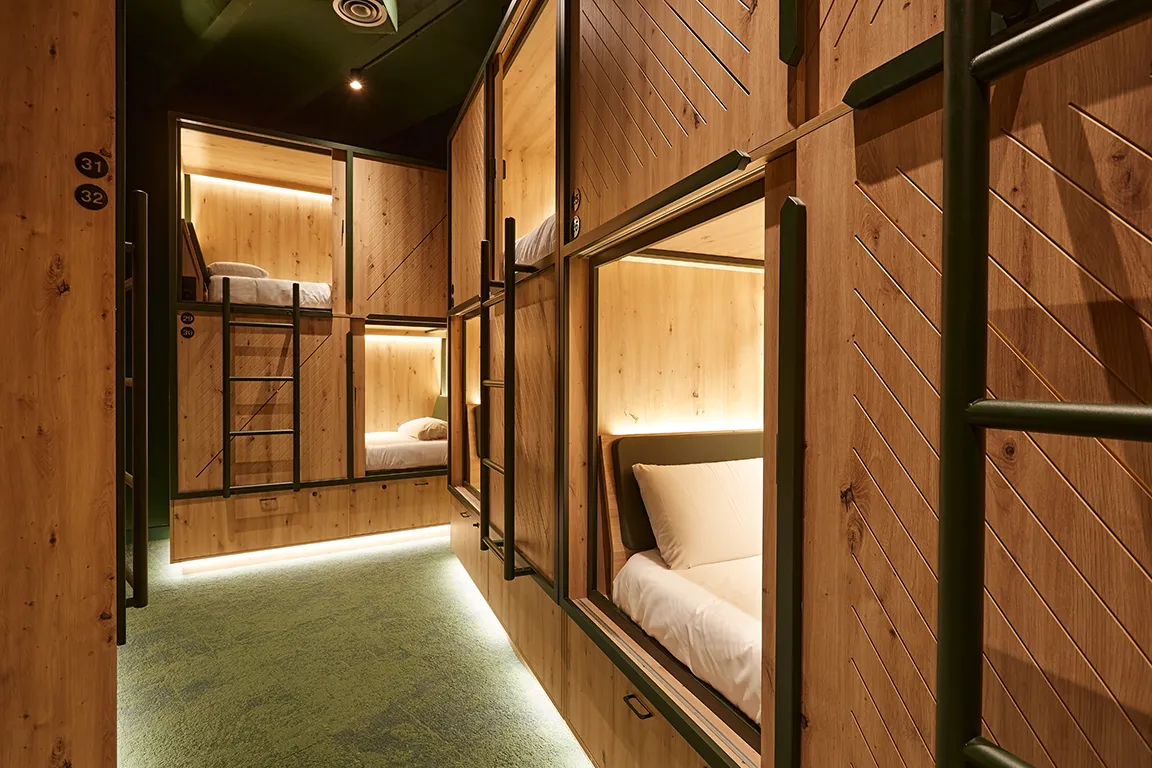
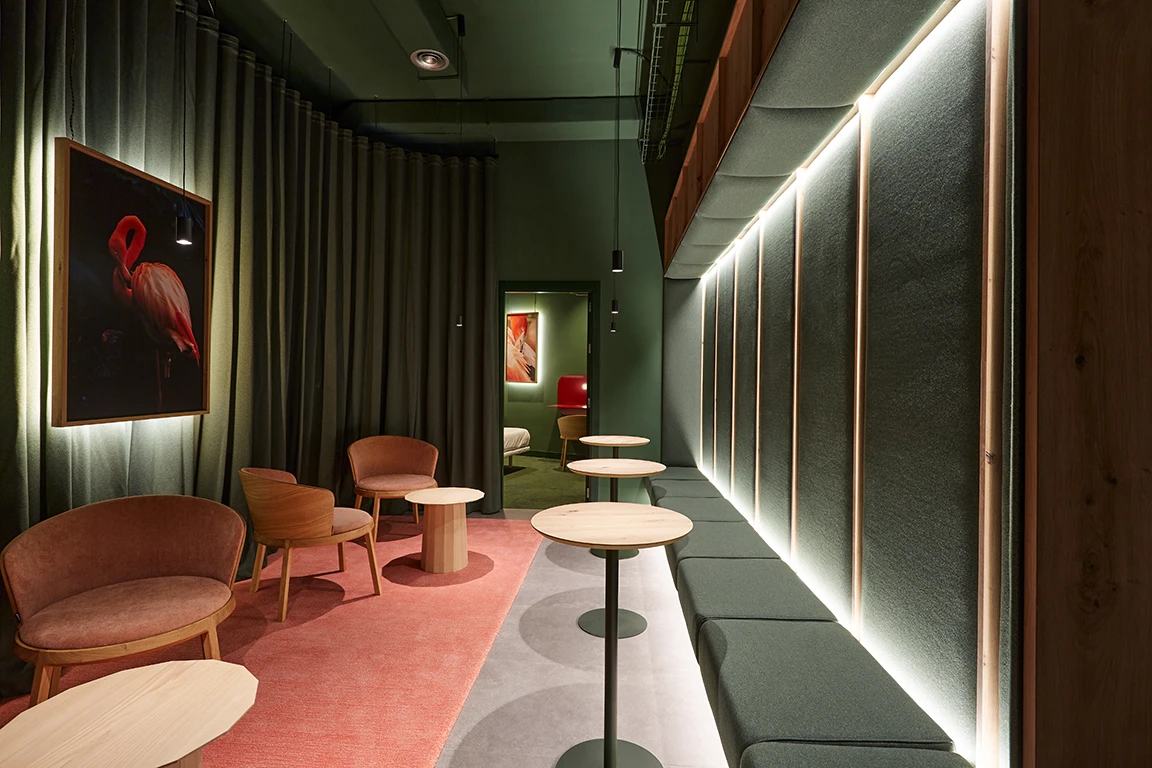
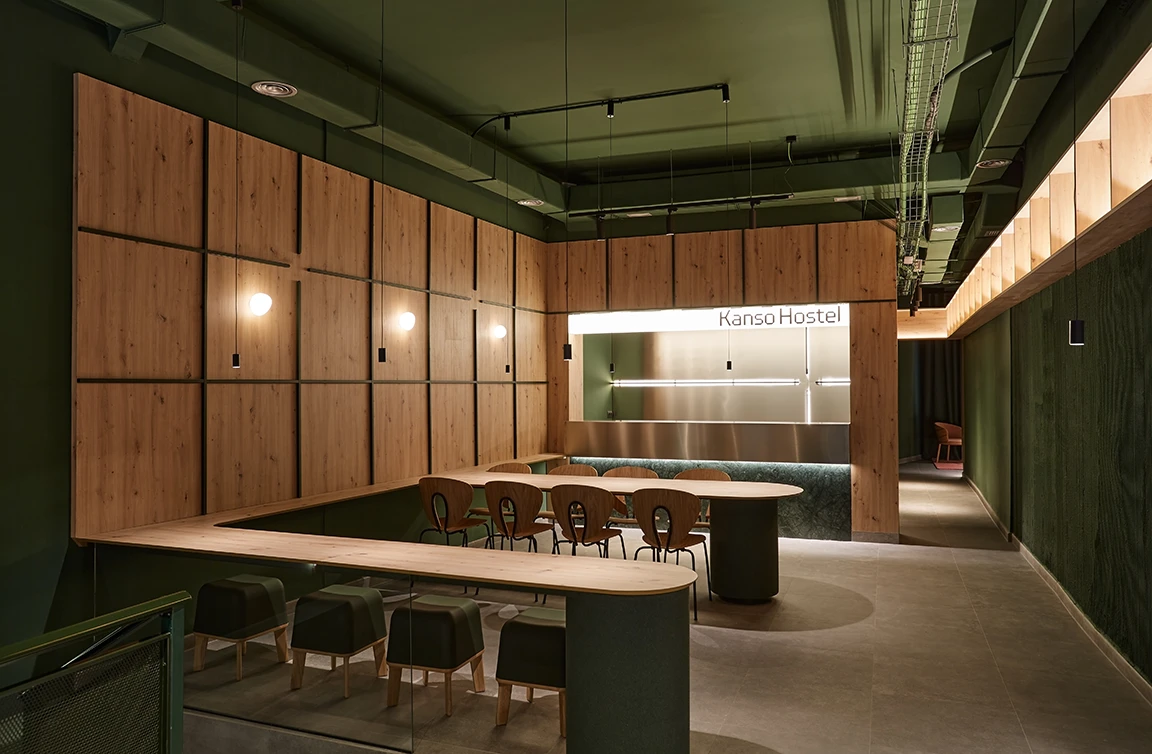
Inspired by the Japanese concept of kanso —the beauty of simplicity— this Madrid hostel uses FibraPan® Decor Roble Amazonas Atlas for its panelling, tables, steps, doors, and bunk bed frames; a solution that gives the space a sense of warmth, along with careful use of lighting and natural textures to create a serene and contemporary hospitality.
Nine Hours (Osaka/Kyoto, Japan)
A pioneer of the new generation of capsule hotels, it redefines Japanese hospitality with a futuristic and minimalist design. Instead of wood, opt for soft materials, polished surfaces, and lighting that accompanies every transition: from checking in to deep rest. Its short-stay concept —one hour to shower, nine to sleep, one to get ready— sets the standard for “essential luxury”.
Low-cost capsules: space savings, wealth of experience
Optimi Rooms (Bilbao)
Spain’s first capsule hotel. An efficient design project that maximises beds per square meter without sacrificing comfort, with common areas featuring warm finishes.
Ver esta publicación en Instagram
Doc Ebisu (Tokyo)
A plywood renovation that updates the classic capsule hotel using circular economy principles and contemporary aesthetics, while maintaining its affordable essence.
The POD Boutique Capsule (Singapore)
Minimalism of light wood and clean lines. An example of how low cost can go hand in hand with thoughtful design and a comfortable experience.
Ver esta publicación en Instagram
What do capsule hotels bring to hospitality?
- Humanising the micro: Wood and warm finishes transform tiny capsules into cosy retreats.
- Compact luxury: detail and atmosphere replace square footage as the new design value.
- Circularity: Projects like Do-C in Tokyo prove that upgrading with wood extends the life of an economic model.
- Urban versatility: In cities like Bilbao and Madrid, the capsule functions as a hybrid of tourism, coliving, and temporary housing.