The worktop is no longer a neutral element in the kitchen. Its thickness, texture, design, and relationship with outdoor Furniture and other furnishings increasingly contribute to the overall atmosphere of the space. Rather than adhering to a single formal trend, work surfaces are diversifying to adapt to different ways of designing and using the kitchen.
This evolution is especially noticeable when the kitchen ceases to occupy a separate room and becomes integrated with the living room, dining room, or even the bedroom in compact apartments. The more interconnected the uses are, the greater the need to reduce visual clutter, coordinate materials, and find a balance between presence and continuity.
Hotels, tourist apartments, and student residences also share a paradox: their kitchens must appear serene and domestic while simultaneously withstanding a level of use rarely found in private homes. The Limehome Porto and Limehome Málaga projects, the Diagonal Suites aparthotel, the Protur Bonaire Aparthotel, and the Liv Student 22@ Barcelona demonstrate how different worktop solutions address this challenge through their materials, design, and user requirements.
The worktop as a design decision
Choosing a worktop involves influencing the overall perception of the space. Its thickness, colour, or surface texture can make the work surface blend seamlessly into the cabinetry, create a contrast, or act as a link between different interior elements.
At Protur Bonaire Aparthotel, Marga Rotger Interiorisme sought “a bright, serene, and timeless space”, where “the simplicity of the lines and the combination of materials” conveyed quality, comfort, and spaciousness. In this context, the worktop forms part of a balanced composition, without competing with the other elements that make up the kitchen.
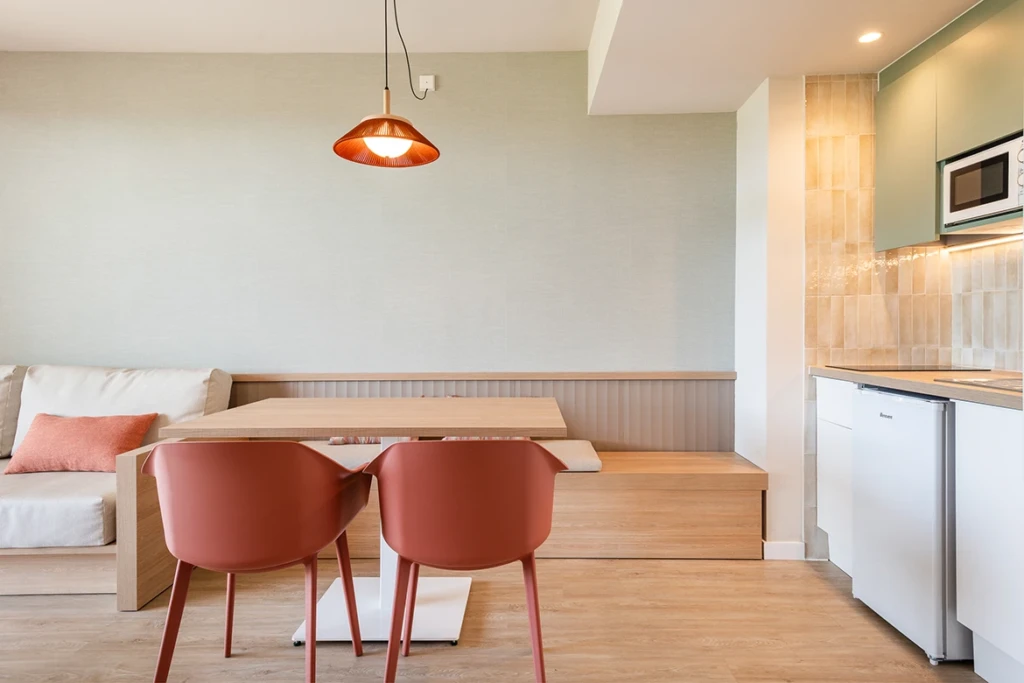
The same attention to integration is evident in the Diagonal Suites apartment. Anna Torres, interior designer for Bernadí, describes their Kitchens as “compact but very complete”, with “a functional and warm design”.
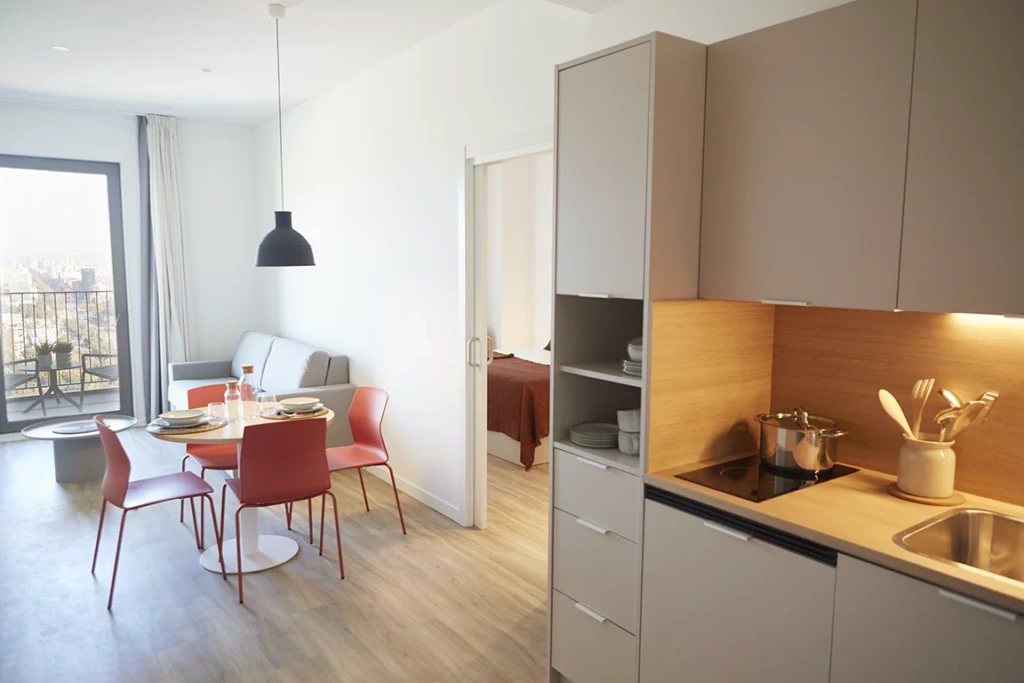
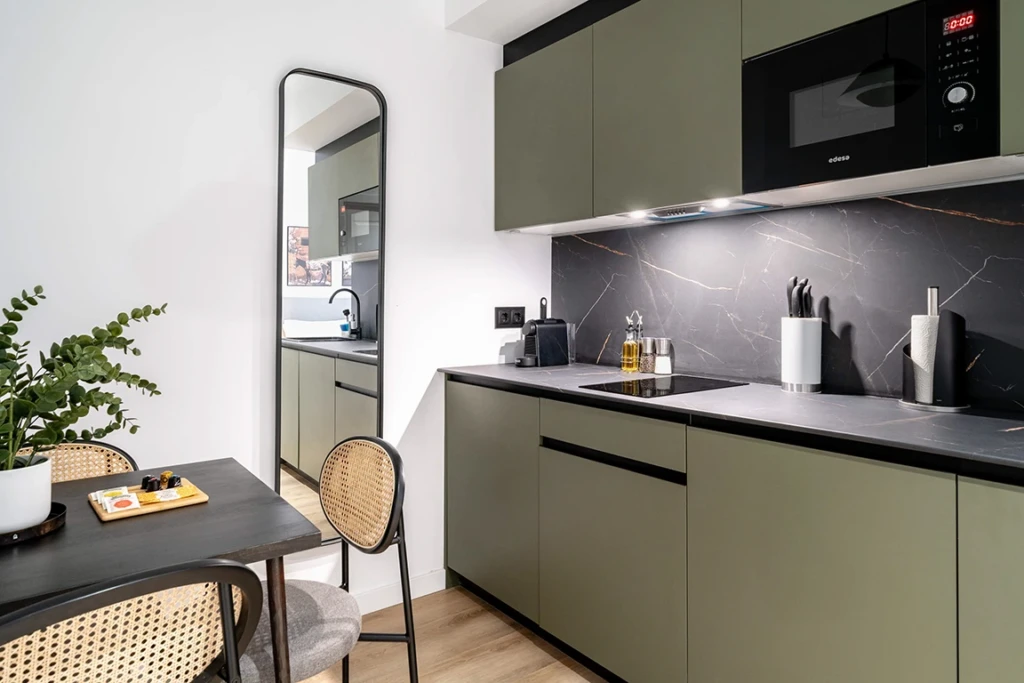
In the Limehome apartments in Porto and Málaga, however, lightness takes on a more literal meaning. Here, the reduced thickness allows for cleaner lines and helps a Dimensions kitchen blend more discreetly into the apartment space.
Continuity and contrast from the kitchen
In hybrid spaces, materials, colours, and textures must establish relationships with the furniture, finishes, and overall identity of the project. The worktop thus plays a role in the gradual blurring of visual boundaries between the kitchen, furniture, and interior architecture.
The Limehome apartments in Porto and Málaga particularly exemplify this pursuit. Beatriz Caminero, an architect at Limehome, highlights that the variety of finishes allows for “integrating the kitchen into the apartment space fluidly and elegantly”.
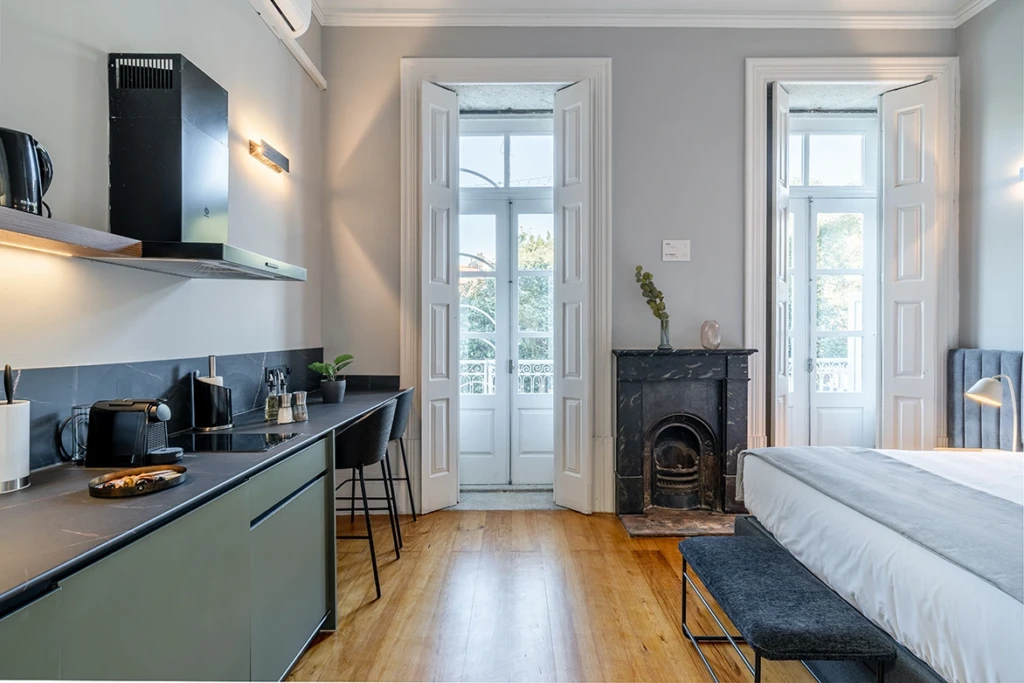
These projects showcase different ways to create continuity through stone and wood designs, as well as various worktop configurations. The choice isn’t solely based on aesthetics; it’s essential to decide the role the surface should play in each project: whether it should blend into the overall design, create a lighter feel, introduce contrast, or reinforce continuity with the rest of the furniture.
From material expression to everyday resistance
This formal diversity is only convincing when it also responds to the demands of use. In hospitality and group accommodation, the choice of worktop is conditioned by guest turnover, shared use, and the need for easy maintenance.
Limehome was looking for “a material that could withstand the high traffic of tourist apartments without sacrificing aesthetics”. At Liv Student 22@ Barcelona, Essenthia Contract emphasised the importance of “excellent durability” and “high resistance to the daily intensive use by students”.
Water resistance, scratch resistance, and impact resistance are recurring design considerations. Hygiene, ease of cleaning, and stability during installation are also key factors. At Diagonal Suites, the goal was to find a material that offered the warmth of Wood while also being “suitable for intensive use and maintenance-free“.
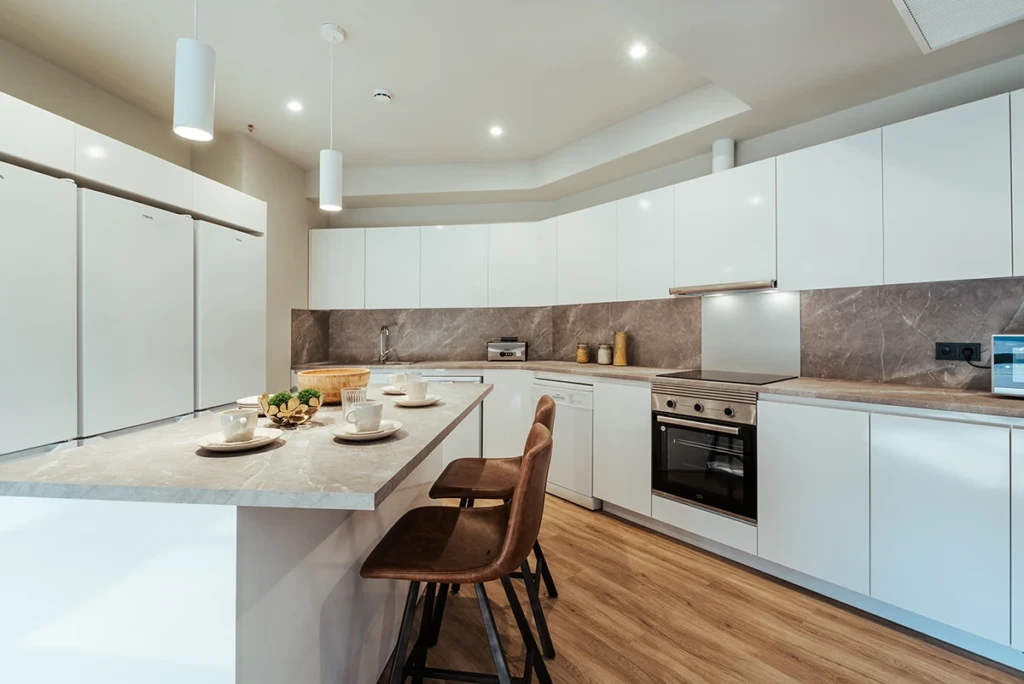
The contemporary worktop thus encompasses demands that are no longer solely technical. It must be functional and easy to maintain, but also integrate seamlessly into the interior architecture and participate in its material language. These projects demonstrate that there is no single formula, and that lightness, warmth, continuity, or graphic presence can be achieved through different surfaces, thicknesses, and finishes. It is precisely this adaptability that makes the worktop an increasingly active tool in kitchen design.
Would you like to find out more about the worktops featured in this article? Finsa’s Fintop worktop ranges embody these concepts: a wooden base, flexibility, resistance, and design.