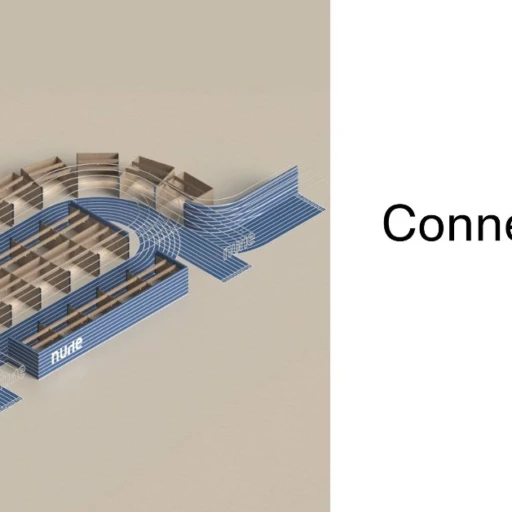
In an increasingly urbanised and complex world, cities are taking on a new role: they are no longer just centres of housing, commerce, or culture, but also spaces for testing, prototyping, and collective learning. The concept of urban laboratory (or urban lab) has established itself as one of the most powerful strategies for addressing the challenges of the 21st century —from the climate crisis to social inequality— through controlled experimentation, collective intelligence, and public-private collaboration.

What is an urban laboratory?
An urban laboratory is an environment where innovative solutions are designed, implemented, and evaluated in real-life contexts. Unlike centrally imposed or theoretical solutions, here we work from a practical perspective: testing on a small scale, measuring the impact, adjusting in real time, and, if the experience is successful, expanding it.
This bottom-up approach not only allows for more agile tackling of urban problems but also democratises the innovation process by actively involving citizens, academia, the private sector, and local governments. Urban planning thus ceases to be an exclusively technical exercise and becomes a collective and experiential process.
Why do we need urban laboratories?
Currently, more than half of the world’s population lives in cities, and that number is expected to reach six billion by 2045. This massive concentration presents an unprecedented opportunity to enhance people’s quality of life, but it also entails significant economic, environmental, and social challenges. Cities generate more than 70% of global greenhouse gas emissions, face housing crises, overcrowded services, and growing inequalities.
Faced with this reality, the urban laboratory model emerged as a powerful tool for transforming metropolises into more sustainable, resilient, and inclusive environments. It’s not about imposing technologies, but rather about creating collaborative environments where solutions adapted to the local context are developed, utilising data, creativity, architecture, citizen participation, and even technology in an integrated way.

Emblematic cases of laboratory cities
Copenhagen (Denmark): Public-private scalability
More than a city, Copenhagen is an open-air urban laboratory. A global leader in sustainability, it has turned green mobility into a lifestyle —bikes everywhere, electric transportation on the rise— and has woven a blue-green infrastructure that not only beautifies the landscape but also actively protects against flooding. What makes it unique: its collaborative approach. Universities, startups, and large companies test their ideas here before scaling them up, as was the case with the 380 smart traffic lights jointly developed to optimise urban mobility in real time, prioritising bicycles and buses.
Singapore: smart city model
Singapore is a real-time smart nation. A true model of a smart city, where urban sensors, digital twins, and massive data analytics intertwine to orchestrate everyday life, from the energy consumed to the traffic avoided. Its approach goes beyond technology: vertical urban planning that optimises space, green corridors that inject biodiversity into urban density, and digital platforms that invite citizens to actively participate in urban design.
Medellín: social innovation
Medellín is living proof that urban planning can heal. From a city marked by violence to a beacon of social innovation, it has managed to transform its rugged geography into a map of opportunity. Metro cables that connect invisible hillsides, escalators that dignify everyday life, and library parks that sow culture in the heart of neighbourhoods. Today, his model of social urbanism is an inspiration for all of Latin America.
Amsterdam: co-creation and circularity
Pioneer in circular economy and smart energy. Its Amsterdam Smart City project promotes the co-creation of solutions with citizens, businesses and government. The city is experimenting with smart grids, material reuse, and sustainable mobility. The Buiksloterham neighbourhood, for example, is being transformed into a circular district, acting as a testing ground for closed-loop systems and local energy sources.
Barcelona: active citizenship in urban planning
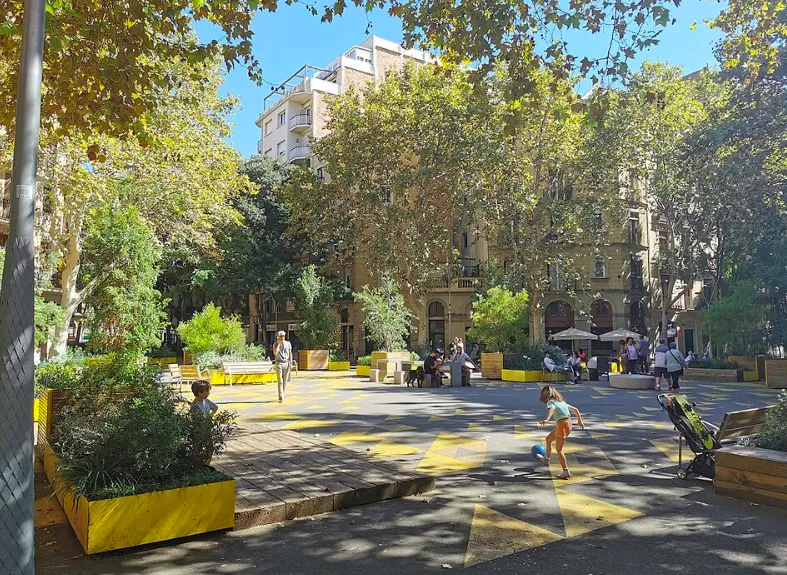
The Barcelona Smart City project integrates technology, sustainability, and citizen participation. Through platforms such as Decidim Barcelona, the population is invited to actively participate in the design of public policies, such as the manufacturing workshops we mentioned in this post. Superblocks transform neighbourhoods into pedestrian-friendly, green and inclusive spaces, while urban sensors and open data drive more efficient and transparent governance.
Boston: Urban Micro-Interventions
With its Office of New Urban Mechanics, Boston is testing urban micro-interventions, from new forms of lighting to engagement apps. The agile, low-cost approach enables rapid innovation and the generation of useful evidence to scale solutions.
Keys to designing an urban laboratory
- Defining the urban problem
The goal is not to “innovate for the sake of innovation”, but rather to address real urban challenges such as mobility, access to water, security, and housing. The approach must be clearly defined and contextualised according to the specific needs of the environment.
- Create a network of change agents
The laboratory must integrate diverse change agents to ensure its effectiveness:
- Local governments: provide legitimacy and access to relevant data.
- Academy: Contributes with rigorous methodologies and objective evaluation.
- Companies: They offer technology and the ability to scale solutions.
- Citizenship: validates proposals and grants social legitimacy.
- Design the test methodology
It is recommended to apply approaches such as design thinking, agile methodologies and rapid prototyping, which allow testing, measuring and adjusting solutions iteratively and effectively. - Selecting the territory
It is crucial to choose an area that is manageable and representative, preferably with social cohesion and good logistical facilities, to ensure a solid and replicable start. - Measure and learn
Each experiment must have clear indicators that allow results to be evaluated. Documenting what you’ve learned is as valuable as the success of the implemented solution itself. - Ensuring continuity
For the urban laboratory to have a sustainable impact, it must be institutionalised through clear governance, stable funding, and close links with public policies.
What all these experiences have in common is their human-centred vision. Technology is not the end, but the means to create more just, sustainable, and liveable urban environments. Cities as living laboratories represent a new paradigm of governance and urban design, blending architecture with data science, ecology with the circular economy, and social engagement with artificial intelligence. They are environments where mistakes are welcomed as part of learning, and where small things can scale to transform big things.