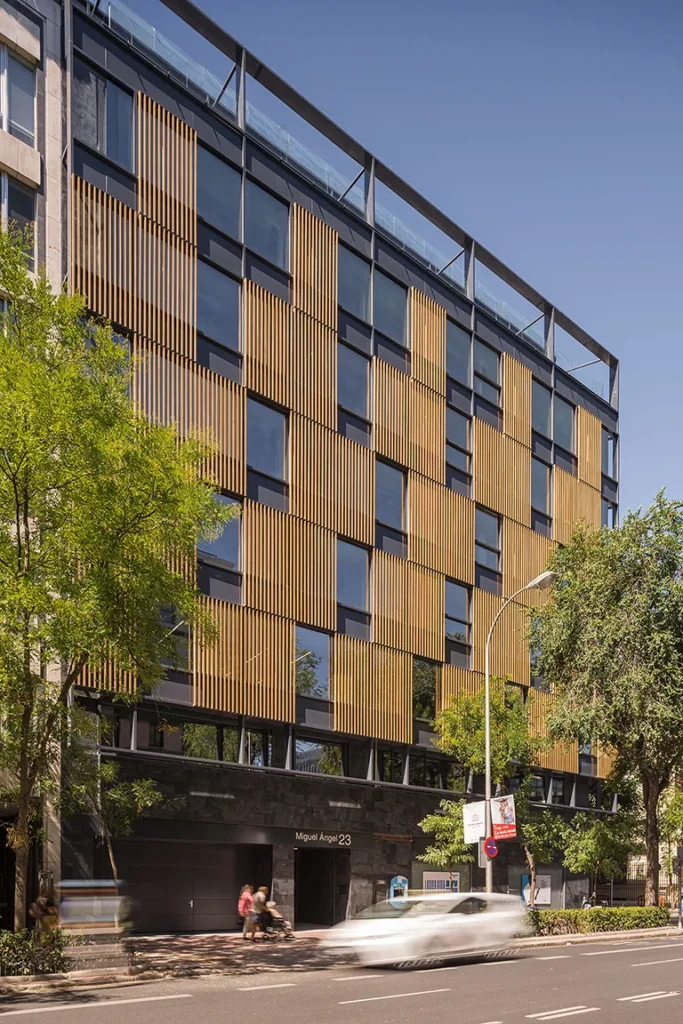
In the financial heart of Madrid, the Miguel Ángel 23 building has been a benchmark since 2022 for how architecture can combine functionality, sustainability, and human experience. The extensive renovation of this property, owned by Colonial, was conceived by Fenwick Iribarren Architects as an opportunity to implement its vision of Blue Architecture: an approach that places people’s well-being at the centre, without sacrificing the highest standards of efficiency and design.
The envelope: key to the project
One of the project’s greatest successes has been the building’s envelope. Instead of the traditional all-glass façade, the team opted for a mixed solution of aluminium and wood, with exterior lattices formed by fixed slats of Thermopine —thermo-treated pine developed by Savia, a Finsa brand— which provide solar control, privacy, and a unique architectural presence.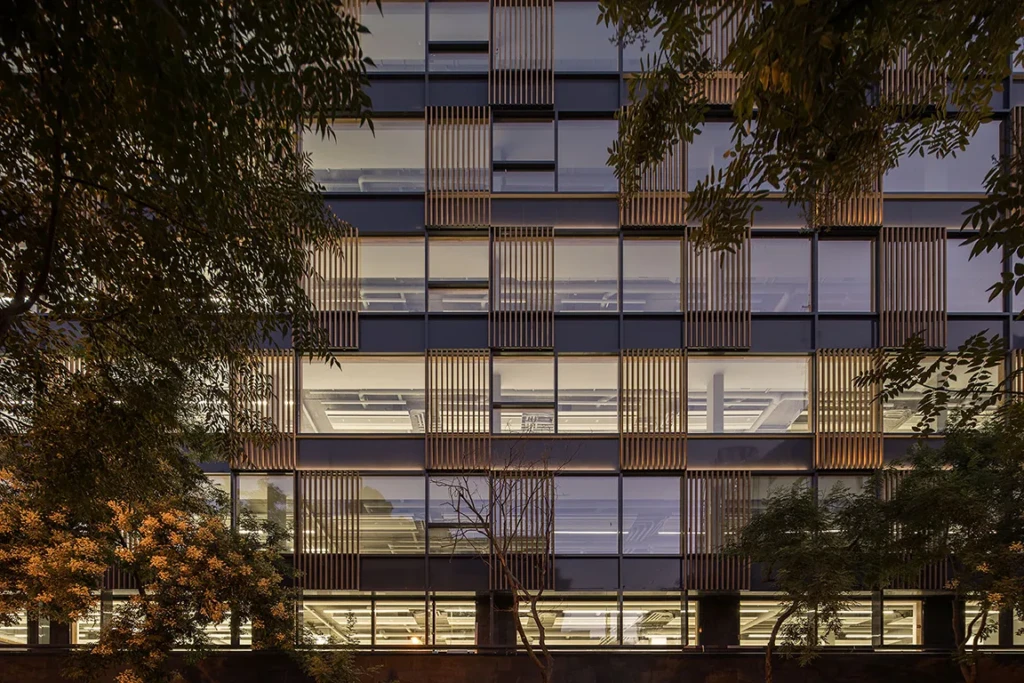
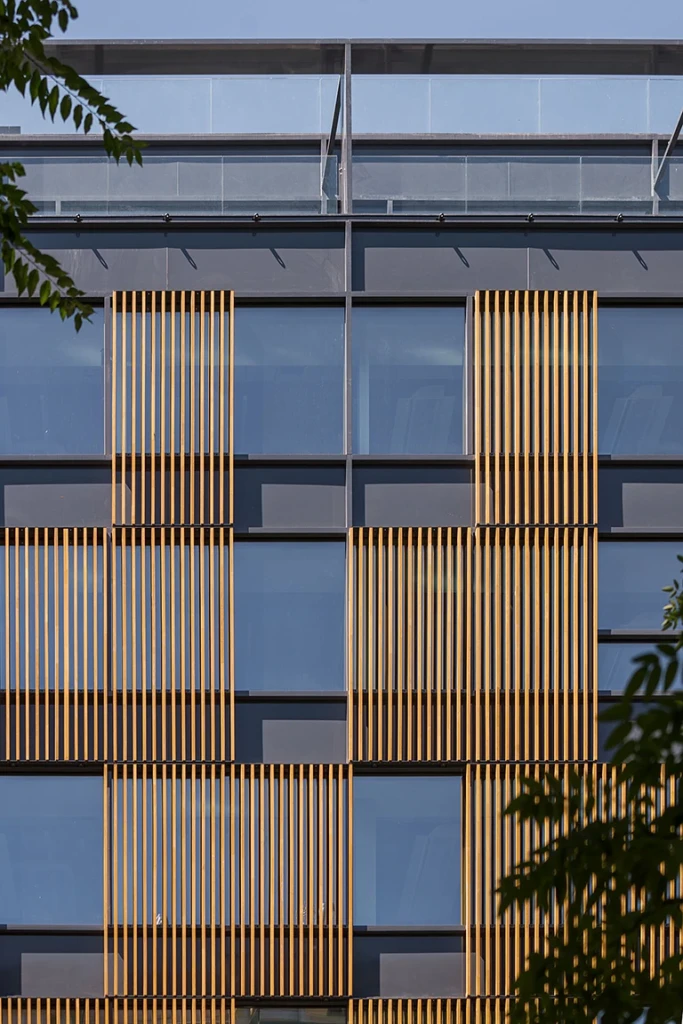
“The wood not only resolved technical needs, such as sunlight and visual protection, but also provided a warm and contemporary interpretation to the façade, very much in line with our concept of urban comfort”, explains Fenwick Iribarren. With a cross section of 50×60 mm and installed 75 mm apart in extruded aluminium frames, the slats generate a rhythmic texture that changes with the daylight and transforms the perception of the building.
Heat-treated Wood: technique and aesthetics
The use of Thermopine responded to both aesthetic and functional criteria. Its dimensional stability, weather resistance and low maintenance made it ideal for an exposed façade. But above all, it fits into the sustainability strategy that guided every decision of the project. “Wood is a circular material with a low carbon footprint, and it responds to this new paradigm that seeks to minimise environmental impact throughout a building’s entire life cycle”, the team notes. The result is a façade that filters light, reduces temperature and improves the feeling of privacy, creating more pleasant and human workspaces.
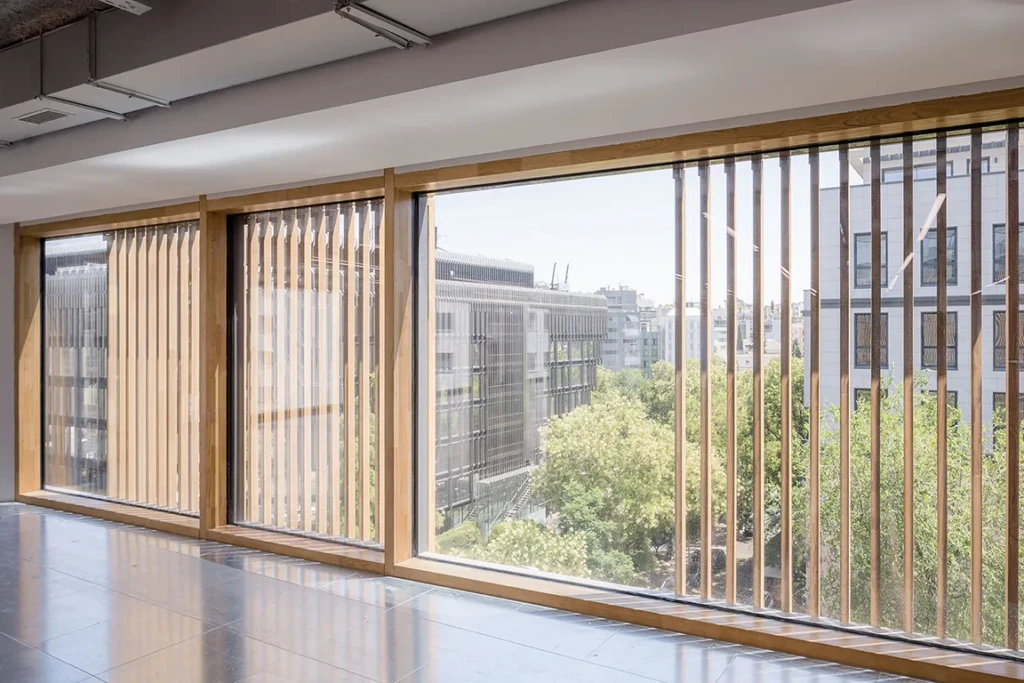
An example of the new office design
Miguel Ángel 23 anticipates the future of office design: buildings that reduce their ecological footprint, prioritise the experience of their occupants, and embody values of respect, health, and belonging. In the words of the study, “wellness architecture is not just a trend; it is an urgent necessity in the sector’s transformation toward decarbonization and energy efficiency, following the latest European Union directives on Energy Efficiency in Buildings and the Circular Economy strategies proposed by the European Commission”, they conclude.