In a context of anxiety and uncertainty, slow travel ceases to be an aspirational label and becomes a measurable consumption pattern: getaways are longer and planned with more intention, seeking well-being, nature and real cultural links.
The figures support this change in mentality. 63% of global consumers plan their next trip to be a detour destination (a detour to less crowded places), since 80% of travellers only visit 10% of the iconic locations. Rest – both mental and digital – is also among the key values: more than one in five people now prioritise leisure travel for self-discovery or mental health, while 24% admit to disconnecting from social media more than before during vacations. In addition, the duration of the trip is increasing: 41% plan international holidays of more than five days (compared to 35% in 2024, according to this study).
How do these issues materialise in interior design? If travel slows down, so does space. Take note of these five trends that you can apply to the design of your hospitality projects.
True luxury is not material, it’s temporary
True luxury is redefined as time, silence, and sensory calm. The interiors invite you to slow down, with a very clear idea at the heart of the project: digital disconnection as part of the experience.
The spatial strategy relies on the tactile and the artisanal. Instead of perfect surfaces, materials that evoke memory appear: raw stone, textured plasters, lime, patinated woods, organic fabrics, muted palettes that maintain a low-stimulus atmosphere… Crafts function as an emotional anchor (handmade ceramics, woven textiles, handcrafted tiles) and as a place marker: it is not about decorating “in local style”, but about making the material knowledge of the territory visible.
On the ground floor, the hospitality area is filled with micro-refuges: reading nooks, meditation nests, candlelit corners and outdoor bathrooms. They are spaces for scheduled breaks. And the bedroom is treated like a sanctuary: layers of linen, low light, acoustic softness, and cushioning curved shapes.
Ver esta publicación en Instagram
The joy of the journey: turning the trip into the destination
In this trend, design shifts to a historically under-designed area: the mode of transport. This forces us to think of interior design as a cinematic sequence.
The first key is to frame the landscape: panoramic windows, exterior decks, observation cars, roofs in night sky mode. The movement does not compete with the environment; it makes it the main scene.
The second key is physiological: if the journey is longer, comfort becomes expanded ergonomics (more positions, soft textures, ambient light that accompanies the transitions of the day). Solutions for real rest appear (for example, lie-flat beds on night buses) and more generous bathrooms, as if the design accepts that the body also travels and gets tired.
This is how material storytelling is imprinted: woods, textiles, patterns and objects that connect the experience with a cultural imaginary (railway, sea, historical routes).
Ver esta publicación en Instagram
Nomadic luxury: lightweight mobility, minimal impact, maximum connection
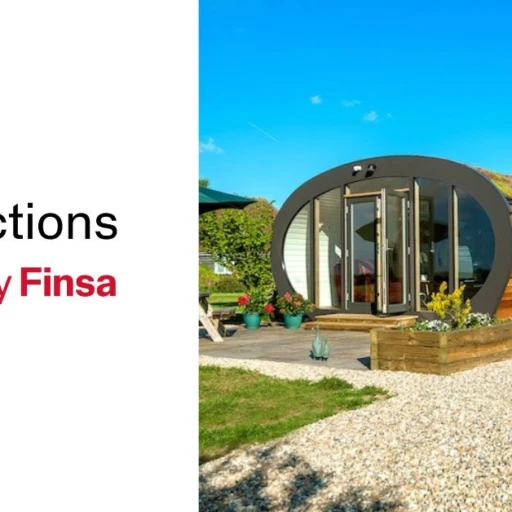
The key is to design mobile or modular accommodations that do not sacrifice comfort, but do reduce their footprint. This trend blends freedom and restraint: self-sufficient experiences (like RVs, campers or “hotelised” tents) with a deliberately clean aesthetic so as not to get in the way between guest and landscape.
Here, the logic of the object prevails: each element must justify its presence. Minimalism is prioritised (clear lines, interiors without visual noise, abundant storage) to maintain a frontal relationship with the exterior. The room functions as both a lookout point and a refuge.
In terms of construction, sustainable and local materials are gaining importance, along with modular structures that minimise impact on the land. And a strategic vector emerges: collaborations between brands (hospitality + outdoor /VR) to create memorable stays without the need for permanent architecture.
Ver esta publicación en Instagram
Cabin craftsmanship: rustic intimacy on a hotel scale
If the guest seeks privacy and seclusion, the hotel responds by “cabinifying” its interior. This trend brings domestic features of cabin life to larger-scale projects: reinterpreted gabled roofs, sunken rest areas, custom-worked wood, and nooks that create a sense of shelter even in a large building.
The atmosphere is built with carpentry and craftsmanship details: custom joinery, visible assemblies, analogue objects or rustic antiques. The materiality emphasises the local and low-carbon: stone cladding, wood panelling, hemp plasters.
But the contemporary cabin does not forgo panoramic views: floor-to-ceiling windows create immersion in nature without losing privacy. It’s a delicate balance: open to look, close to feel safe.
As a backdrop, modularity in wood (CLT) appears to redefine the cabin as a replicable and customizable typology: a system that allows the deployment of retreats with a contained aesthetic and hotel-like features.
Ver esta publicación en Instagram
Rural hospitality with hands in the soil
The latest trend blends rustic charm with agritourism and hands-on experiences (harvesting, collecting, cooking, preserving…). And that rewrites the interior program: utilitarian kitchens appear, garden rooms, tool-walls, mudrooms, workshops; spaces designed to get a little dirty – and enjoy it.
The aesthetic is humble but carefully crafted: reclaimed wood, stone, terracotta, green roofs, custom-made carpentry. The important thing is that it doesn’t look like a new set design: they look for used surfaces, patinas, vintage patterns, eclectic mixes that build a house rather than a hotel.
Craftsmanship is once again a common language, but here with a nuance: not so much as silent luxury, but as identity and uniqueness (hand-woven basketry, patchwork, embroidery, painted finishes or artisanal joins). Hospitality becomes an extension of the material culture of the place, and the table -especially outdoors- functions as a social device for sharing territory and season.
Ver esta publicación en Instagram