
Interest in growing food at home has been increasing in recent years, driven by greater awareness of health, food origin and sustainability. What began as a trend linked to urban gardens, domestic cultivation systems or specific solutions for small spaces, is now being applied to the design of the home itself.
Increasingly, residential projects are being designed from the outset to integrate food cultivation as part of everyday life, understanding the home not only as a place to live, but also as a space that cares, connects with nature and promotes self-sufficiency. This approach ties in with the movement Grow Your Own Food, which we already told you about in Connections by Finsa. What was once approached through systems, solutions, and small spaces, is now evolving towards a deeper integration: homes designed from the outset to incorporate cultivation as part of the design and the experience of living.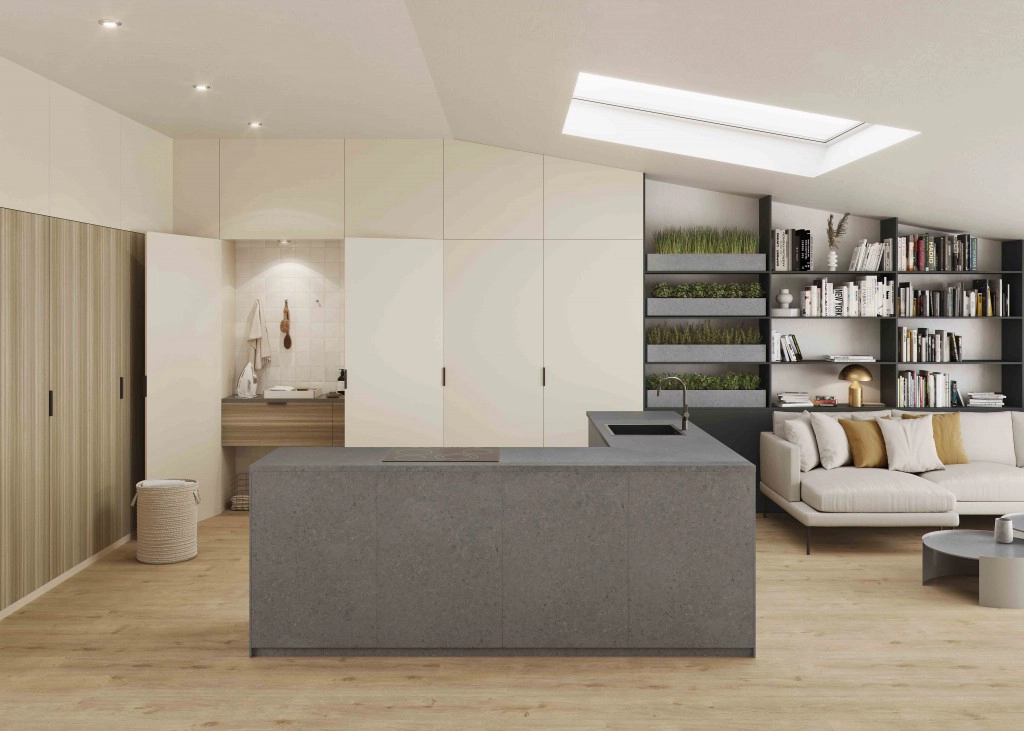
When the garden structures the house
Some contemporary houses show how cultivation can become the axis around which architecture and the use of spaces are organised:
- Pojeon House (South Korea). Designed to embrace an existing orchard, this house curves around the cultivated field, which acts as the visual and functional core of the home, protected from the urban environment.
- Longhouse (Australia). An agriculturally inspired residence that integrates indoor and outdoor planting areas directly connected to the kitchen, reinforcing the relationship between producing food and consuming it at home.
- Farmworker’s House (United Kingdom). A modern reinterpretation of the traditional country house, organised around a courtyard with a vegetable garden that articulates domestic life.
Ver esta publicación en Instagram
Cultivating as a way of living in community
Home cultivation is not always approached individually. Some projects incorporate shared gardens as a tool to foster community life and social bonds:
- Hazelmead (United Kingdom). A cohousing project where gardens in the front yards are part of the daily life of the residents, promoting self-sufficiency and social interaction.
- The Red Roof (Vietnam). A house whose roof is transformed into a productive garden that improves thermal comfort and supplies food to the local community.
Ver esta publicación en Instagram
From architectural design to healthy habits
Integrating food cultivation into the home directly connects with new domestic habits. Hydroponic systems, aeroponics, and vertical gardens now allow us to grow fruits, vegetables, and herbs even in small spaces, facilitating access to fresh, locally sourced food.
Beyond production, the presence of living nature in the home brings warmth, improves the environmental quality of spaces and promotes more conscious routines, linked to personal care and well-being.
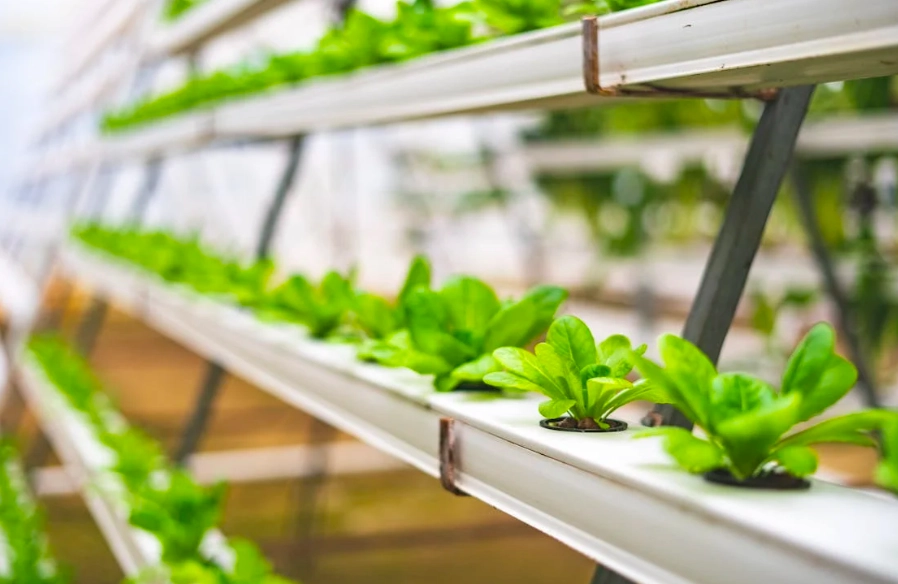
Designing homes around food cultivation means rethinking the home as an active ecosystem. A space that not only protects and welcomes, but also produces, reduces its environmental impact and strengthens a more direct relationship with food and nature.