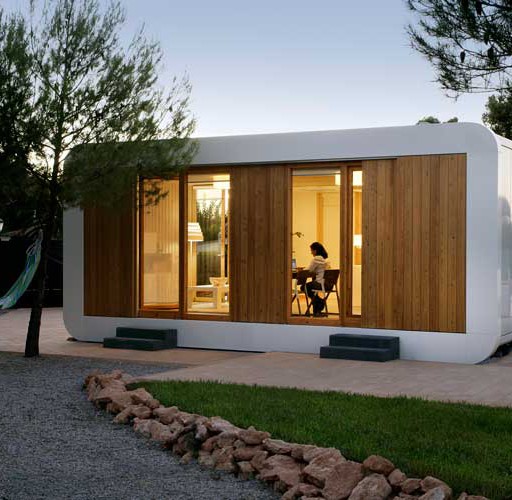
People no longer travel the same way they used to. It’s no longer enough for them to find a good location: they’re looking for an authentic experience. For this reason, boutique hotels have become benchmarks thanks to their commitment to history, design, sustainability, and personalised service.
Ver esta publicación en Instagram
The idea of a boutique hotel was born in the 1980s in London, thanks to designer Anouska Hempel, a pioneer in combining design and luxury. Far from competing with large chains, these hotels are distinguished by their unique character, sense of place, and ability to move their guests through every detail. It can be found from a pillow menu in the Bless Hotel Madrid, to boat trips and bike tours at the Can Ferrereta hotel in Mallorca.
Boutique hotels and renovation of historic spaces
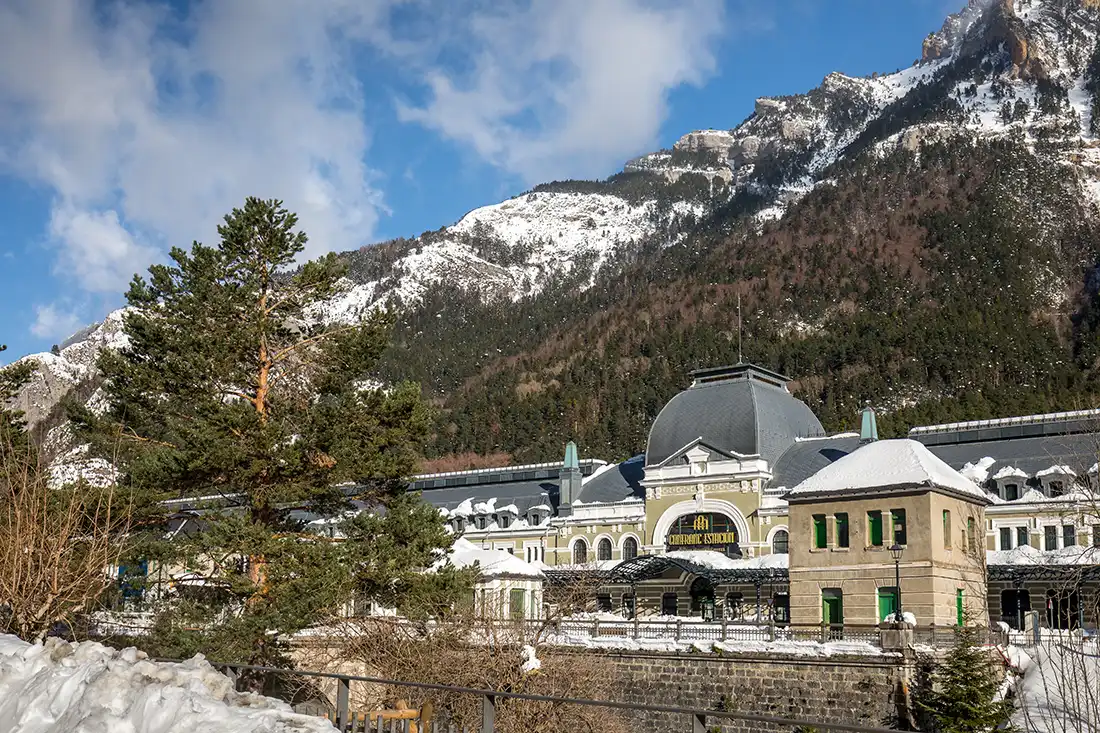
From Switzerland to Mexico; from Iran to Spain. One of the most notable trends is the transformation of historic buildings into boutique hotels. This is the case of the Hotel Royal Hideaway, a 5-star Grand Luxury hotel created in an old train station in the Aragonese Pyrenees, in Canfranc, Huesca. This was inaugurated in 1928 and was considered the largest in Europe at the time. Years later, Ilmiodesign took on the challenge of giving this space a second life.
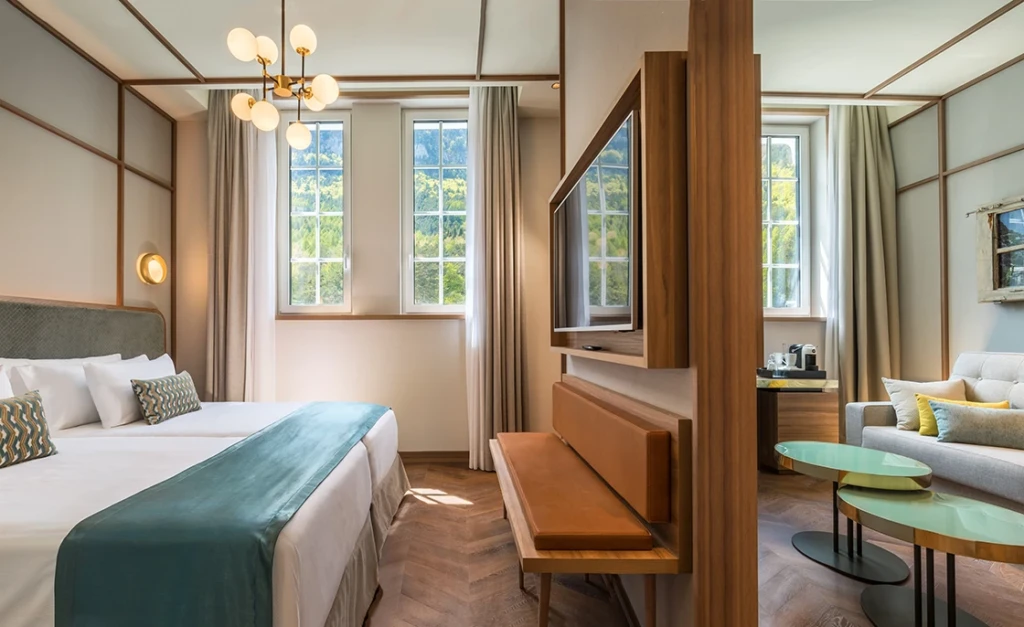
The challenge, explains Andrea Spada, co-founder of the studio, was “to respect the monumental character of the station (structure and morphology), protected as a Site of Cultural Interest, and at the same time give it a renewed look”. The result combines warm woods, Art Deco touches, and a contemporary design that pays homage to the railway splendour of the early 20th century.
The power of materials in a boutique hotel
Among the most popular materials for this type of establishment is wood. “Wood is always a very grateful material when worked by hand, as the great Italian master Pierluigi Ghianda teaches us”, adds Spada. Ghianda is known throughout the world as “the poet of wood”.
For designer María José Osuna, author of projects at Soho Boutique, natural elements are irreplaceable. “My favourite materials are always natural ones like wood, and boards like those from Finsa meet those technical and aesthetic characteristics”, he emphasises.
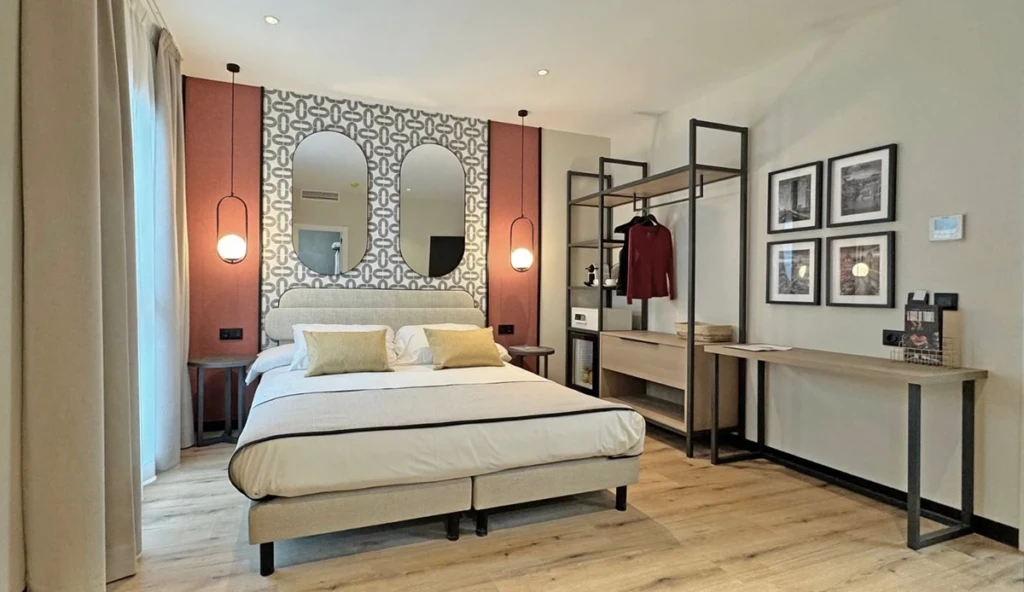
The choice of these materials depends largely on the type of project. In an urban hotel, “warm textures or fabrics such as velvet predominate, mixed with walnut-toned woods with a rich grain that conveys solidity and quality, as well as stones and brass details”, according to Spada. While a resort hotel requires “wood with natural tones that convey a calmer and more relaxed atmosphere. In this case, they can be mixed with more patterned fabrics and strong colours, including laminates in strong, bright colours”, she adds.
The importance of light
Lighting is another key element in defining the experience. “Good use of lighting represents 70% of the final result”, says Spada, “it is the medium that most influences our sensations. “We would never dare to have a first kiss in a space with cold light and illuminated like an operating room”, he exclaims. “If we want to describe a refined, relaxed atmosphere, we need indirect, warm light, like in the best New York movies”, he adds.
Timelessness, above trends
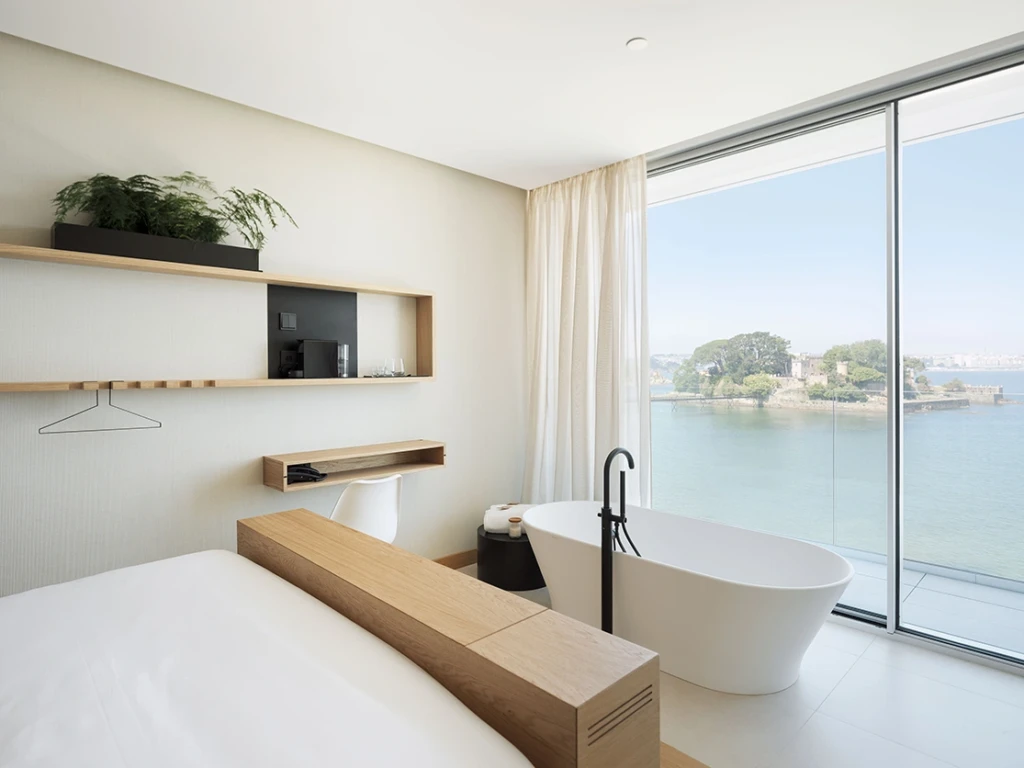
Rather than following a trend, boutique hotels seek to remain in time. In this sense, timelessness is another of its characteristic features, as reflected in the Noa Boutique Hotel, located in Oleiros, A Coruña, on the shores of the Atlantic Ocean.
“The main thing in the design of this hotel was timelessness. It wasn’t a fad; every year there are new trends and it would be easy to adapt to some, but we don’t think that’s the way the hotel concept goes”, explains Ignacio Reigada, architect and co-founder of Sinaldaba. Six years after its opening, the hotel still looks “like new”, thanks to a harmonious, functional, and durable design.
Boutique hotels in harmony with nature
Being in symbiosis with nature also defines the design, according to Reigada: “The location of the hotel is wonderful, so the design was always focused on creating harmony: allowing guests to relax and enjoy the views”. The result is “a calm, tranquil, timeless, and functional design”.
María José Osuna agrees on the importance of this timeless character. “In boutique hotels, the priority is durability and practicality, always hand in hand with aesthetics”, he says.
Sustainability as part of a boutique hotel’s philosophy
Boutique hotels understand sustainability as an essential part of their design. “The most important sustainability criterion is not having to renovate the hotel every ten or fifteen years”, says Reigada. Sinaldaba opted for local companies and solutions such as geothermal energy, efficient insulation, and glass that protects from the sun without sacrificing the views.
Ilmiodesign also prioritises local materials, as well as local suppliers and certified products, to reduce its carbon footprint. For example, textiles such as recycled polyester stand out.
“A suit that fits perfectly”
History and innovation, natural materials, timelessness, sustainability… In short, boutique hotels escape fads to create tailor-made spaces, “like a suit that fits perfectly”, says Spada.
The uniqueness of this type of hotel lies in the ability to listen to the customer and “deeply understand their needs, desires, and specific characteristics“, he emphasises. To convey the feeling of extreme care in every detail. “That level of attention and adaptation is, in itself, the true luxury, because it transforms a space into a unique, exclusive, and deeply personal experience […]. The key is to incorporate design elements that surprise and generate that differentiating effect, that “wow!” that leaves an indelible mark […]. Everything must be a concert of tangible and intangible details for the experience to be unique”, he concludes.