Stronger than glass and stronger than many plastics, transparent wood is emerging as one of the most innovative materials of the 21st century, according to research published in the Annual Review of Materials Research. Although it sounds like science fiction, this technology has its roots in a 1992 experiment, when German botanist Siegfried Fink managed to create a type of translucent wood to observe plant tissues without having to dissect them.
Decades later, that discovery has been reactivated by scientists such as Lars Berglund of the KTH Royal Institute of Technology in Sweden or Liangbing Hu, from the University of Maryland in the United States, who see it as an ecological and multifunctional alternative to conventional materials such as glass or plastic.
How is transparent wood created?
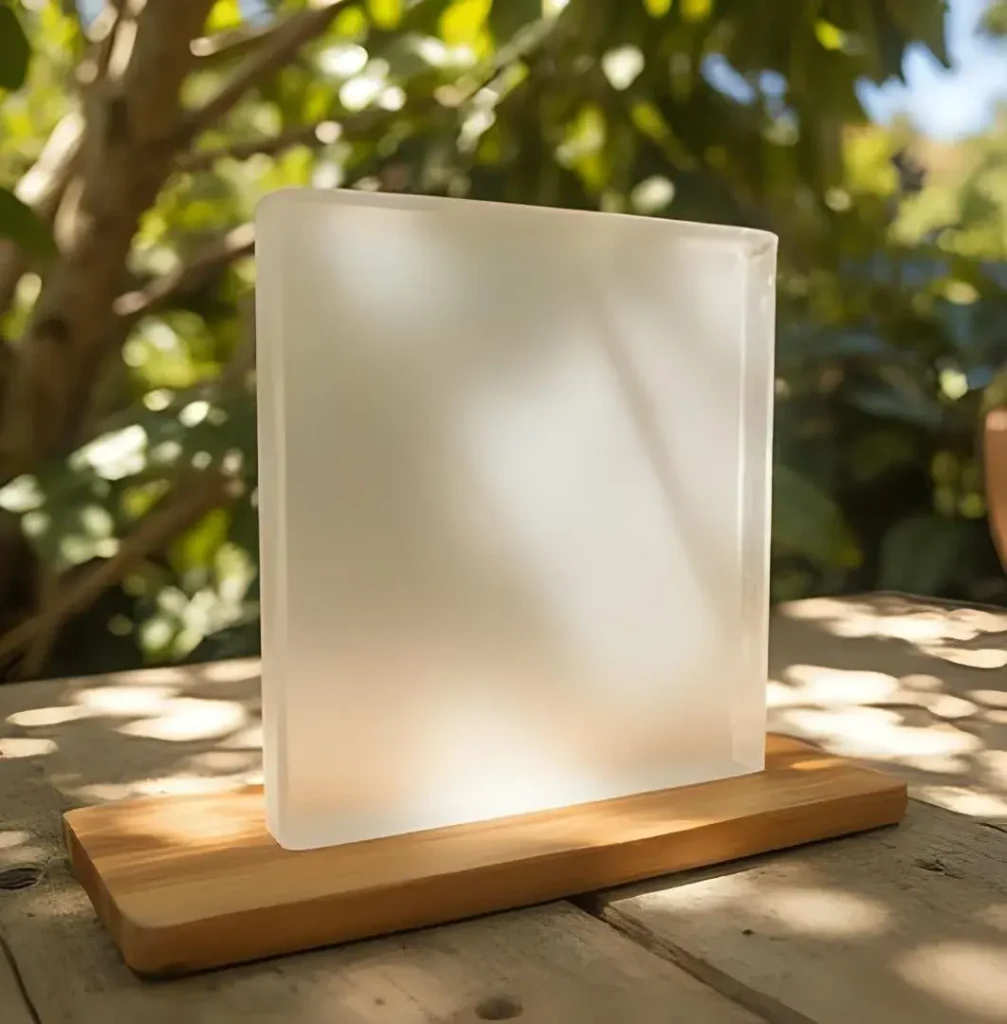
How is this surprising effect achieved? Wood is made up of a network of cellular channels that transport water and nutrients. These channels are held together by lignin, the polymer that gives wood its rigidity and colour. By removing or bleaching the lignin and filling the gaps with resin (such as epoxy), the researchers can match the refractive index of the whole, allowing light to pass through almost unhindered. The result is a material that maintains the natural texture of wood, but with a translucency comparable to frosted glass.
Qualities and applications of transparent wood
Its technical performance is remarkable: just a few millimetres thick, transparent wood transmits between 80% and 90% of light and is also up to ten times more resistant than glass and three times more than plexiglass. This makes it a viable option for demanding applications such as device displays, insulating windows (it would eliminate the need for double insulation), or lamps.
Thermal efficiency is another of its strong points. Variants developed with polymers such as PVA or phase-change materials have demonstrated thermal conduction up to five times lower than that of glass, which could revolutionise passive air conditioning in architecture, considering that a quarter of the energy consumed in homes is lost through windows. In addition, their application as smart windows, capable of changing colour with electricity, is being investigated.
Is everything that glitters sustainable?
Sustainability is also in focus: new techniques based on hydrogen peroxide and ultraviolet light allow wood to be bleached with lower energy consumption. Resins derived from citrus peels have even been developed, eliminating the use of fossil polymers without losing transparency or strength.
Although challenges remain —such as scalability and end-of-life environmental impact— transparent wood represents a fascinating intersection of technology, design, and sustainability. A material that, although still in the experimental phase, invites us to imagine warmer, more resilient, and more environmentally friendly buildings… in a more transparent way.